Making Kava tea the right way transforms what could be a disappointing first experience into something genuinely worthwhile. Unlike regular herbal tea where you just steep and sip, Kava requires a different approach. The techniques have been refined over centuries in the South Pacific, and they exist for a reason.
Get the preparation wrong and you’ll wonder what all the fuss is about. Get it right and you’ll understand why people keep coming back.
What Makes Kava Tea Different
Kava comes from the root of the Piper methysticum plant, used for hundreds of years in Fiji, Vanuatu, Tonga, and other Pacific Island nations. The root contains kavalactones, which are responsible for Kava’s potential calming effects. Understanding how to release those kavalactones is the key to making Kava teas that actually work.
Here’s the critical difference from regular tea: Kavalactones don’t dissolve in water through steeping alone. They need to be physically extracted through agitation, meaning kneading, blending, or squeezing. Simply dunking a tea bag in hot water won’t cut it. Traditional Kava preparation is hands-on because that’s what actually works.
The Traditional Method: How to Make Kava Tea the Original Way
Traditional preparation remains the gold standard because it consistently produces strong, effective Kava. Many people find the tactile ritual becomes part of the experience itself, turning preparation into a meditative practice rather than just a step to get through.
What You’ll Need
- 1 serving of medium-grind Kava root powder (according to package instructions)
- 8-12 ounces of warm water (100-120°F, not boiling)
- A strainer bag, muslin cloth, or nut milk bag
- A bowl or large cup
Step-by-Step Traditional Preparation
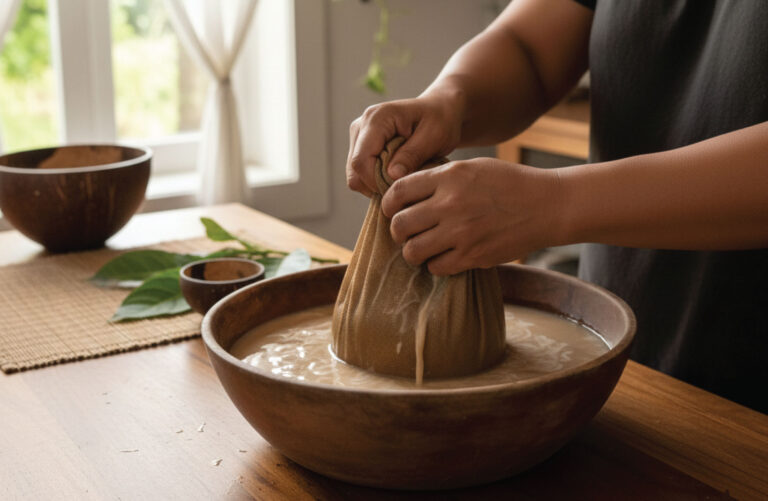
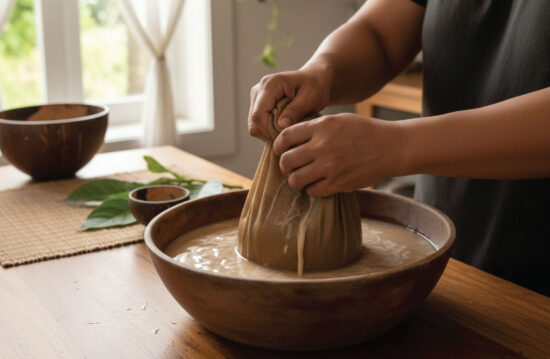
Place your Kava powder inside the strainer bag and submerge it in warm water. Now comes the important part: kneading. Squeeze and knead the bag continuously for 10 to 15 minutes. You’ll feel the bag releasing a slippery, milky liquid. Watch the water turn cloudy and light brown. Keep going until the liquid feels slightly oily between your fingers. Remove the bag and give it a final hard squeeze to release any remaining liquid.
Stir gently before drinking, since the active compounds may settle to the bottom. The warm water combined with sustained physical pressure helps to extract the kavalactones without damaging them.
 Modern Methods: Faster Ways to Make Kava Tea
Not everyone has 15 minutes to spend kneading a strainer bag. Modern methods trade some ritual for convenience without abandoning what makes Kava work. These approaches use different techniques to achieve the same goal: extracting kavalactones effectively.
The Blender Method
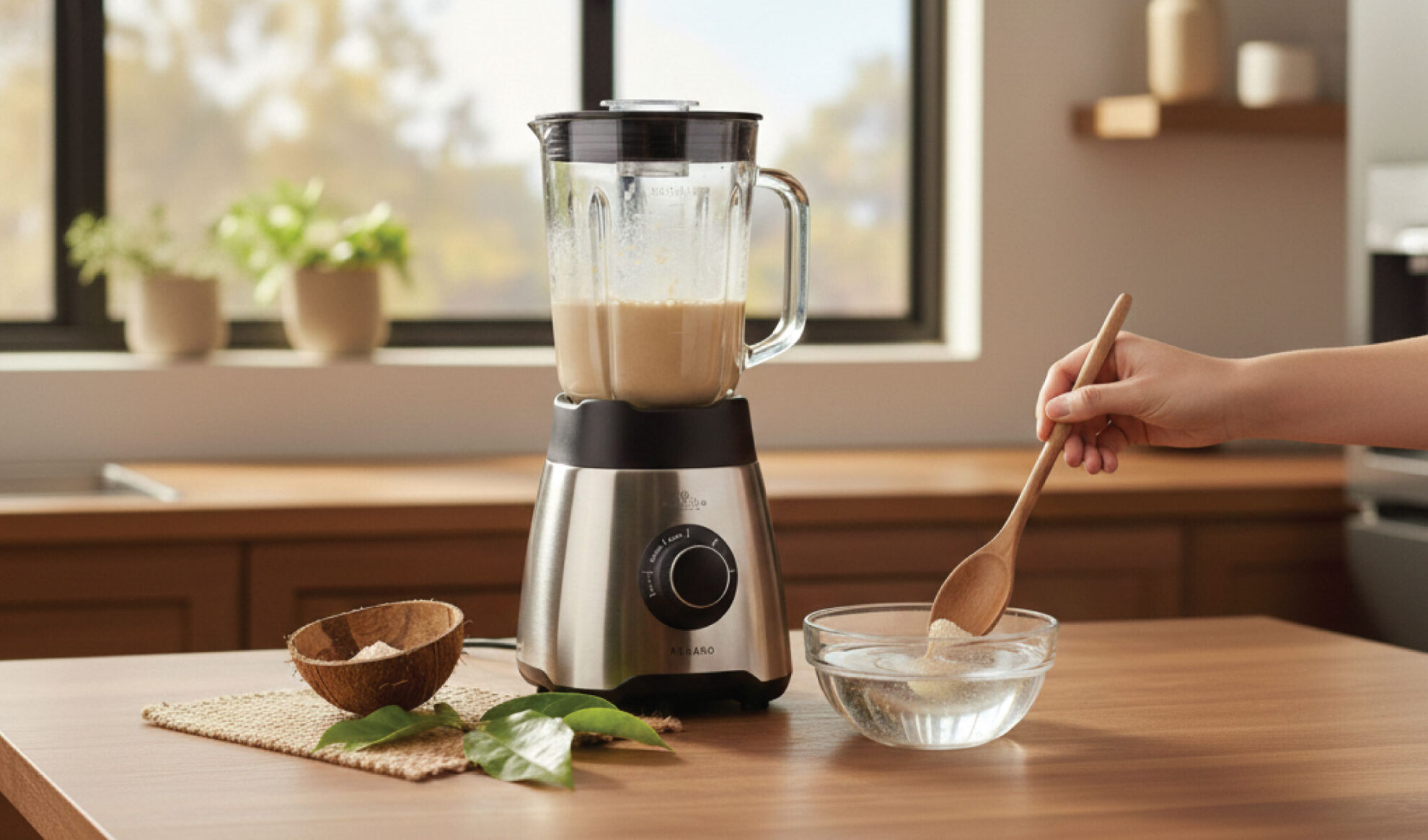
Add Kava powder and warm water directly to a blender. Run on high for 3 to 4 minutes. The rapid agitation does the work that kneading would accomplish manually. After blending, strain through a fine-mesh bag to remove root particles. One note: clean your blender immediately after use. Kava residue gets sticky when dry and becomes a hassle to scrub off later.
Instant Kava (Micronized)
If you want the easiest approach, instant or micronized Kava is your answer. This product has been processed so finely that you can mix it directly into water without straining. Add powder to warm or room-temperature water, stir in your serving, and drink. Instant Kava removes the preparation barrier entirely. The tradeoff is texture; you’re consuming the full root powder, so it tends to be grittier than strained Kava.
Note: Kats Botanicals makes micronized Kava powders for easy tea preparation and enjoyment.
Cold Brew Kava
Cold brew trades time for smoothness. Place Kava powder in a strainer bag, submerge in room-temperature or cold water, and refrigerate for 4 to 8 hours. Give the bag an occasional squeeze during this time. The result is milder and smoother-tasting, though cold water extracts kavalactones less efficiently than warm. It’s a good option if you prefer a gentler experience or want to prepare ahead.
Comparing Preparation Methods
| Method | Prep Time | Strength | Best For |
| Traditional Kneading | 10-15 min | Strong | Full experience, ritual |
| Blender | 5-7 min | Strong | Speed without sacrifice |
| Instant/Micronized | 1-2 min | Moderate to strong, depending on how much powder is used | Convenience, beginner-friendly |
| Cold Brew | 4-8 hours | Mild-Moderate | Smooth taste, advance prep, beginner-friendly |
All of these methods are customizable. Simply adjust the amount of Kava powder you use. Products like those at Kats Botanicals are made without fillers for a purer, more full-bodied experience.
Getting the Taste Right
Let’s be honest: Kava can be an acquired taste. It’s earthy, woody, and bitter. Think medicinal root tea rather than pleasant herbal blend. The texture is thicker than water with a slight oiliness that coats your mouth.
Within a few sips, you’ll notice a mild numbing or tingling on your tongue and lips. This is completely normal and actually indicates your Kava was prepared properly. The numbing comes from the kavalactones themselves, so it’s a sign that extraction worked.
Flavor Helpers
Many people add something to make Kava more palatable:
- Coconut milk or coconut water (the fat may help absorption)
- Honey for sweetness
- Vanilla extract
- Chocolate syrup
- Fruit juice
There’s no wrong way to make Kava taste better. Experiment until you find what works for you. Some people grow to appreciate the earthy taste over time, but there’s no shame in masking it.
Important Habit
To keep the active compounds in full suspension, stir a few times while you enjoy your cup of Kava.
Storing Kava and Prepared Tea
Keep dry Kava root or powder in an airtight container in a cool, dark cupboard to preserve kavalactone potency. Avoid humidity and direct sunlight.
Prepared Kava tea loses freshness quickly due to oxidation. Store in an airtight container in the fridge. Consume within a few hours or refrigerate up to 24 hours max. Shake or stir vigorously before drinking.
Common Mistakes When Making Kava Tea
Avoid these common mistakes which can weaken your experience:
- Boiling Water: High heat can degrade kavalactones and produce weaker tea. Stick with warm water, roughly the temperature of a comfortable bath. If it’s too hot to keep your finger in, it’s too hot for Kava.
- Kneading Shortfalls: Five minutes of half-hearted squeezing won’t extract much. Commit to at least 10 minutes of active kneading with the traditional method. Your arms might get tired, but that’s part of the process.
- Serving Size Shortfalls: The packaging instructions on your product will tell you how much equals one serving. Adjust this based on your personal sensitivity and desire. Using smaller amounts to avoid the taste or using poor-quality Kava will produce weaker teas.
- Impatience: Kava takes time to get into your system based on the speed of your metabolism. Give it 20 to 30 minutes for those effects to settle into your system.
Tip: Love going to Kava bars? Have a favorite Kava tea there? Ask your Kavatender for tips on making the best teas!
When to Drink Kava Tea
Most people enjoy Kava in the evening or during calm social settings. Some users may find it too calming for daytime rituals, but let your experience be your guide. Build a calming ritual, enhance a social get-together with friends, or simply settle in for a comfy weekend. Relax, and enjoy creating your own Kava rituals.
Kava Tea vs Other Kava Forms
Kava tea offers a hands-on practice many enjoy. If the earthy taste or preparation is not for you, Kava comes in other forms. There are Kava Extract Tinctures you can drip into a beverage or smoothie. Kava Gummies offer an edible version of your new favorite herb. There are even Kava + Kratom Shots for a synergized experience.
Buying Quality Kava for Tea
Poor Kava sourcing often results in weak suspension or off-flavors during preparation. Here’s how to get the best Kava for your teas:
- Seek noble Kava varieties (not tudei): These are the high-quality Kavas with more predictable results. Tudeii Kavas may leave you feeling groggy or impart unnecessary side effects.
- Buy the right texture: Medium grid Kavas are great for optimal kneading. Finer ground Kavas (micronized) offer stir-in flexibility without the need to knead or strain.
- Buy lab-tested Kava from trusted sources, only: This is the only way to buy contaminant-free, proven potency versions of Kava root. Quality powder yields a thicker, more consistent extraction and milder earthy notes.
 The Kats Botanicals Kava Promises
Kats Botanicals sources noble Kava from trusted Pacific partners with full lab testing for purity. Every batch meets traditional quality standards while offering modern convenience. This ensures your Kava tea preparation delivers the smooth, reliable experience Kava is known for.
Sip easy knowing our Good Manufacturing Practices are in place for your safety and enjoyment of all our wellness products. We offer lab results in the form of a Certificate of Analysis. This details the safety screenings and exact kavalactone content.
For more information on the safe use of Kava, see the American Kava Association website.