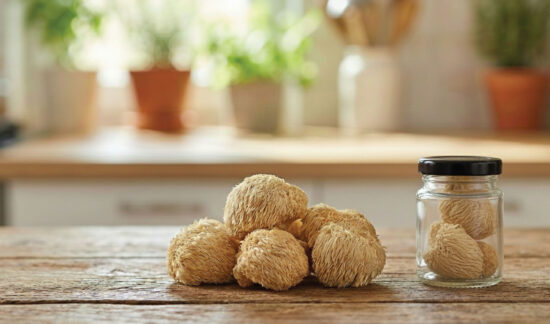
Lion’s Mane mushrooms are trending with wellness enthusiasts, and for good reason. Scientifically known as Hericium erinaceus, its compounds have been studied for their potential to support cognitive and mood health.
But you may be wondering – How do you know how many of them to eat? Do you have to eat them every day to get their potential benefit? And you’re onto something important; consistency, dosing, and practice.
This uncertainty in herbal use leads us to a variety of modern Lion’s Mane forms. Today you can find powders, capsules, or convenient, easy-to-use tinctures. Many prefer tinctures for easy, adjustable dosing, and a long shelf life.
Can you make the tinctures at home? Yes. Learning how to make Lion’s Mane tinctures at home can be rewarding (and fun!). You don’t need a full laboratory, but you do need to follow procedure to make safe, consistent tinctures. As you’ll see in our DIY Lion’s Mane tincture recipe, you’ll also need a healthy dose of patience.
Let’s walk through the process, ingredients, and precautions for crafting a Lion’s Mane tincture from start to finish. Get out your beakers…time to make some tinctures.
What Is Lion’s Mane and Why Make a Tincture?
Let’s get the basics under our belts. That’s important to do before you start tinkering or buy a case of Lions Mane mushrooms.
First, What’s a Tincture?
A tincture is an extract of a botanical substance, like Lion’s Mane. They’re created by soaking a botanical ingredient in alcohol or another solvent to draw out its active compounds. In the case of Lion’s Mane, a double extraction method is often used.
Learn more about what are functional mushrooms and how to use them for wellness.
Double Extraction
Some compounds have a higher affinity to water. Thus, using water to draw them out makes sense. The polysaccharides are a good example. Other compounds, like the hericenones are not drawn to water at all so they are not extracted unless you use an alcohol solvent. Each step helps release different beneficial elements of the mushroom’s fruiting body. (The fruiting body is the above-ground portion of the mushroom.)
Factors like alcohol concentration, soak time, and contamination control all affect the final result.
About Lion’s Mane Mushrooms
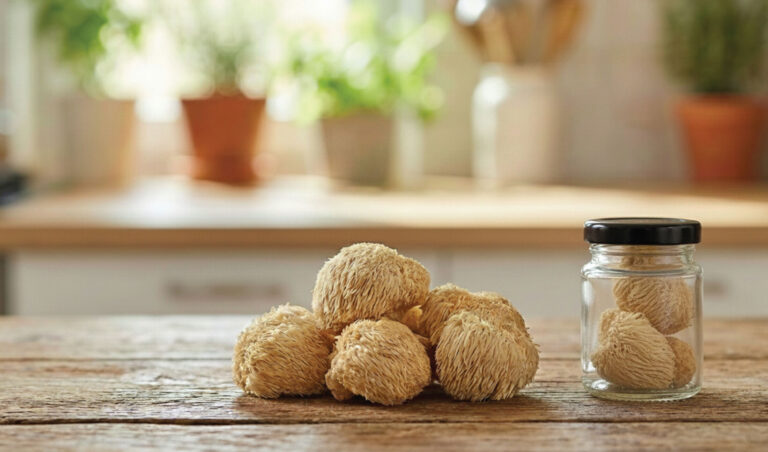
Lion’s Mane is a soft, white, cascading mushroom that grows on hardwood trees. It looks almost like a burst of white noodles, or hair, and has a sweet, almost nutty flavor. Eastern cultures have harvested and used it for centuries. Ancient Chinese healers called it “Yamabushitake” (mountain monk’s beard). Japanese monks used Lion’s Mane to brew mushroom teas for meditation. Native American tribes in the Pacific Northwest crushed it into poultices to use as a salve.
Today, researchers want to know why so many cultures of people have found non-culinary use for Lion’s Mane. Researchers have explored several areas, mostly in cognitive and neuroprotective science.
- Potential cognitive health support from studied compounds.
- Potential neurotrophic and neuroprotective effects.
- Compounds like erinacines and hericenones may stimulate nerve growth factor.
Why Make Lion’s Mane Tincture?
Naturally, wellness seekers want an easy way to take Lion’s Mane, without eating a pile of mushrooms every day. A tincture allows you to preserve and concentrate those compounds in a convenient, easy-to-dose liquid. Water and food-grade ethanol (or sometimes vodka for DIY) are used to make the extractions.
While better done in a GMP lab, you can make them at home and produce a shelf-stable solution that can be stored for months without refrigeration.
Recommended Read: Do Mushroom Tinctures Work? A Comprehensive Guide to Functional Mushroom Tinctures
DIY Tincture Benefits
- Control your ingredients: Source organic mushrooms and know exactly what goes in.
- Learn extraction science: Understand alcohol vs water-soluble compounds hands-on.
- Cost-effective: Make multiple batches cheaper than commercial products.
- Custom potency: Adjust ratios for your preferred strength.
- Fresh results: Use immediately harvested mushrooms for maximum freshness.
DIY Tincture Cons
- No potency standardization: Results vary by batch, mushroom quality, and technique.
- Risk of contamination: Home setups lack sterile lab conditions.
- Inconsistent alcohol content: Hard to measure precisely without equipment.
- Time-intensive: 4-8 weeks alcohol soak + water phase.
- Safety variables: High-proof alcohol handling requires caution.
 Step-by-Step: How to Make Lion’s Mane Tincture at Home
Ready to try your first batch? Gather the ingredients, tools, materials, and follow the procedures below.
Materials and Ingredients You’ll Need
Gather the supplies to prepare a Lion’s Mane tincture:
- 1 cup of dried Hericium erinaceus (or 2 cups fresh)
- 2 cups of 80–95% food-grade ethanol (vodka or Everclear diluted with water)
- Distilled water
- Two glass jars with tight-sealing lids
- A saucepan or slow cooker
- Cheesecloth or coffee filters for straining
- Small funnel
- Amber glass dropper bottles for storage
Sanitize all tools before starting to prevent contamination. Always use glass containers rated for high-proof alcohol. Label everything clearly, especially alcohol containers. To measure the alcohol content of your final solution, you’ll need to use a proofing hydrometer or alcoholmeter.
Alcohol Extraction (Ethanol Phase)
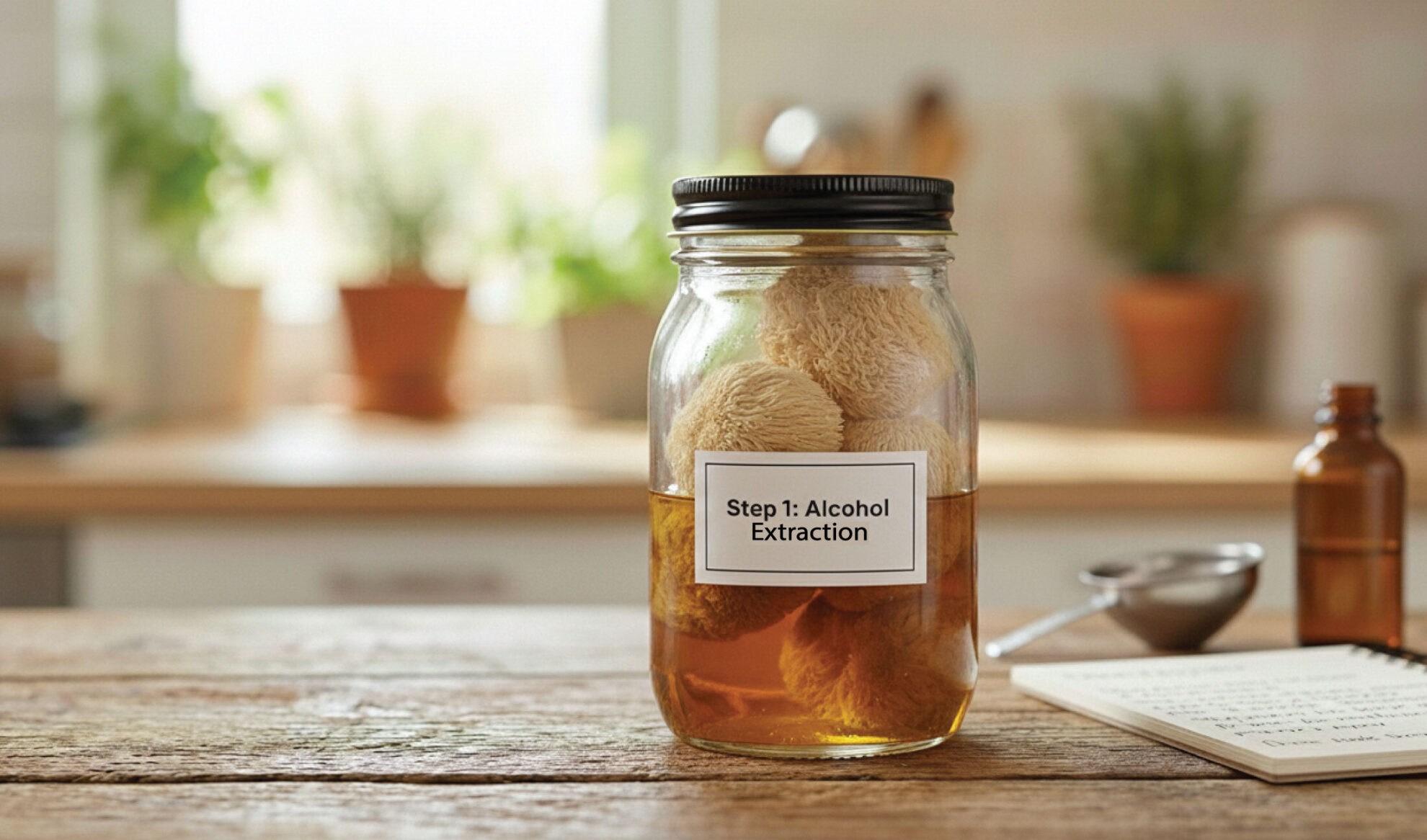
Fill a clean glass jar halfway with dried Lion’s Mane and pour alcohol over it until the material is fully submerged. Seal tightly and store it in a cool, dark place for 4–8 weeks. Shake it gently once a day to promote even extraction. The alcohol will extract fat-soluble compounds, such as hericenones. When the soak period ends, strain, reserving the alcohol solution and the mushrooms.
Water Extraction (Hot Water Phase)
Simmer the same mushrooms used in the alcohol soak in distilled water for about 1–2 hours. Keep the temperature below boiling (around 160–175°F) to preserve heat-sensitive compounds. This draws out polysaccharides and beta-glucans that aren’t soluble in alcohol. Allow the liquid to cool, then strain and discard the mushroom solids.
Learn more about functional mushroom extracts made by the experts.
Combining Extracts and Bottling
Mix the alcohol and water extracts in roughly equal parts. Aim for a final alcohol content near 25–35%, which helps preserve the tincture while keeping it safe for consumption. To measure this, use a proofing hydrometer or alcoholmeter.
Pour the finished liquid into sterilized amber bottles using a funnel. Label with the date and ingredients. Store in a cool, dark cabinet for up to one year.
Can you use other mushrooms with the Lion’s Mane? Yes. You can incorporate other mushrooms or botanicals in your DIY tinctures if they pair well. It may be difficult to get the proportions right for the maximum wellness benefit. For those looking to support focus, Kats Botanicals has created a tincture of Lion’s Mane and Ginkgo Biloba with the perfect ratios. The tincture is lab-tested for purity and even potency.
Understanding Potency, Ratios, and Shelf Life
The strength of your tincture depends on the ratio of mushroom material to solvent. A common starting point is a 1:5 ratio, one part dried Lion’s Mane to five parts solvent (a mix of alcohol and water). Using too little alcohol may lead to spoilage, while too much can dilute potency.
Extraction time also affects concentration. A minimum of two weeks per alcohol soak allows compounds to infuse properly, though at least 4 weeks is recommended. Water extraction, meanwhile, should not exceed two hours of gentle heat to avoid degradation. After combining, shake the finished tincture occasionally to maintain uniformity.
For proper dosages, be sure to check out our complete user-friendly guide: Mushroom Tincture Dosage: How to Find Your Perfect Amount.
When to Discard Your Tincture
Homemade tinctures appropriately stored in amber bottles may last 12–18 months. That said, DIY mushroom tinctures can spoil. Exposure to sunlight or temperature fluctuations can reduce potency and flavor. For best results, keep your tincture in a dark cabinet between 55°F and 70°F.
Discard your solution if you notice any sour or off odor, persistent cloudiness or new sediment, unusual color changes, visible mold, or an off taste. Also discard if storage conditions have drifted (exposure to heat or light, or improper sealing), or if alcohol content falls outside the preserving range. When in doubt, err on the side of safety and prepare a fresh batch with sanitized equipment and a fresh batch of Lion’s Mane.
DIY vs Commercial Lion’s Mane Tinctures: What’s the Difference?
Making tinctures at home can be fun and educational for herbal enthusiasts, but they’re not always efficient or the safest route to wellness. Professionally made, lab-tested tinctures provide better assurance of consistent potency and safety.
Solving the Potency Problem
DIY mushroom tinctures are not usually consistent. The potency may be higher with one batch you make over the next. Commercial mushroom tinctures solve this problem with standardization of the compounds. This produces the same strengths for each bottle.
Commercial tinctures from brands like Kats Botanicals undergo third-party testing for alcohol concentration, microbial safety, and heavy metals. Kats Botanicals takes it a step further, following strict cGMP standards, which indicates high commitment to safety and quality.
Preventing the Risk of Contaminants
Lion’s Mane mushrooms are hyperaccumulators. This means they absorb heavy metals like cadmium, mercury, and arsenic from the substrates they grow on. Since tinctures concentrate the compounds, any present heavy metals can accumulate in your tincture. Buying lab-tested mushroom tinctures avoids this risk.
 Safety and Quality Considerations
When handling high-proof alcohol, always work in a well-ventilated area away from open flames or heat sources. Use food-grade ethanol only; never use isopropyl alcohol or industrial solvents. Wear gloves and eye protection if necessary. Store your tincture out of the reach of children or pets.
Lion’s Mane tinctures are not FDA approved. This means there are no standards set for their safety and use. It also means they are not approved to diagnose, treat, or prevent any medical condition. Studies have examined Lion’s Mane for its potential to support cognitive and nerve health, but evidence remains preliminary.
To ensure safety, look for commercial tinctures that include batch-specific lab reports called Certificates of Analysis, or COAs. Look for clear ingredient lists and recommended dosage guidance. Brands like Kats Botanicals prioritize lab testing, clean extraction methods, and transparent labeling. These are the standards that protect consumers and support the confident, safe use of wellness botanicals.