It used to be that “where to buy Kava” depended on who you knew, or word of mouth. You either knew someone who knew someone, or you didn’t drink Kava. Today, you can buy Kava online or in-store at head shops, health food stores, or in some cases gas stations. A growing trend is to buy Kava beverages at Kava bars, a fast-growing alternative social scene to alcohol bars.
With so many Kava options available, where is the best place to buy Kava near you, and what formats should you buy?
The quick answer is this: Buy Kava where the product is high-quality, available at your convenience, affordable, and comes in the formats you love or want to try. This guide will give you the pre-shopping details you’ll need to sort the marketing sales strategies from the Kava products worth your money.
Buying Kava Online
Buying Kava online is outpacing in-store sales now that there’s such a wide selection. Prices are typically lower, and disclosure on sourcing and testing tends to be better than in physical stores.
Specialty Kava Brands
Kava brands that specialize in botanicals, Kava products, and similar wellness products will be the first (and often best) way to buy Kava. Kats Botanicals falls into this category.
These brands are easy to differentiate if you check out their website, or if the sales clerk is knowledgeable.
You’ll see:
- Kava products are featured and highlighted, proudly. (Not hiding in a dusty corner, or appearing sporadically on the website.)
- Website information is complete and informative; product sourcing, ingredient info, lab testing results, etc.
- Variety of Kava formats, regional varieties like Vanuatu or Fiji.
- Noble Kava varieties only.
You’ll pay more than you would for bargain-bin Kava, but the product is more likely to deliver what the label claims.
General Supplement Retailers
Amazon and iHerb, along with similar general retailers like Vitacost, carry Kava alongside thousands of other supplements. The pricing is competitive, but quality is uneven. Many of these products are point-of-sale only with no little vendor support or usage guidance. Lab-testing is hit or miss. Reviews are often unreliable indicators of actual quality. These sources offer convenience at a lower price point, but can be more risky in terms of product safety or freshness.
If you’re buying from a general retailer, stick to brands you’ve already researched independently. Don’t treat Amazon’s bestseller tag as a signal of product quality; it’s a signal of product velocity, which isn’t the same thing.
What to Avoid Online
The online Kava you should skip is the bargain product with vague labeling that doesn’t tell you:
- The Kava variety (noble vs non-noble)
- The kavalactone percentage
- The country of origin
- Whether it’s been lab-tested
These are indicators the brand has either cut corners or doesn’t want you to know they did. Either way, you’re likely not getting a reliable product.
Kava Bars
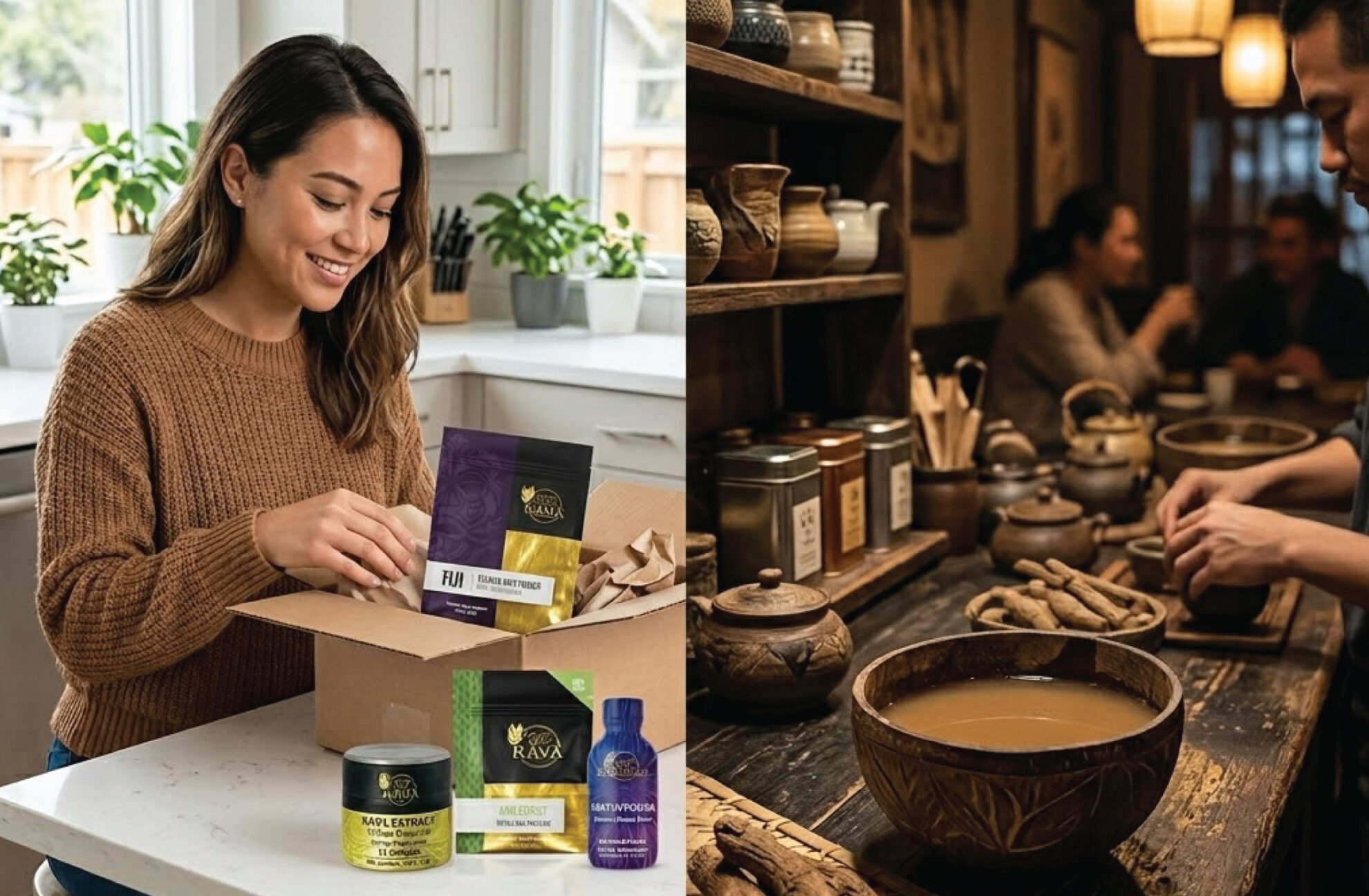
Kava bars are the fastest-growing channel for Kava in the United States, especially in Florida and Texas, with other concentrations in California and parts of the Midwest. They serve prepared Kava drinks (usually made from traditional root powder mixed with water) and often have a small retail section where you can buy powder or capsules to take home.
The appeal is experiential. A Kava bar is where you go to drink a bowl prepared by someone who knows what they’re doing, usually in a setting that leans more toward a tea house than a bar. Kava bars are a good way to try Kava for the first time without committing to a $30 bag of powder that might sit unused if you don’t like it. Make sure to ask the Kavatender about other botanical drinks while you’re there, as these establishments often carry Kava and Kratom, CBD, Matcha and a variety of other niche drinks.
The downside: prices per serving are higher at a Kava bar than at home. A bowl of Kava at a bar might cost $7 to $15, depending on the location and potency. For regular users, buying powder or capsules for home use is the cheaper path.
Kava bars also vary in quality. Some serve excellent traditional preparations from reputable source powder; others use lower-grade products or skimp on preparation time. If you’re trying a new Kava bar, order a single bowl before committing to a membership or multi-bowl journey.
Not sure how Kava drinks will affect you? Learn what to expect for Kava effects and whether you’ll need to get an Uber.
Finding Kava Bars Near You
The main ways to find Kava bars in your area:
- Google Maps search for “Kava bar” with your city name
- The Kalm with Kava directory maintains a list of Kava bars in the US
- Instagram, Facebook, and local forums often have current information on bar openings and closures
If your area doesn’t have a Kava bar, you have two options: drive to the nearest one that does, or start buying Kava for home preparation. For most people outside major metro areas, option two is the practical answer.
Can’t find a Kava bar near you? Try making your own Kava tea recipes right at home!
Buying Kava in Stores
Brick-and-mortar Kava sales happen in a few different store types, and the quality varies enough between them that knowing which is which matters.
Health Food Stores
Natural grocers and health food stores (Sprouts, Whole Foods, smaller independents) often stock Kava capsules or tinctures in the supplement section. Selection is limited, usually two or three brands, and pricing is middle of the road. They’re the most convenient channel if you want a bottle of Kava without waiting for shipping; just don’t expect the selection of a specialty online retailer.
Smoke Shops and Gas Stations
Kava is increasingly stocked in smoke shops, vape shops, and some gas stations, usually in the form of ready-to-drink beverages or shots. The convenience is real; the quality is hit or miss.
The honest take: smoke shop Kava is rarely the product you’d choose if you had options. Many ready-to-drink formats have low kavalactone content and added sweeteners. If a smoke shop is your only option, stick to products from brands you recognize from online research, and read the label for kavalactone content before buying.
Seen kratom, kava, and CBD products in your local gas station? Be sure to read up on gas station Kratom and what to avoid and look for when buying conveniently.
Specialty Tea and Supplement Shops
Some tea shops, especially in coastal cities, carry Kava as part of a herbal drink selection. Staff at a specialty shop are more likely to know what they’re selling, and the product is typically sourced with more attention than what you’d find in a smoke shop.
Can You Buy Kava Near You?
The simplest way to check if Kava is sold near you: search Google Maps for “Kava,” “Kava bar,” or “Kratom and Kava.” The results will usually include Kava bars, smoke shops that carry Kava, and specialty health food stores that carry products like Kava Kratom shots for an on-the-go wellness boost.
A few practical tips for local sourcing: call before you drive, since stock levels at smaller stores vary. Ask what brands the store carries; if staff can’t tell you, that’s a yellow flag. And compare prices online first because in-store Kava is almost always more expensive than the same product online. The convenience premium is fine if you need Kava today; it’s not fine if you’re building a regular routine.
What Formats of Kava to Look For
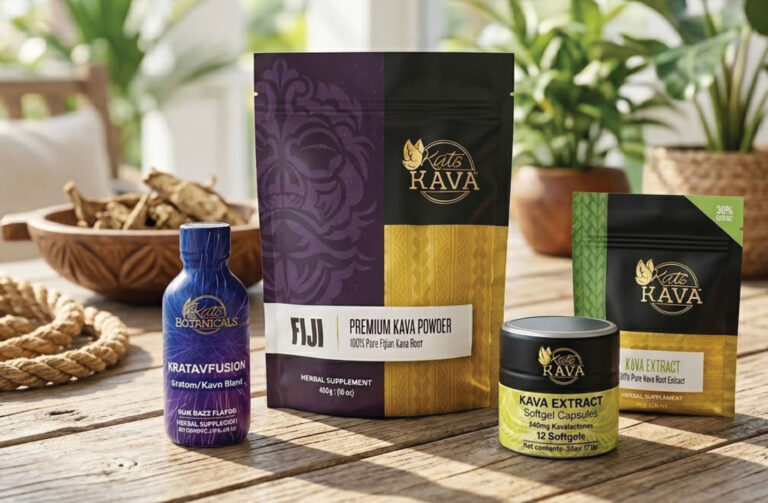
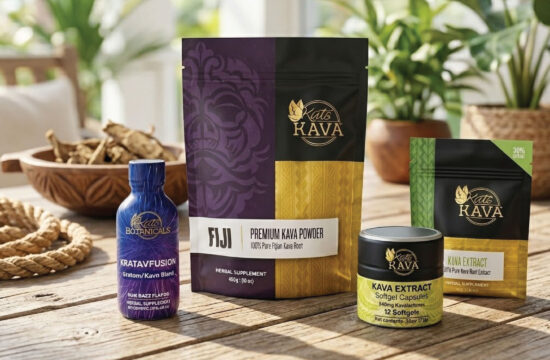
You’ll encounter several different formats when you’re shopping for Kava. Here are some of those formats and what Kats offers at our inclusive online store:
Traditional root powder. Ground Kava root, usually sold in 1 oz, 4 oz, 8 oz, or 1 lb bags. You prepare it at home by kneading it into water. Lowest cost per dose, widest kavalactone spectrum, requires prep.
- Kava Blends: Kava blends combine two or more regional varieties for a blended experience. See Kats Kava Blend.
- Regional Kavas: Regional Kavas like Solomon Kava and Fiji Kava tap into the nuance of regional cultivars.
Kava capsules. Pre-measured doses of ground root or standardized extract in swallowable form. Convenient, travels well, no prep required. Higher cost per kavalactone milligram than powder.
- Kava capsules can easily be heavy on the fillers, light on the kavalactones. To offer a better, more effective alternative, Kats Botanicals is expected to launch a capsules version of their premium Kava extracts later on in 2026.
Kava softgels. A newer format that puts Kava extract in an oil-based carrier for faster absorption. Typically stronger per piece than ground-root capsules.
- These Kava Extract Softgels have higher kavalactone content than traditional Kava root powders.
Kava extracts and tinctures. Concentrated liquid forms, usually sold in small dropper bottles. Faster onset than capsules, more precise dosing than powder, higher price per milliliter.
- These Kava Extract Powders offer 30% kavalactone content.
Kava gummies. Chewable sweetened format, easier on the palate than powder or tincture. Works well for new users who want to skip the traditional taste profile.
- Kava Gummies are fairly new on the scene, featuring a rich berry flavor, easily one of the most popular formats for modern Kava use.
Ready-to-drink beverages and shots. Pre-mixed Kava drinks in bottles or cans. Convenient, usually lower in Kavalactones than a traditionally prepared drink. Best for casual or occasional use rather than regular routines.
- Kava Shots are coming soon to Kats Botanicals lineup of liquid botanical shots.
Which format you should buy depends on your experience level, how often you plan to drink Kava, and whether you care about the traditional preparation ritual. If you’re not sure, capsules are the low-risk starting point.
What Separates a Good Kava Product From a Bad One
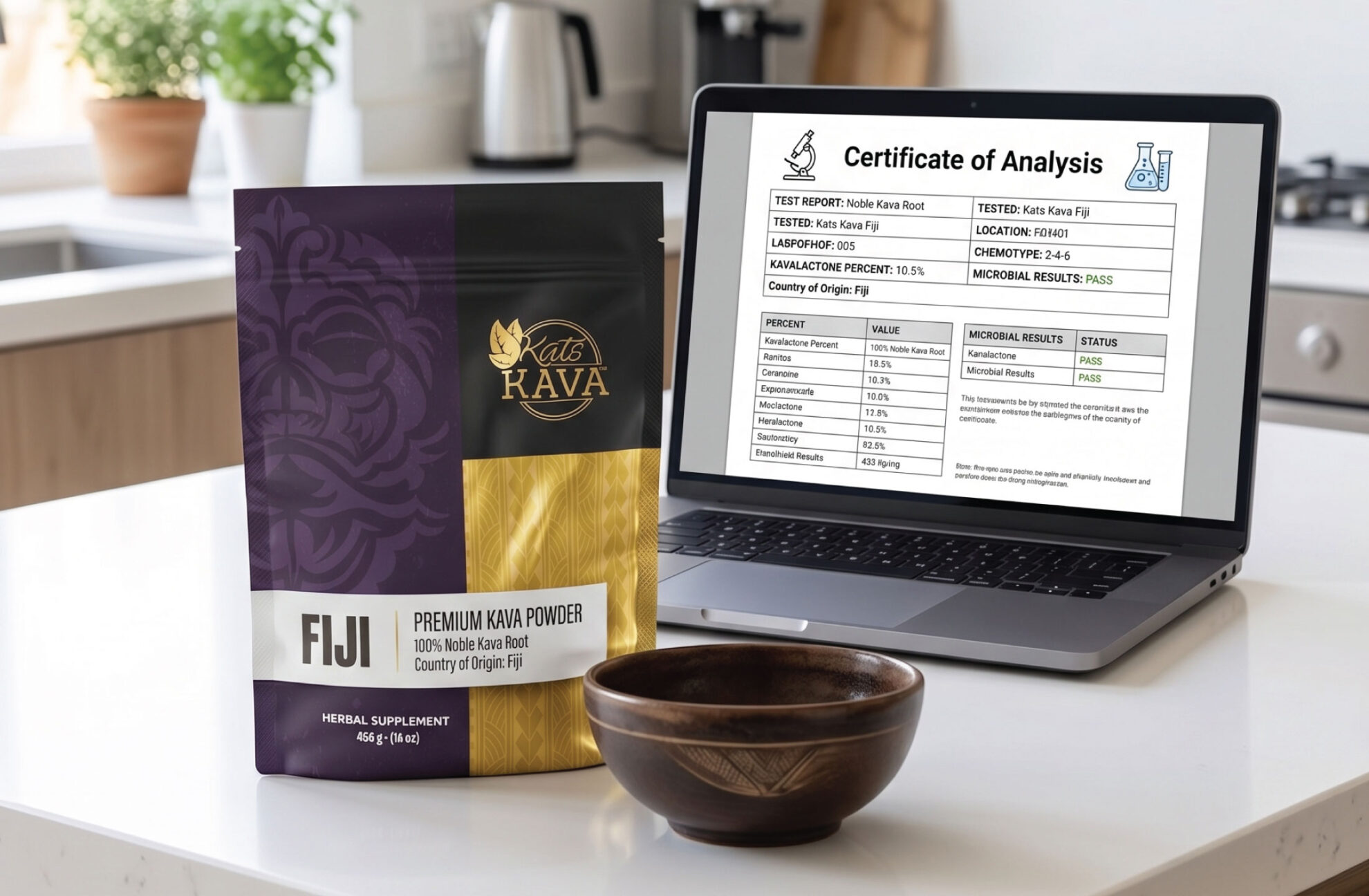
A few specifications separate Kava worth your money from Kava that isn’t:
- Noble variety. Only noble Kava cultivars should be consumed for beverage use. Non-noble (also called “tudei” or “two-day”) varieties have a different kavalactone profile and are associated with more side effects. Quality brands disclose cultivar and variety.
- Country of origin. Vanuatu and Fiji produce the highest-regarded Kava. Other South Pacific nations also produce quality Kava. Kava from outside this region is rarer and worth extra scrutiny.
- Kavalactone percentage. Listed on the label for reputable products. Noble powder usually tests between 4% and 8%. Extract products can range from 15% to 70% depending on preparation.
- Third-party lab testing. For contaminants, heavy metals, and kavalactone concentration. A brand that doesn’t test is guessing.
- Clear serving information. Either a measured weight for powder or a per-capsule kavalactone content for encapsulated products.
The nutshell version here is that wherever you buy Kava, whether online or in stores, or at a new local bar, higher quality Kava will always be best. Price, alone, doesn’t indicate the quality so checking the label, the website, and online reviews are all essential to getting the Kava experience you want.