You bought moringa powder because you heard about its nutritional profile. Now it’s sitting in your kitchen and you’re wondering what to actually do with it. The good news is that moringa powder is versatile and easy to incorporate into your routine once you know the basics.
This guide covers everything you need to start using moringa powder effectively: how much to take, when to take it, and the various methods for utilizing this unique nutritional supplement. We’ll also cover how to find the best moringa supplement for your needs. Let’s get into how to use moringa powder for your wellness.
Moringa Powder Basics
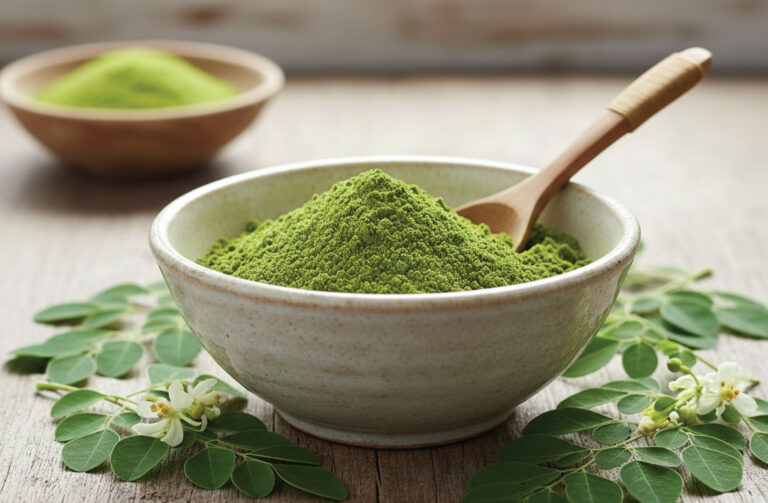
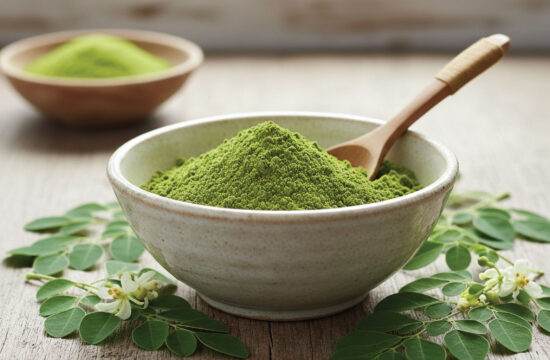
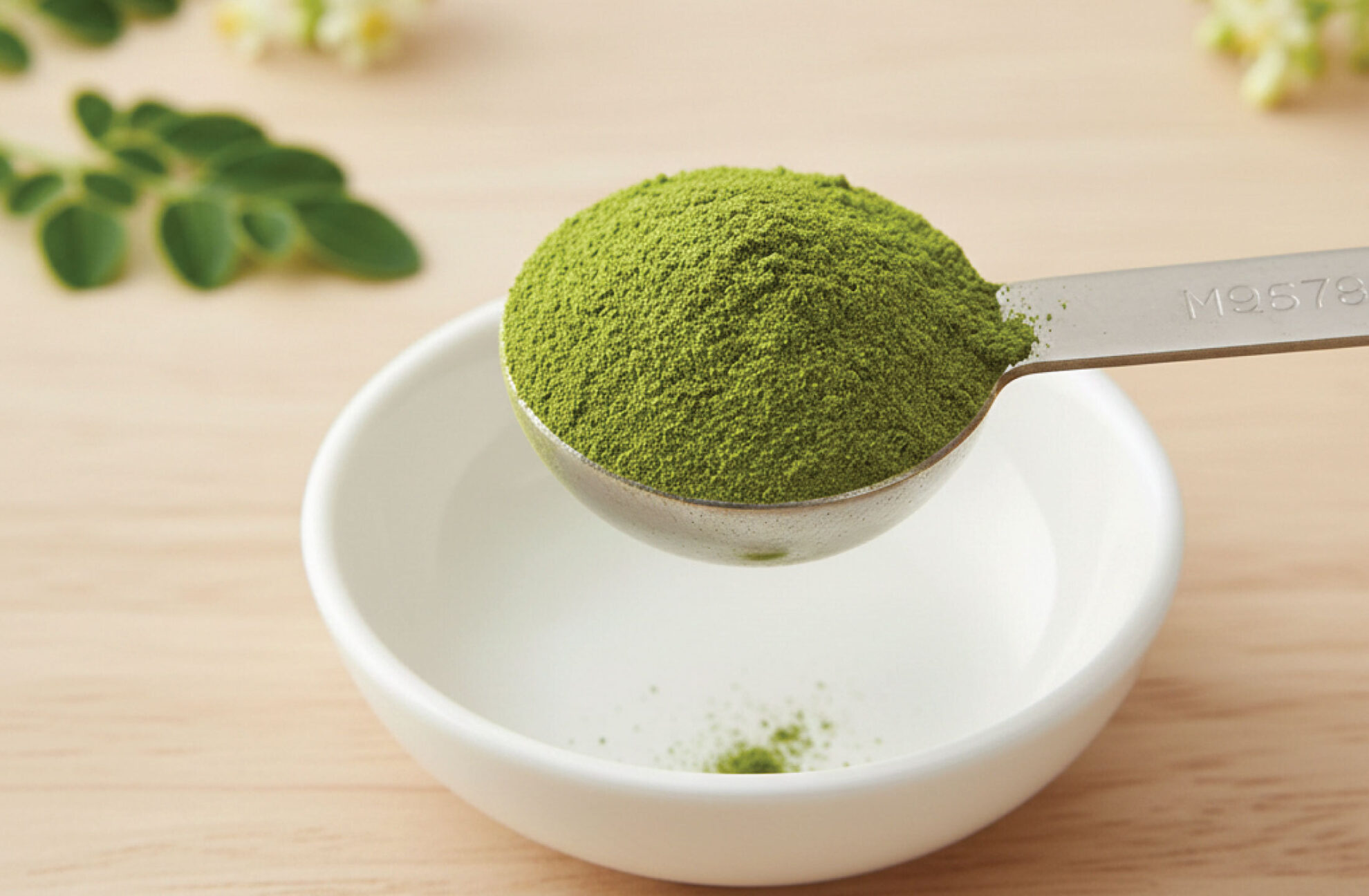
Moringa powder comes from dried, ground leaves of the Moringa oleifera tree, sometimes called the drumstick tree or miracle tree. The powder is deep green, fine in texture, and packed with vitamins, minerals, and plant compounds.
Why Take Moringa Powder?
Moringa powder delivers concentrated essential vitamins, minerals, and antioxidants naturally found in the leaves of the Moringa oleifera tree. It provides up to 20 times more nutrition than common fruits and vegetables. For example – 7x more vitamin C than oranges and 10x more potassium than bananas!
Daily use may support:
- Healthy metabolism
- Better sleep
- Clearer skin
- Stronger immunity
- Joint comfort
Results often appear within a few weeks when taken consistently as part of your routine.
Learn more about the Benefits of Moringa Powder
What It Tastes Like
Let’s address this upfront: moringa has a distinct taste. Most people describe it as earthy, slightly bitter, and reminiscent of green tea or matcha with a stronger vegetal note. Some find it pleasant; others need to mask it.
The taste intensity varies by brand and processing method. Higher-quality moringa that’s been carefully dried tends to taste cleaner than poorly processed powder. If your moringa tastes overwhelmingly bitter or musty, the quality may be suspect.
Starting Slow
If you’re new to moringa, don’t start with a full dose. Your digestive system needs time to adjust to the fiber and phytochemicals (active plant compounds). Beginning with too much can cause stomach discomfort or digestive upset.
Start with a quarter to half teaspoon for the first few days. If you tolerate that well, gradually increase to your target dose over a week or two.
 Moringa Dosage: How Much to Take
There’s no official recommended daily allowance for moringa since it’s a dietary food supplement that’s not regulated in the U.S. However, common usage patterns and research studies can provide reasonable guidance.
Beginner Dosage
New users should start with 1/4 to 1/2 teaspoon (roughly 1-2 grams) daily. This allows your body to adjust while still providing a modest amount of the nutrients.
Standard Daily Amount
Most regular moringa users take 1 to 2 teaspoons (3-6 grams) daily. This range appears in many scientific studies on moringa benefits and represents the sweet spot for most people.
Upper Limits
Some users take up to 1 tablespoon (around 10 grams) daily, but more isn’t necessarily better. Higher doses increase the likelihood of digestive side effects without proportionally increasing benefits.
If you want to take more than 2 teaspoons daily, split it into multiple servings rather than taking it all at once.
Building Up Gradually
The key to finding your ideal dose is gradual adjustment. Increase by small increments every few days, paying attention to how you feel. If you notice digestive discomfort, back off to the previous dose and stay there longer before trying to increase again.
Best Time to Take Moringa
Timing matters less than consistency, but some patterns work better for most people.
Morning vs Evening
Most users prefer taking moringa in the morning. The nutrients and plant compounds may support natural energy levels, making it a good addition to your morning routine. Some people report that taking moringa late in the day affects their sleep, though this isn’t universal.
If you’re sensitive to anything that might be mildly stimulating, avoid moringa within a few hours of bedtime until you know how it affects you.
With Food vs Empty Stomach
Moringa can be taken with or without food. Taking it with food may reduce digestive sensitivity, especially for new users. Moringa powder is amphiphilic, meaning it contains both water-soluble and fat-soluble compounds. For this reason, it may help to take it along with some fat:
- Mix into a smoothie with nut butter or avocado.
- Stir into oatmeal with milk.
- Add to coffee with cream.
If moringa upsets your stomach when taken alone, try having it alongside breakfast or another meal.
Consistency Matters
Whatever time you choose, try to be consistent. Taking moringa at the same time each day helps establish a habit and may help your body adapt to it more smoothly.
Methods for Taking Moringa Powder
Moringa powder is a flexible supplement, making it easy to work into your routine. Here are some popular ways to take moringa powder. Choose the method that fits your lifestyle and taste preferences.
Mixed Into Water or Juice
The simplest approach: stir moringa powder into a glass of liquid. Water works but does nothing to mask the taste. Juice is preferred for many users to mask moringa’s earthy flavor. Gentle, sweet, low-acid juices work best:
- Apple juice
- Orange-pineapple blend
- Pear juice
- Pineapple juice
Add your measured powder to about 8 ounces of liquid, stir or shake vigorously, and drink. The powder doesn’t fully dissolve, so drink it before it settles.
Smoothies and Shakes
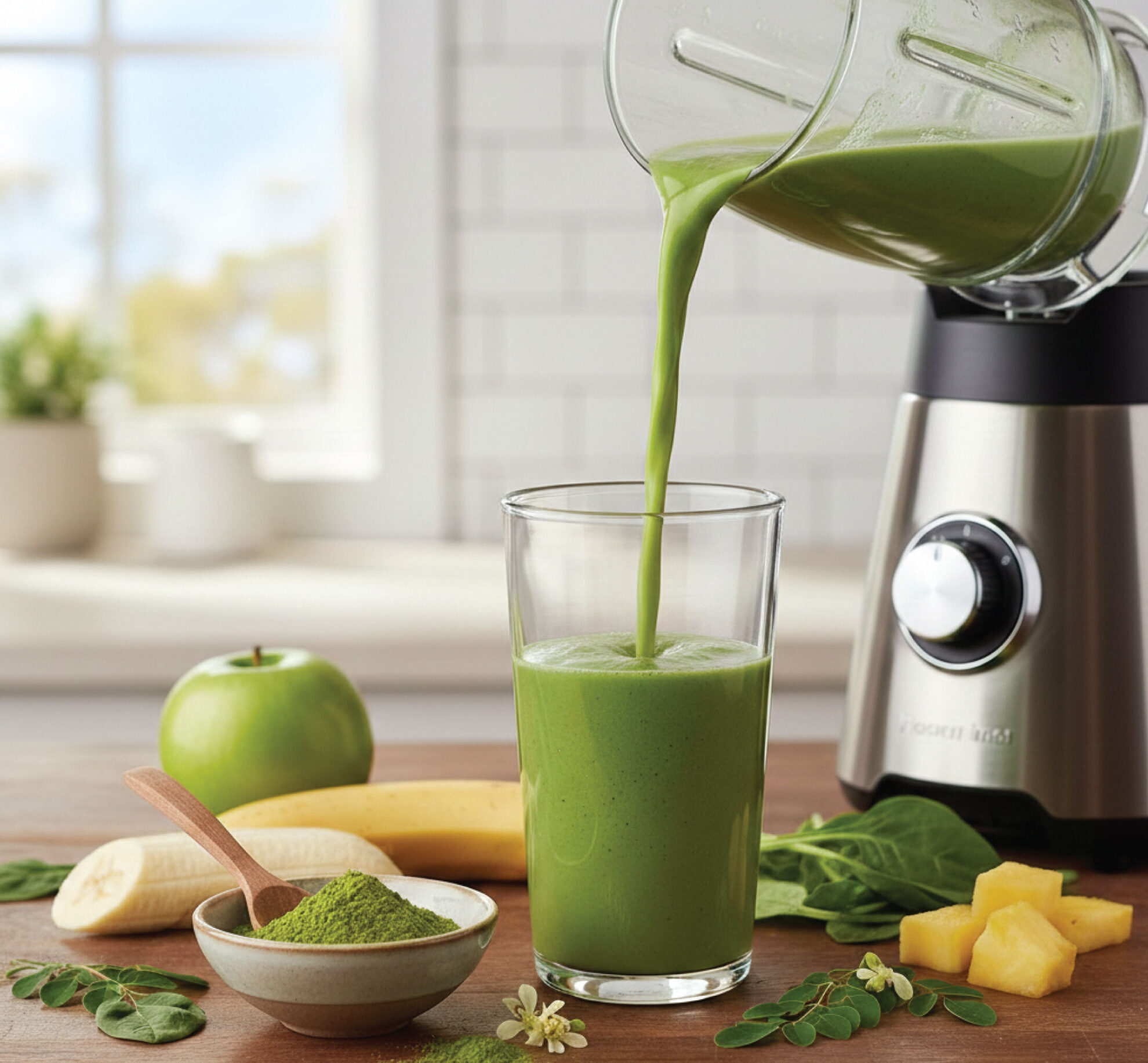
Smoothies are the most popular way to take moringa because blending fully incorporates the powder and other flavors mask the taste effectively. The green color blends right in with spinach or kale-based smoothies. A bit of fruit can help mask moringa’s flavor while adding additional nutritional value.
Basic Moringa Smoothie Recipe
- 1 banana
- 1 cup frozen berries
- Handful of spinach
- One moringa dose (½–1 tsp)
- 1 cup milk or milk alternative
Instructions
- Add all ingredients to blender.
- Blend until smooth.
Moringa Tea
You can steep moringa powder in hot water to make tea. The taste is strong and grassy, like intense green tea. Adding honey, lemon, or ginger helps make moringa tea more palatable. Some people combine moringa with regular green tea or herbal tea blends.
Note: Excessive heat may degrade some of moringa’s nutrients. Use water that’s hot but not at a rolling boil.
Basic Moringa Tea
- ½–1 tsp moringa powder
- 1 cup hot water (not boiling)
Instructions
- Add powder to hot water.
- Steep 3–5 minutes.
- Stir well before drinking.
Added to Food
Moringa powder can be stirred into many foods. Popular options include oatmeal, yogurt, soups, salad dressings, and sauces. The key is adding it to foods with enough flavor to balance the earthiness. Stirring it into already-cooked food or adding it at the end of cooking preserves more of its nutritional value.
Capsules
If you genuinely can’t tolerate the taste, Moringa Capsules offer an alternative. Each Kats Botanicals Moringa Powder serving contains 800 milligrams of Moringa oleifera Leaf Powder. Capsules are vegan/vegetarian. While dose-adjusting is harder with capsules, many users prefer the ease and convenience they offer. No flavor, no grit!
Capsules are also convenient for travel or busy mornings when making a smoothie isn’t practical.
 Moringa Powder Recipes and Ideas
Once you’re comfortable with basic methods, you can get creative. For powdered moringa or capsule doses, these recipes accompany a moringa routine nicely.
Smoothie Combinations
Tropical Moringa: Mango, pineapple, coconut milk, 1 tsp moringa. The tropical sweetness completely masks the green taste.
Berry Boost: Mixed berries, banana, almond milk, 1 tsp moringa, tablespoon of nut butter. Rich and filling.
Green Machine: Spinach, cucumber, green apple, lemon juice, 1 tsp moringa. Leans into the green flavor rather than hiding it.
Stacking tip: Try these versatile recipes with turmeric, Kratom, or CBD drops! Clear any supplement stacking with your medical professional.
Salad Dressings
Whisk moringa into vinaigrettes or tahini-based dressings. A half teaspoon blends into a batch of dressing without dramatically changing the flavor. The earthiness actually complements savory dressings well.
Soups and Sauces
Stir moringa into finished soups, especially creamy or tomato-based ones. Add it to pesto, hummus, or guacamole. The other strong flavors absorb the moringa taste.
Energy Balls
Blend dates, nuts, cocoa powder, and moringa in a food processor. Roll into balls and refrigerate. The sweetness of dates and richness of cocoa cover the moringa while giving you a portable, nutrient-dense snack.
Topical Uses for Moringa Powder
Moringa isn’t just for eating. Some people use it externally for skin and hair.
Face Masks
Mix moringa powder with honey, yogurt, or mashed avocado to create a face mask. Apply to clean skin, leave for 10-15 minutes, then rinse. The powder’s nutrients may support skin health when applied topically.
Hair Treatments
Combine moringa powder with coconut oil or olive oil to make a hair mask. Apply to hair and scalp, leave for 20-30 minutes, then shampoo out. Some users find this helps with scalp health and hair condition.
Mixing with Carrier Oils
Moringa powder can be infused into carrier oils for a multipurpose topical preparation. Combine powder with jojoba, sweet almond, or coconut oil, let it sit for several days, then strain. Use the infused oil for skin or hair.
Buying Lab-Tested Moringa
A note on shopping online for moringa: always buy lab-tested! Here at Kats Botanicals, moringa supplements are tested for impurities, heavy metals, and pathogens. We go the extra mile on testing so you can use our supplements with confidence!