Moringa oleifera has been used as food and medicine across South Asia and Africa for thousands of years. It’s not a trend. Around the world, moringa has earned nicknames like “miracle tree,” “tree of life,” and even “never-die tree” because it grows in harsh conditions and nearly every part of the plant is usable.
Moringa trees are very distinctive; often tall, slender, with fern-like leaves and long clusters of edible pods. Use of the tree for culinary purposes and as a plant medicine date back to at least 500 BC. Modern nutritional analysis has shown us that the leaves contain protein, iron, calcium, and impressive concentrations of antioxidant compounds.
Researchers in the West are helping to develop a more comprehensive safety profile and document proven moringa benefits, but this work takes many decades to develop. The research-supported links between moringa powders and practical health effects are in some ways still pending. That being said, mainstream wellness conversations still imbue centuries of cultural knowledge supporting moringa for health and enjoyment.
What Moringa oleifera Is
Moringa oleifera is a fast-growing deciduous tree native to parts of northwestern India. It belongs to the Moringaceae family and is now cultivated across tropical and subtropical regions worldwide. The entire plant is edible. Leaves, seed pods, flowers, and roots all have documented applications.
The leaf is what most supplement products use. It’s dried and ground into a powder that can be encapsulated, added to smoothies, or stirred into food. The nutritional density of the dried leaf is what drives most of the interest: a small daily serving carries a meaningful amount of several vitamins and minerals that are often under-consumed in modern diets.
Buy moringa capsules for an easy daily routine—no mess, no guesswork, just pure plant goodness.
The Nutritional Profile
Comparing fresh moringa to other foods shows some notable concentrations. Gram for gram, dried moringa leaf powder contains more iron than spinach, more calcium than milk (by weight), more protein than yogurt, and a meaningful amount of vitamin C. Bioavailability and serving size matter. But the underlying nutrient density is real and backed by laboratory analysis.
The leaf also contains quercetin and chlorogenic acid, two compounds that have been studied for antioxidant and metabolic effects. Chlorogenic acid in particular has been examined in connection with blood sugar regulation, and it appears in moringa in useful concentrations.
This combination of vitamins and minerals alongside its polyphenol content is why moringa gets described as a whole-nutrition supplement rather than a single-compound product.
What the Research Says About Moringa Benefits
While moringa’s traditional uses span centuries, modern research focuses on specific compounds and their potential effects. Studies examine antioxidant activity, blood sugar patterns, inflammation markers, cholesterol levels, and energy support—always with caveats about preliminary findings and individual variation.
Antioxidant Activity
One of the most consistent findings across moringa studies is its antioxidant content. The leaves contain isothiocyanates and quercetin among other polyphenols. These are compounds that may help the body manage oxidative stress. Oxidative stress plays a role in aging and is associated with a range of chronic conditions, which is why antioxidant-rich foods and supplements receive research attention.
A 2014 study in the Asian Pacific Journal of Cancer Prevention found that moringa extract showed antioxidant activity in laboratory conditions. In-vitro findings don’t always translate to human outcomes, but the antioxidant profile of moringa has been confirmed across multiple analyses.
Blood Sugar Support
Chlorogenic acid, found in moringa leaves, has been studied in connection with glucose metabolism. Research suggests it may help slow sugar absorption after meals by inhibiting certain digestive enzymes. One small moringa human study found that women who took moringa leaf powder for three months experienced a modest reduction in fasting blood sugar compared to a control group.
The research is preliminary and the sample sizes are small. People managing blood sugar with medication should speak with their doctor before adding moringa, since effects could compound.
Inflammation Support
Moringa contains isothiocyanates, a class of compounds also found in cruciferous vegetables like broccoli and Brussels sprouts. Isothiocyanates have demonstrated anti-inflammatory properties in laboratory research. Moringa’s concentration of these compounds is one of the reasons it shows up in discussions about this type of plant-based support.
Users often report feeling better overall after consistent moringa use, which aligns with its nutrient-dense profile. The exact mechanisms require more clinical research to understand fully.
Cholesterol
A few animal studies and one human trial have examined moringa’s effect on cholesterol. A study in Journal of Ethnopharmacology found that moringa leaf supplementation was associated with lower LDL cholesterol in participants over a 40-day period. The effect size was modest, and more research is needed, but the finding has been replicated in animal models consistently enough to warrant continued study.
Energy and Fatigue
Moringa’s iron and B vitamin content may account for the energy-related benefits users most commonly report. Iron deficiency is widespread, particularly among women of reproductive age, and fatigue is one of its primary symptoms. A food-based iron source that also provides complementary vitamins may support energy levels more effectively than isolated iron supplementation for some people.
Moringa doesn’t contain caffeine, so any energy effect is nutritional rather than stimulant-based. This makes it suitable for people who are sensitive to caffeine or want to avoid it.
Who Tends to Use Moringa
The range of people who use moringa regularly is wide. It includes people looking for nutritional support and those managing specific wellness goals. Athletes enjoy stacking moringa with other nutritional support supplements like protein powders, collagen, or CBD oils for wide-spectrum support. People following plant-based diets looking for additional iron and protein also enjoy adding moringa, and mineral-rich shilajit resin for their nutritional value.
Moringa works well as a daily-use supplement because it doesn’t create dependency, doesn’t require cycling, and pairs with most existing supplement routines without interaction concerns. That said, moringa may interact with certain medications, including thyroid medications and blood thinners, so a conversation with your healthcare provider is worthwhile if you’re on any prescribed medication.
How to Take Moringa
Once you’ve decided that moringa is right for your routine, learn how to take moringa powder for the best benefits. Often, this involves a daily supplement in a format you’ll stick with.
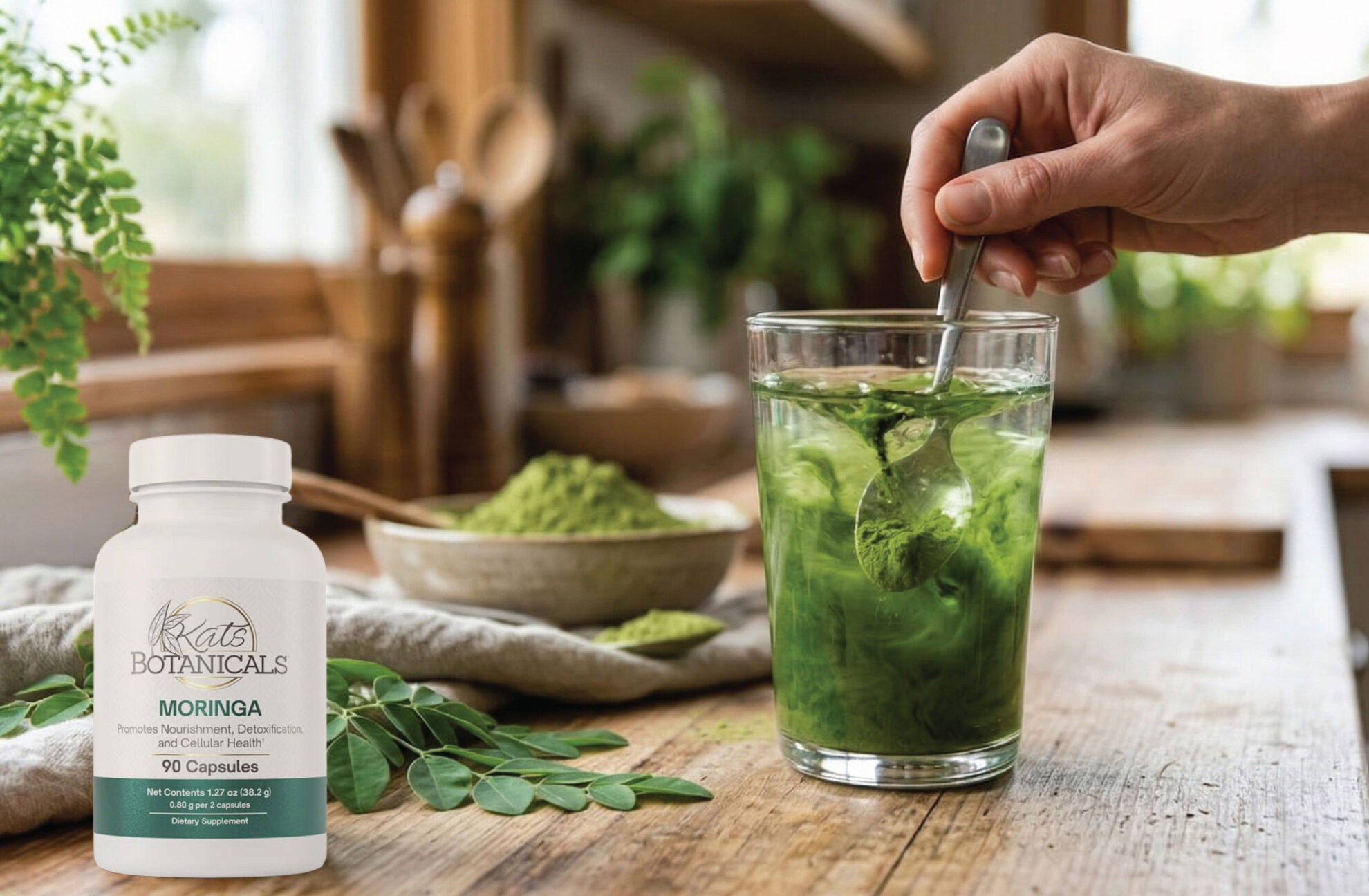
Moringa is available in powder and capsule form. The powder can be mixed into smoothies, stirred into water, or added to recipes. It has an earthy, slightly grassy flavor that most people find manageable in a blended drink. Capsules are the simplest approach: no preparation, no flavor to contend with, and a pre-measured daily dose.
Most users take 1 to 2 grams daily, which is roughly one teaspoon of powder or two capsules depending on the product. Starting lower and building up over a week or two is the best approach for new users, as a small percentage of people experience digestive sensitivity when first starting a new plant-based supplement.
Timing is flexible. Moringa doesn’t need to be taken on an empty stomach, and may even absorb more easily with a small small meal.
What to Look for in a Moringa Product
Quality varies across moringa products more than most people realize. The leaf should be sourced from a reputable growing region and processed at low temperatures to preserve heat-sensitive nutrients. Third-party lab testing for contaminants including heavy metals and pathogens is non-negotiable.
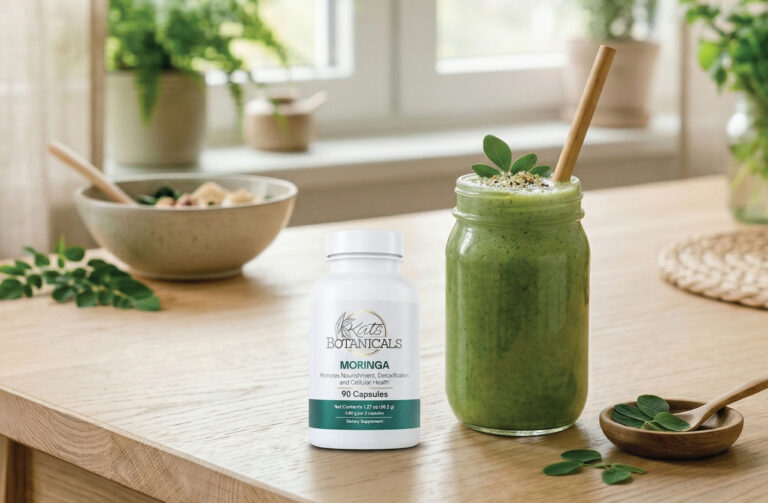
Kats Botanicals’ moringa capsules use pure moringa leaf powder with nothing added. Each batch is independently lab tested, and the results are available so you can verify what you’re taking. The capsules are vegan-friendly and contain no fillers or flow agents that would dilute the dose.
As with all our other botanical supplements, like Kratom and Kava, our moringa capsules are made with the highest level of manufacturing integrity within the Good Manufacturing Practices framework.