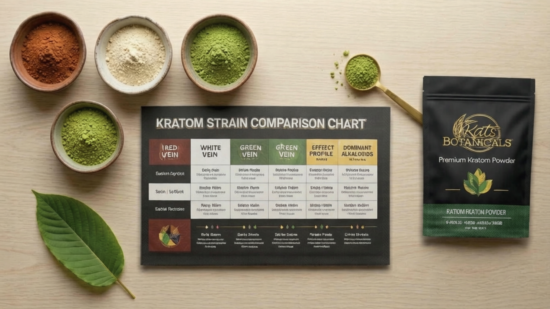
A kratom strains chart sorts Mitragyna speciosa by vein color, region of origin, dominant alkaloids, and the effects users most often report. Four vein colors anchor almost every chart. Red veins tend toward relaxation, white veins toward energy and focus, green veins toward a middle ground, and yellow veins toward a mellow, in-between feel. Origin matters too, since a leaf grown in Borneo carries a slightly different alkaloid ratio than one from Sumatra or Vietnam. Read across a single row, and you get the full picture of any strain: where it comes from, what it contains, and how people describe it. Vein color is the fastest way in. Alkaloid content and potency tell the deeper story.
Quick Answer: A kratom strains chart groups strains by vein color (red, white, green, yellow), origin, and dominant alkaloids like mitragynine and 7-hydroxymitragynine. Red veins are typically the most relaxing, whites the most energizing, and greens the most balanced. Use the chart to shortlist a strain, then adjust the kratom dose to fit how your body responds.
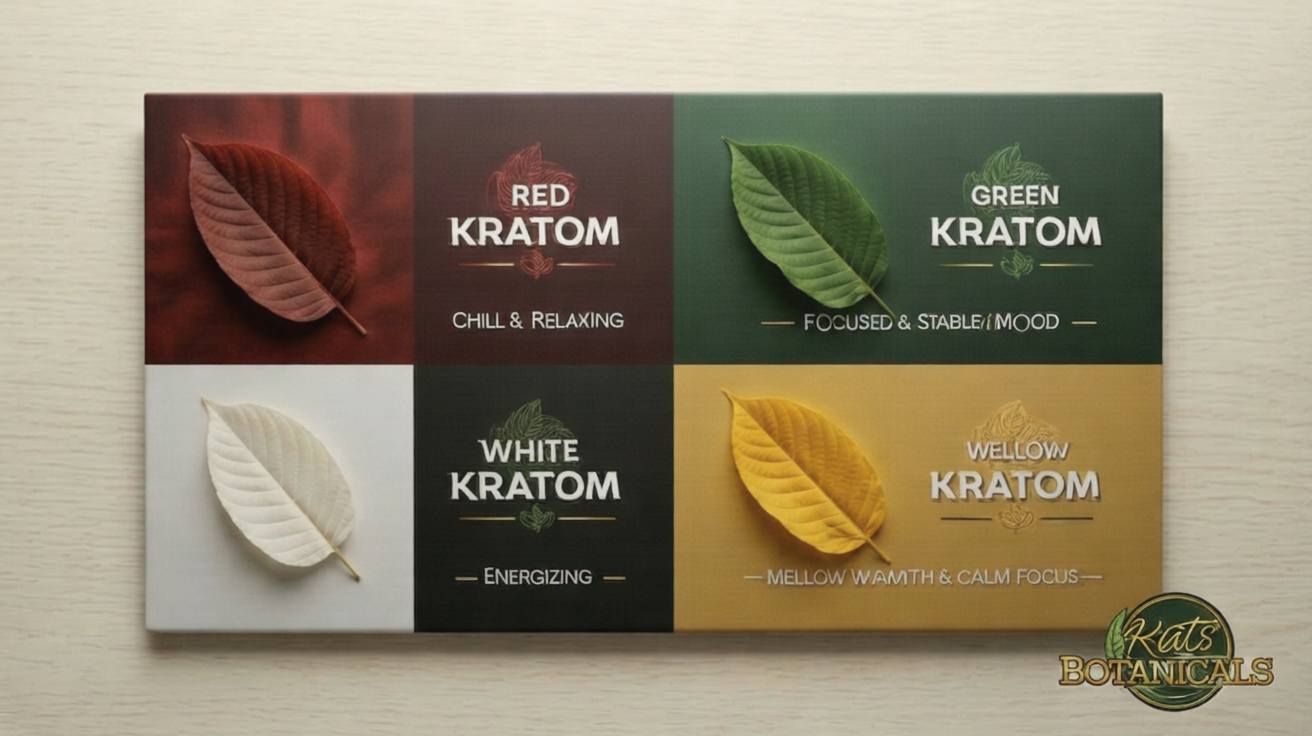
How Vein Color Shapes the Chart
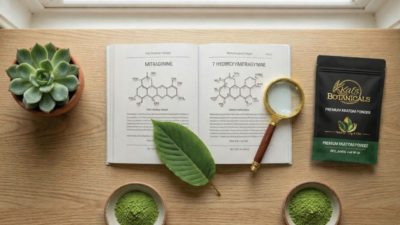
Every leaf on a kratom tree starts the same. What changes is when it gets harvested and how it’s dried and cured afterward. That timing shifts the alkaloid ratio, and the vein color is a shorthand for that ratio. Mitragynine is the alkaloid that dominates the plant, making up roughly 60 to 66 percent of total alkaloid content in most commercial leaf. The smaller players, including 7-hydroxymitragynine, speciogynine, and paynantheine, move the experience in one direction or another.
Here’s the honest caveat most charts skip: two bags labeled “Red Bali” from two different vendors can feel different, because curing methods and harvest windows aren’t standardized across the industry. A chart points you toward a category, not a guarantee. That’s exactly why third-party lab results matter more than the name on the label.
Red Vein Kratom
Red vein strains are the relaxing end of the chart. They’re cured longer, often with more exposure to light or fermentation, which shifts the profile toward 7-hydroxymitragynine and away from raw mitragynine dominance. People reach for reds in the evening, after work, or when they want to settle rather than switch on. Red Bali, Red Borneo, and Red Bentuangie are the usual starting points, and Bentuangie in particular is fermented in bags for a day or more, which gives it a slower, heavier character.
White Vein Kratom
Whites are picked earlier and dried quickly, so they hold onto more mitragynine. That makes them the go-to for a morning routine, a workout, or a long afternoon that needs a lift. Many longtime users treat white kratom the way other people treat a second cup of coffee. If you’re sensitive to stimulation, a white can feel like a lot, so a smaller starting amount is the smart move.
Green Vein Kratom
Green veins sit between the two. The chart tends to label them “balance” for a reason: enough mitragynine to feel awake, enough of the calming alkaloids to keep the edge off. Green Malay and Green Maeng Da are among the most requested strains on any menu, and greens are often where curious buyers land first because the middle ground is forgiving.
Yellow Vein Kratom
There’s no yellow kratom tree. Yellow strains come from extended drying or fermentation of green or white leaf, which nudges the profile toward a mellow, rounded feel. Think of yellow as a smoother read on a green. It’s the least dramatic column on the chart, and for a lot of people that’s the appeal.
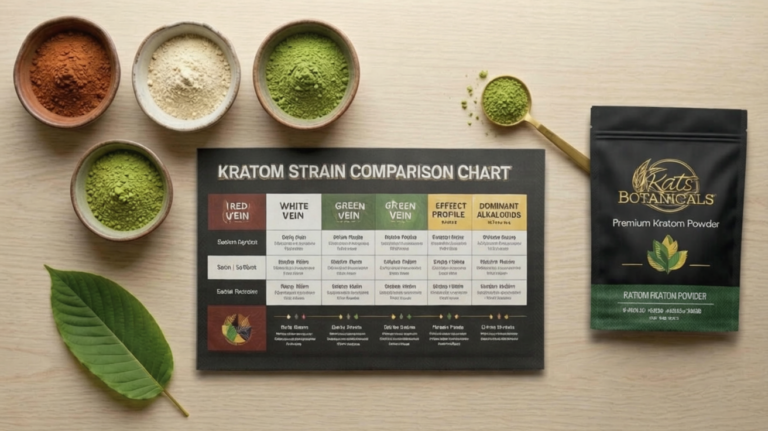
Kratom Strains Comparison Chart
Locate a strain in the left column, then read right across the row for its vein, origin, dominant alkaloids, and the effects users commonly describe. Effects are reported experiences, not promises, and individual responses vary.
| Kratom Strain | Vein Color | Origin | Dominant Alkaloids | Reported Effects |
| Red Bali | Red | Borneo, Indonesia | 7-Hydroxymitragynine, Mitragynine | Smooth relaxation, evening calm |
| Red Borneo | Red | Borneo, Indonesia | 7-Hydroxymitragynine, Speciogynine | Soothing, unwinding |
| Red Indo | Red | Sumatra, Indonesia | 7-Hydroxymitragynine, Speciociliatine | Gentle calm, mild ease |
| Red Bentuangie | Red (fermented) | Sumatra/Borneo, Indonesia | 7-Hydroxymitragynine, Corynoxine A/B | Deep chill, long-lasting, slow build |
| Red Sumatra | Red | Sumatra, Indonesia | 7-Hydroxymitragynine, Mitragynine | Rich, calm, quiet mind |
| Super Indo | Green | Indonesia | Mitragynine, Speciogynine | Steady energy, stable mood |
| Green Malay | Green | Malaysia | Mitragynine, Paynantheine | Clean focus, mild uplift |
| Green Bali | Green | Borneo, Indonesia | Mitragynine, Speciogynine | Balanced mood and energy |
| Green Hulu Kapuas | Green | West Kalimantan, Indonesia | Mitragynine, Corynoxine A | Clear focus, light mood lift |
| White Bali | White | Borneo, Indonesia | Mitragynine, Paynantheine | Brisk energy, clean motivation |
| White Borneo | White | Borneo, Indonesia | Mitragynine, Corynoxine A | Mental clarity, energizing |
| White Sumatra | White | Sumatra, Indonesia | Mitragynine, Speciogynine | Alertness, daytime lift |
| White Thai | White | Thailand region | Mitragynine, Speciociliatine | High stimulation, crisp focus |
| Yellow Bali | Yellow | Borneo, Indonesia | Mitragynine, Speciogynine | Mellow warmth, mild focus |
| Yellow Vietnam | Yellow | Vietnam region | Mitragynine, Speciociliatine | Light focus, calm clarity |
Every strain listed here should come with a certificate of analysis. At Kats Botanicals, batches are third-party tested by an ISO 17025-accredited lab for mitragynine content, heavy metals, and microbial contamination, which is the standard the American Kratom Association’s GMP program calls for. If a vendor can’t show you that paperwork, the strain name on the bag is just a name.
Where Maeng Da and Blends Fit
You won’t find Maeng Da in the single-strain chart above, and that’s on purpose. Maeng Da isn’t a region or a vein. It’s a blend, built to run a higher alkaloid count than a standard single strain. The name loosely translates to “pimp grade,” which started as marketing and stuck around because the leaf behind it tends to be selected for strength.
A blend combines veins to shape a specific feel. Red Maeng Da leans relaxing with a lift, white leans energizing, and green splits the difference. If you’ve already worked through a few single strains and know how your body reads red versus white, a blend is the logical next step. If you’re brand new, start with a single strain first so you can actually tell what’s doing what.
| Blend | Red | White | Green | Reported Character |
| Red Maeng Da | Yes | Yes | Relief with a mild lift | |
| White Maeng Da | Yes | Yes | Energy and focus | |
| Green Maeng Da | Yes | Energetic balance | ||
| Yellow Maeng Da | Yes | Yes | Mild energy, mellow balance |
7-Hydroxymitragynine and the Most Potent Strains
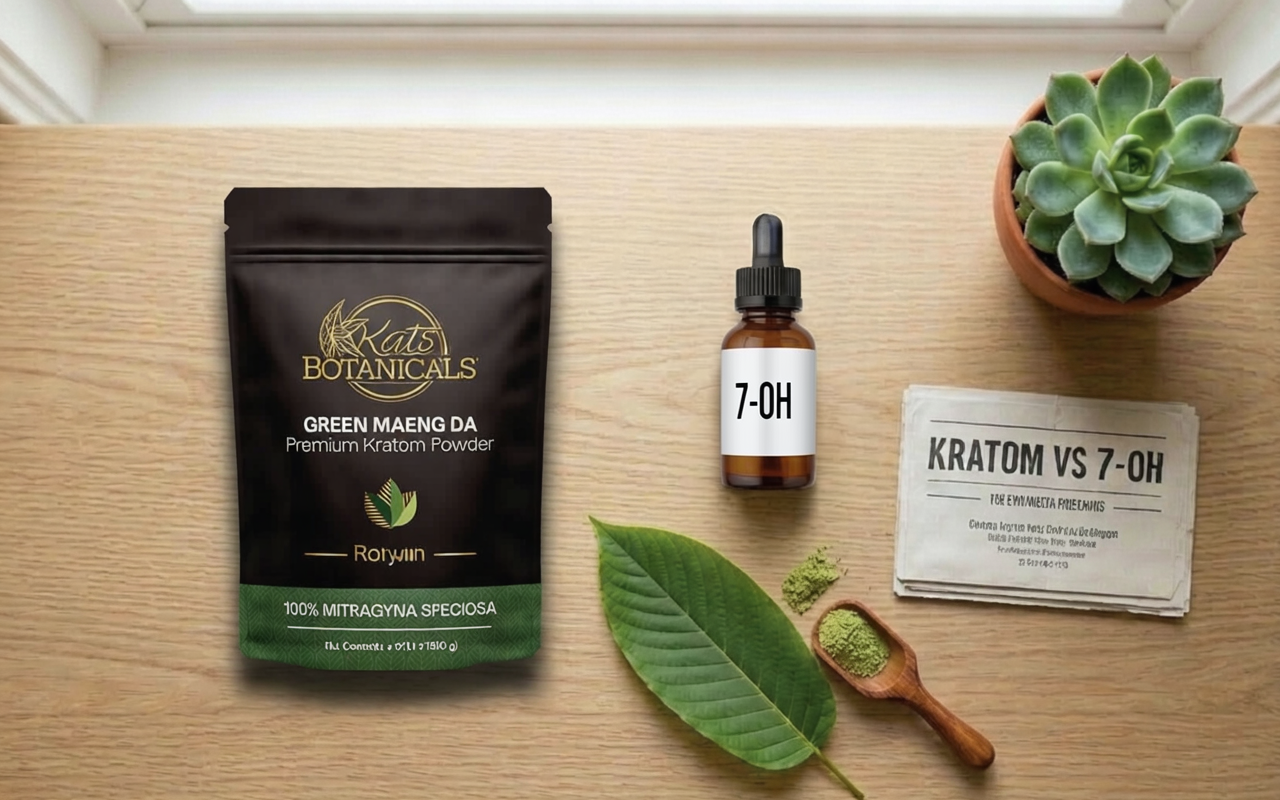
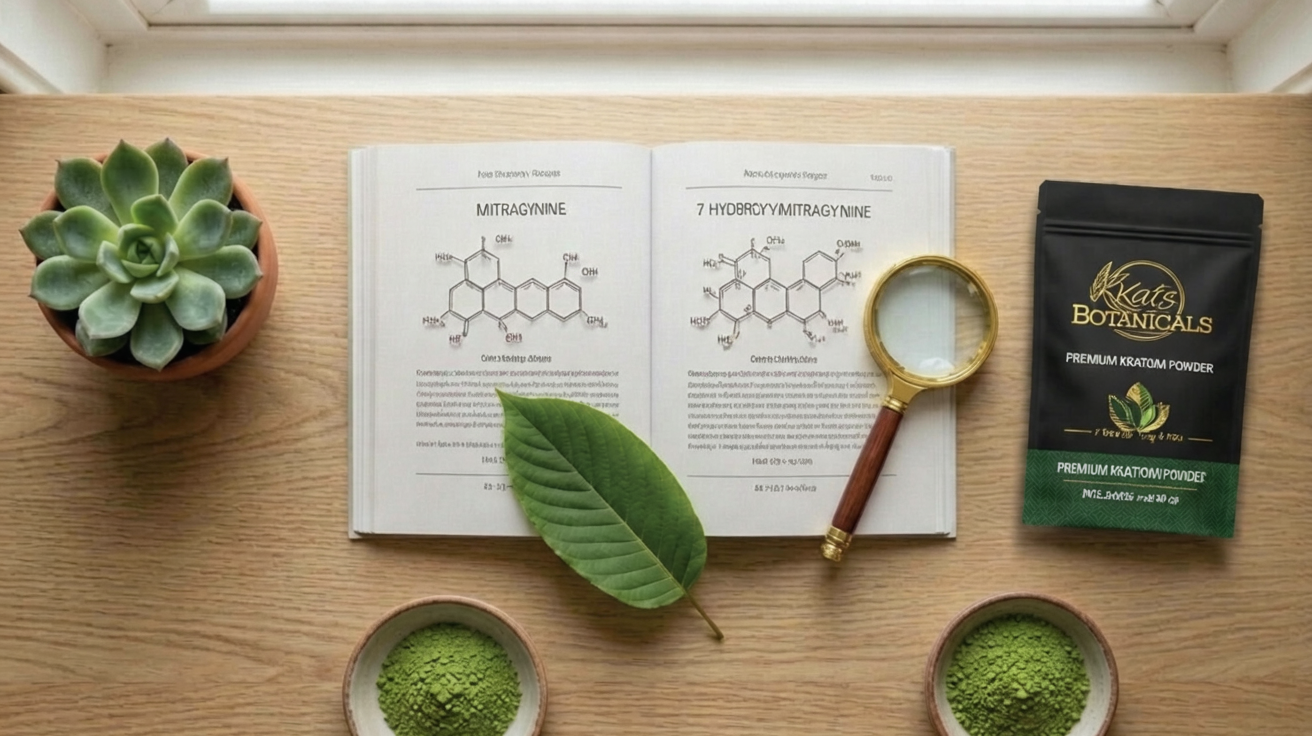
When people ask which strains sit at the top of a “most potent” chart, they’re usually asking about 7-hydroxymitragynine. This alkaloid appears in tiny amounts in raw leaf, often less than 0.05 percent, yet it carries an outsized share of kratom’s relaxing character. Well-cured red veins and fermented strains like Red Bentuangie tend to show slightly more of it, which is why they cluster at the calming end of the chart.
Potency is not only about one alkaloid, though, and this is where marketing gets ahead of the facts. Total mitragynine percentage, freshness, and your own tolerance all move the needle. A lab-verified 1.5 percent mitragynine batch of white kratom will feel stronger to a new user than a “premium” bag with no numbers on it. Enhanced strains push potency further by adding kratom extract back into leaf powder, and those belong to experienced users only. Start low and go slow is not a slogan here. It’s the difference between a good afternoon and an uncomfortable one.
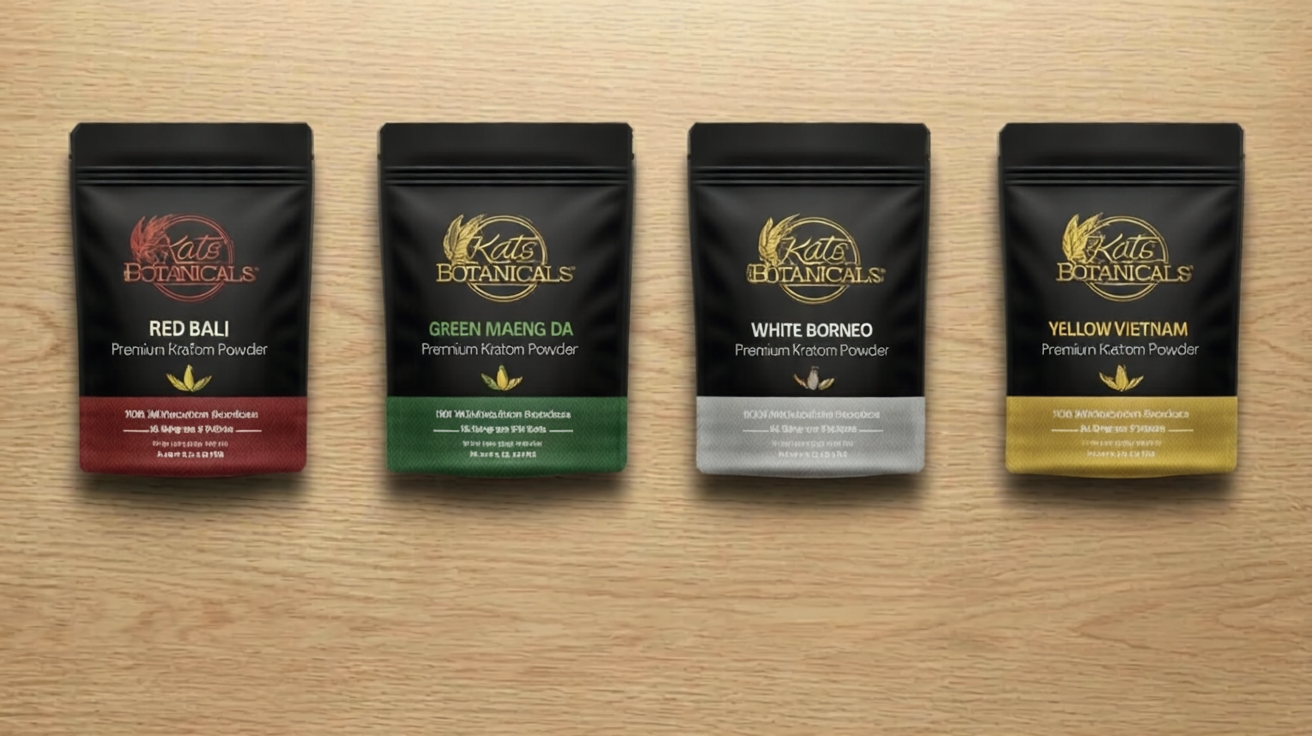
Choosing the Best Strain for Your Routine
Match the column to the time of day and the outcome you want. Morning and energy point you toward whites and greens. Evening and winding down point you toward reds. A midday reset without much push points toward yellows or a lighter green.
Read Effects, Not Just Names
The smartest way to use any kratom strains chart is to treat it as a shortlist, then keep your own notes. Try one strain at a low amount, write down how you felt and when, and give it a couple of sessions before you judge it. The right strain does what you need during the dose without leaving you flat afterward. If a strain feels wrong, switch veins before you switch dose. A white that overstimulates you may become a non-issue as a green.
Format Matters Too
Powder gives you the most control over amount and the widest strain selection, which is why it stays the most popular format. Capsules trade that flexibility for convenience and consistent measuring. Kratom tea is another route, though heat and steeping time can change the experience, and it takes some trial to dial in. Pick the format that fits your day, then use the chart to pick the strain.