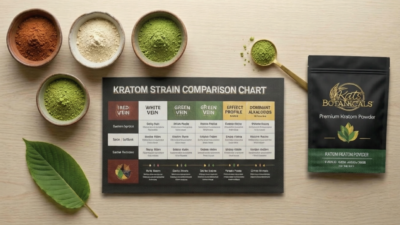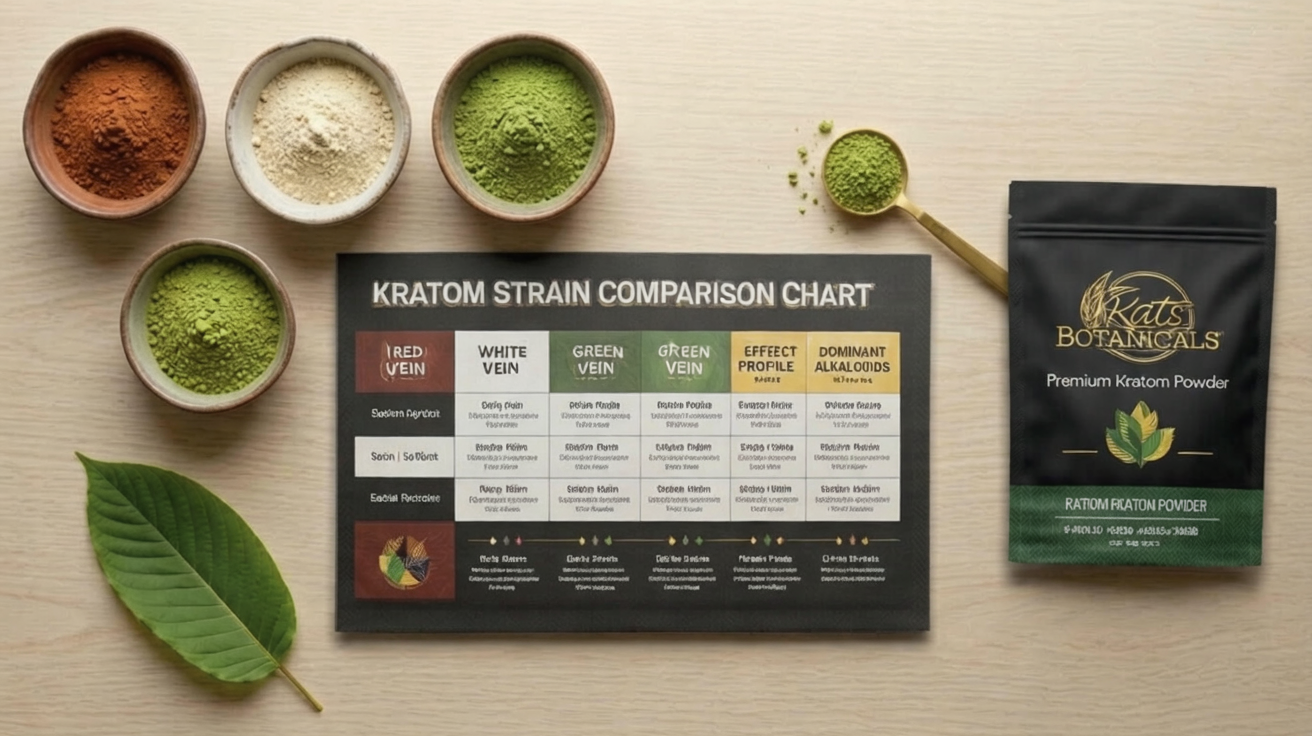
Kratom extracts are concentrated kratom. Instead of drying and grinding the whole leaf into powder, an extract pulls the active alkaloids out of the leaf and condenses them, so you get more in a smaller serving. That’s the short version. The longer version, which is worth reading before you buy one, covers the different forms extracts come in, what the strength numbers on the label actually mean, and whether an extract makes sense for your needs.
If you’re brand new to kratom, note that extracts are probably not where you should start. They’re stronger thankratom powder, and the right time to consider one is after you already know how standard kratom affects you.
Quick Answer: Kratom extracts are concentrated forms of Mitragyna speciosa leaf, sold as shots, gummies, tablets, softgels, and enhanced powders. A standard leaf carries roughly 1-2% mitragynine, while extracts can range from 10% up to 65% mitragynine by weight. They’re built for experienced users who want a smaller, premeasured serving, not a starting point for beginners.
What an Extract Actually Is
A kratom extract is leaf material processed through a solvent so the alkaloids separate from the plant matter, then reduced into a concentrated form that carries far more mitragynine per gram than the leaf it came from. Whole-leaf kratom powder contains the full range of alkaloids found in Mitragyna speciosa, with mitragynine as the main one. Peer-reviewed analysis showsmitragynine makes up roughly 2% of dried kratom leaf by weight and 12% to 66% of total alkaloid content, depending on plant origin. Product labels may say “concentrated,” “enhanced,” “kratom extract,” “MIT tablet,” or something similar.
One thing to be clear about, because the market has gotten muddy: a real kratom extract is still derived from the plant. That’s different from synthetic kratom products built around concentrated7-hydroxymitragynine, which are a separate category with separate risks. For this article, assume we’re talking about plant-derived extracts featuring high MIT levels.
Extract vs Standard Powder: Why People Make the Switch
People switch to extracts when they want a smaller, premeasured serving and a stronger per-gram alkaloid load thanwhole-leaf powder delivers. Powder and extract come from the same leaf, but they’re built for different jobs. Powder gives you the rounded, strain-specific experience, and it’s easier to fine-tune because the alkaloid content is modest and predictable. An extract trades that nuance for concentration.
A few practical reasons come up again and again. Premeasured formats like shots and gummies are easy to carry and dose without a scale. A smaller serving size suits people who find large amounts of powder hard on the stomach. For longtime users whose usual routine has flattened out, an extract can be a way to vary things.
None of that makes extracts better than powder. It makes them different, and useful in specific situations.
The Types of Kratom Extract
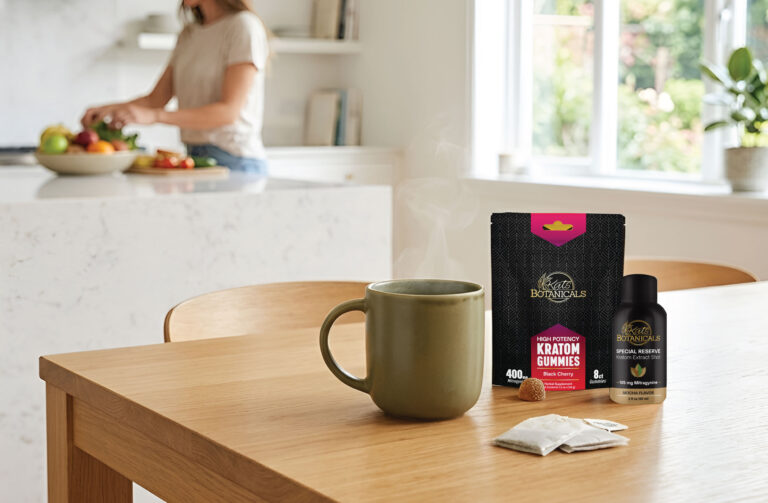
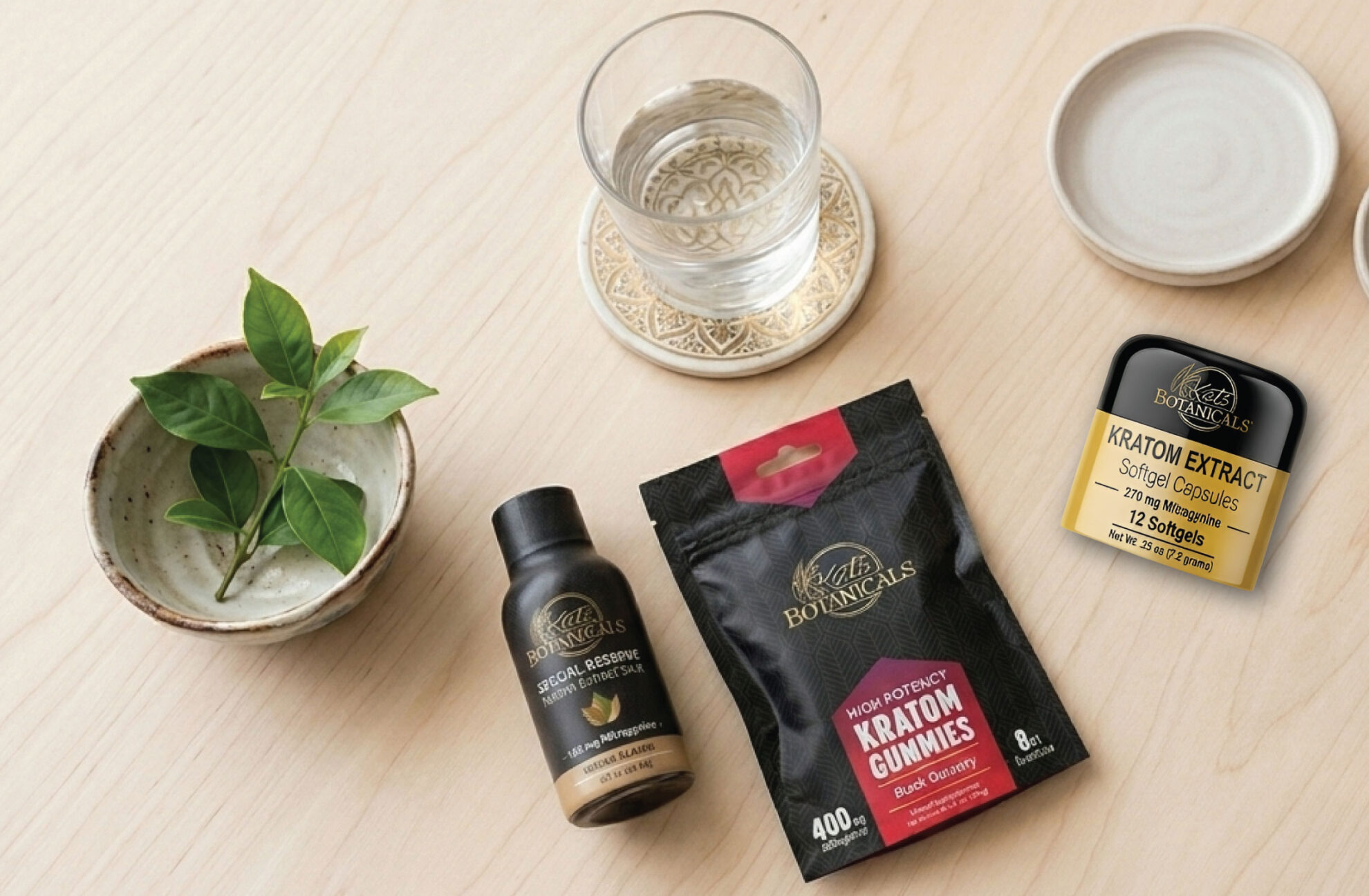
“Extract” is a category, not a single product. The most common formats include liquid shots, gummies, tablets and softgels, and enhanced powders, each with its own onset profile and use case. Here’s a quick overview of kratom extract product formats and their potential uses.
| Form | What it is | Onset & Duration | Why people pick it |
| Liquid shots | Concentrated extract in a premeasured bottle | Higher peak with fastest onset, lower end of 4-6 hour duration | Fast, portable, no mixing |
| Extract gummies | A fixed dose of extract in an edible | Slower onset, gentler peak, longer duration | Enjoyable flavors, discreet |
| Tablets and softgels | Compressed or encapsulated extract | Slower onset, notable peak, longer duration | Precise serving, travels well |
| Enhanced powder | Leaf powder with extract added back in | Faster onset, moderate peak & duration | Familiar format with more alkaloid strength, can be used for teas |
A good start to kratom extracts is the enhanced powder versions. Enhanced powders feature all the mixing and brewing aspects of kratom’s traditional use but with the higher strength you want. Lines likeRogue Rhino kratom run a measured mitragynine level above standard leaf to bring you that familiarity with an extra kick of potency.
Liquid extracts and shots are the next step, featuring options like the Bali 45 Liquid Kratom Shot, which packs 125 mg of mitragynine into a two-serving bottle. Pay special attention to ingredients when browsingkratom shots as they contain different MIT levels and sometimes other ingredients like kava or ashwagandha.
Gummies are also a moderate introduction to kratom extract effects.Black cherry kratom extract gummies, for example, deliver a set milligram amount per piece. Both shots and gummies are solid options when you want strength and palatability.
If you need the highest MIT products, go for the concentrated MIT shots, the splittable MIT tablets, or the 45% extract softgel capsules. Each of these options prioritizes potency, smaller doses, portability, and pocket-sized discretion.
Full-Spectrum vs Isolate
Full-spectrum extracts keep the whole alkaloid range from the leaf, while kratom isolates strip everything down to mitragynine alone. Many users prefer a more well-rounded profile, which can be verified with a look at the product’s Certificate of Analysis. There, you can see that it contains other alkaloids and not just MIT.
Kratom Stacking Tip: You don’t have to give up your favoritekratom strain. If you’re careful about total alkaloid amounts per dose, you can use small amounts of an extract product alongside your favorite kratom strain. Calculate the alkaloids per dose to be sure you’re within the dosing recommendations. That extra dose of MIT in your routine may allow you to reduce the amount of powder you need to use. Keep this tip in mind for intense days that call for more support.
How Kratom Extracts Are Made
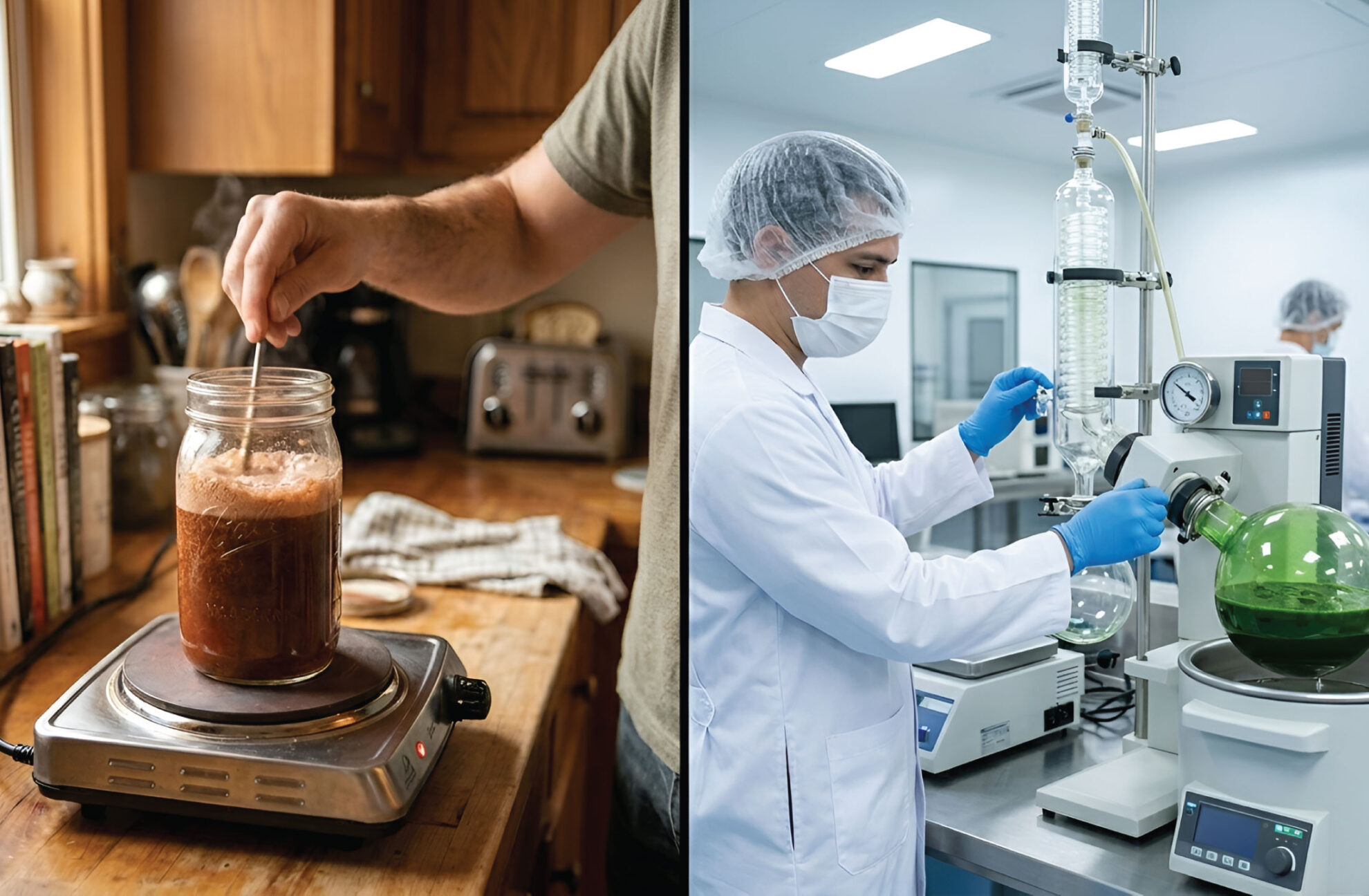
Kratom extracts are produced by steeping leaf or powder in a solvent (usually water, ethanol, or CO2) that pulls the alkaloids out of the plant material, then reducing the liquid into a dense, alkaloid-rich concentrate. That concentrate can be used on its own or built into the finished forms described above.
At-Home Extraction
You can extract kratom alkaloids at home, though the results are less predictable. The best-known DIY kratom extraction technique is theRed Bubble Method.
Commercial Extraction
On a commercial scale, the process is tighter and lab-controlled. Every Kats Botanicals extract is produced under theAmerican Kratom Association’s GMP Standards Program, which requires an annual independent third-party audit covering facility sanitation, batch testing, and labeling accuracy. Each product is third-party tested, with a QR code on the package that links to the batch’s lab results. That testing matters more with extracts than with anything else, because concentration multiplies whatever is in the source leaf, contaminants included.
Reading the Label: What the Percentages Mean
The percentage on a kratom extract label is its mitragynine concentration by weight. A 10% extract contains 100 mg of mitragynine per gram; a 65% extract contains 650 mg per gram. Kratom labels vary widely from one manufacturer to the next, so a clear read on what you’re looking at matters. Calculating the amount of alkaloids you consume is central to responsible kratom use since label patterns, dosing guidelines, and product strengths can all vary.
Doing the Math
The single most important number on an extract is its mitragynine concentration. Pay attention to whether the product specifies how much mitragynine there is per package or per dose. If it gives milligrams per dose, then the math has been done for you and you only need to factor in the amount you’re taking.
A percentage by package means, for example, that a 10% extract contains mitragynine in the amount of 10% of the product’s weight, or 100 mg per gram. A 65% product would contain 65% total MIT, or 650 mg per gram, a much stronger product. To find the MIT per dose, divide the total package amount by the number of doses in the package, then multiply by how much of a dose you take.
Since most users prefer not to math out the amounts per dose, we include this information on the product pages for all our kratom extract formulas.
Why Higher Isn’t Better
When it comes to kratom, your sweet spot dose doesn’t always mean higher MIT. This takes some mindful use and practice to get a good feel for what works best for you. It’s worth keeping in mind when you’re sampling products with much higher concentrations. As with all kratom, start with low amounts and go slow as you adjust your doses mindfully. Ourkratom dosage guide lays out the ranges.
Are Extracts Right for You?
If you’re new to kratom, skip extracts for now. Get a feel for how standardkratom powder or capsules affect you first, then revisit extracts once you have a baseline. If you’re an experienced user, an extract can be a convenient, portable option or a way to refresh a stale routine, as long as you respect the higher strength.
A couple of things apply to everyone. Don’t combinekratom with alcohol, and check with your physician before using it if you take medication or have a health condition. Effects vary from person to person, and a high-concentration product narrows the margin for guessing.