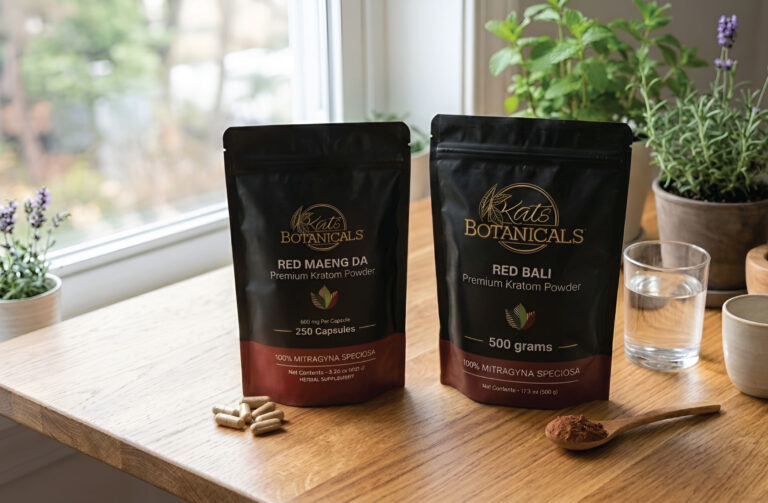
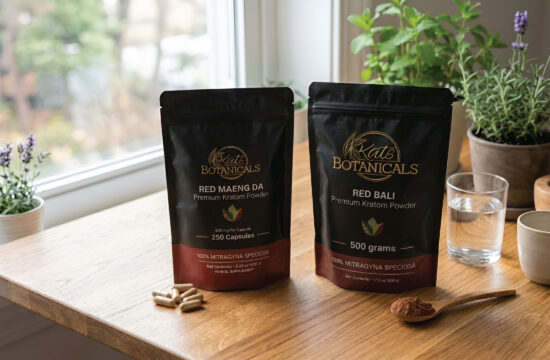
Red Maeng Da and Red Bali are both red vein kratom, but they don’t feel the same once you take them. Red Maeng Da is a blended strain with a stronger, more energetic edge that experienced users tend to reach for during the day. Red Bali is a gentler single-strain red that runs more relaxing, which is why so many newcomers start there. Both come from the same plant,Mitragyna speciosa, and both are grown in Indonesia. The difference comes down to how each one is built and how much intensity you’re after.
Quick Answer: Red Maeng Da is a red-and-white blend with a stronger, more stimulating profile, best suited to experienced users who want daytime energy alongside calm. Red Bali is a gentler single strain that leans toward relaxation, making it an easier entry point for beginners. Choose Maeng Da for a bigger kick and Bali for a smoother, milder red.
What Red Vein Kratom Actually Is
Red vein kratom gets its name from the reddish color of the leaf veins and stems at harvest. Both Red Maeng Da and Red Bali sit in this family. The color reflects leaf maturity and post-harvest drying, and reds as a group tend to be the calming, wind-down side of the kratom spectrum compared to the more energizing whites.
Every red starts as the same leaf. What separates one red from another is where it grew, when it was picked, and how it was dried and processed afterward. That’s the part most people skip over. A red vein from one region dried in burlap bags won’t carry the same alkaloid balance as a red dried in a cold room, even if both leaves came off similar trees.
The Alkaloids That Do the Work
Kratom leaf contains more than 40 naturally occurring alkaloids. The two that get the most attention are mitragynine and 7-hydroxymitragynine, with mitragynine making up roughly two-thirds of total alkaloid content in the leaf and 7-hydroxymitragynine present at less than 0.05% of dry leaf mass, according to research published in ACS Central Science. Reds carry their own distribution of these compounds based on maturity and processing. This is why two reds can share a color label and still feel distinct. It isn’t marketing. It’s chemistry shaped by farming.
What Is Red Maeng Da Kratom?
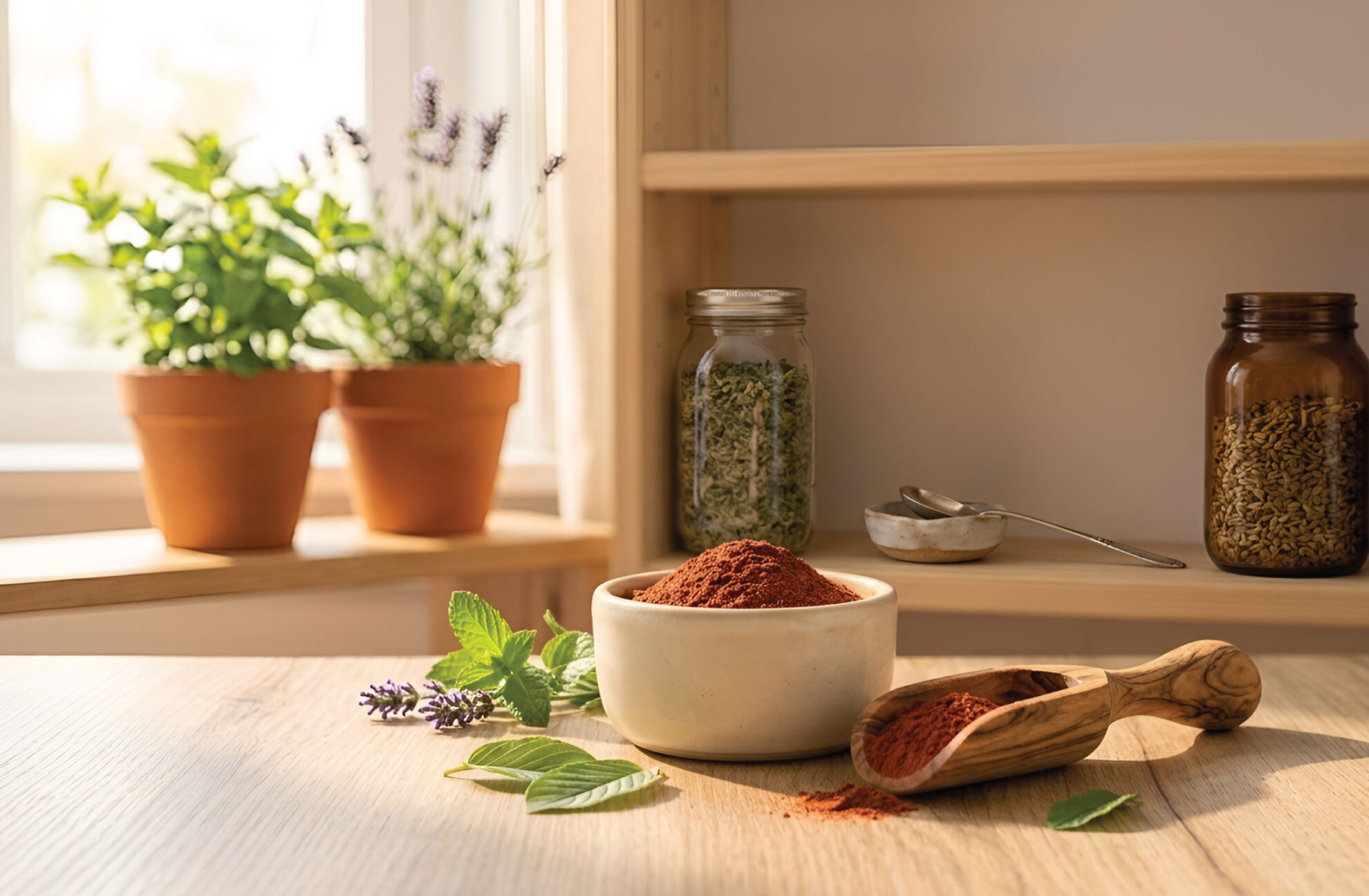
Red Maeng Da is a red-dominant blend built for strength, and it’s the more intense of the two strains in this comparison. The name “Maeng Da” is Thai slang that loosely translates to “pimp grade,” a nod to potency rather than a growing region. No region called Maeng Da exists on a map. The name signals a stronger profile, and that reputation is why moderately experienced users gravitate toward it.
Here’s the part worth being direct about: Maeng Da is not a single leaf. At Kats Botanicals, Red Maeng Da is a deliberate mix, roughly 60% red vein kratom from the Borneo region and 40% white vein kratom from the JongKong region. That white portion is what gives this red its daytime kick. It’s a red with a stimulating undertone, which is unusual for the category and part of why people who find traditional reds too sedating often land here instead.
How Red Maeng Da Is Made
The two halves of the blend are dried separately. The red vein portion is dried indoors inside burlap bags, a process that ferments the leaves and shifts the alkaloid profile. The white vein portion is dried outdoors, stems intact, for about 48 hours. Two drying methods, two timelines, then blended into one product. It’s slower and more involved than making a single strain, and honestly, that extra step is the whole point. Skip it, and you get a flatter, less layered red.
What Red Maeng Da Is Used For
Users typically reach for Red Maeng Da during the day rather than at night. It’s often chosen before or after physical activity, or on days that need a bit more push. Because it carries that white-vein energy, it may help you feel more upright and alert than a classic red would, while still keeping the calming character reds are known for. Newer users sometimes find it too strong at a full dose, which is exactly why the strength is a feature, not a flaw, once you know your tolerance. If you’re still calibrating, the kratom dosage guide is worth a look before you land on your amount.
What Is Red Bali Kratom?
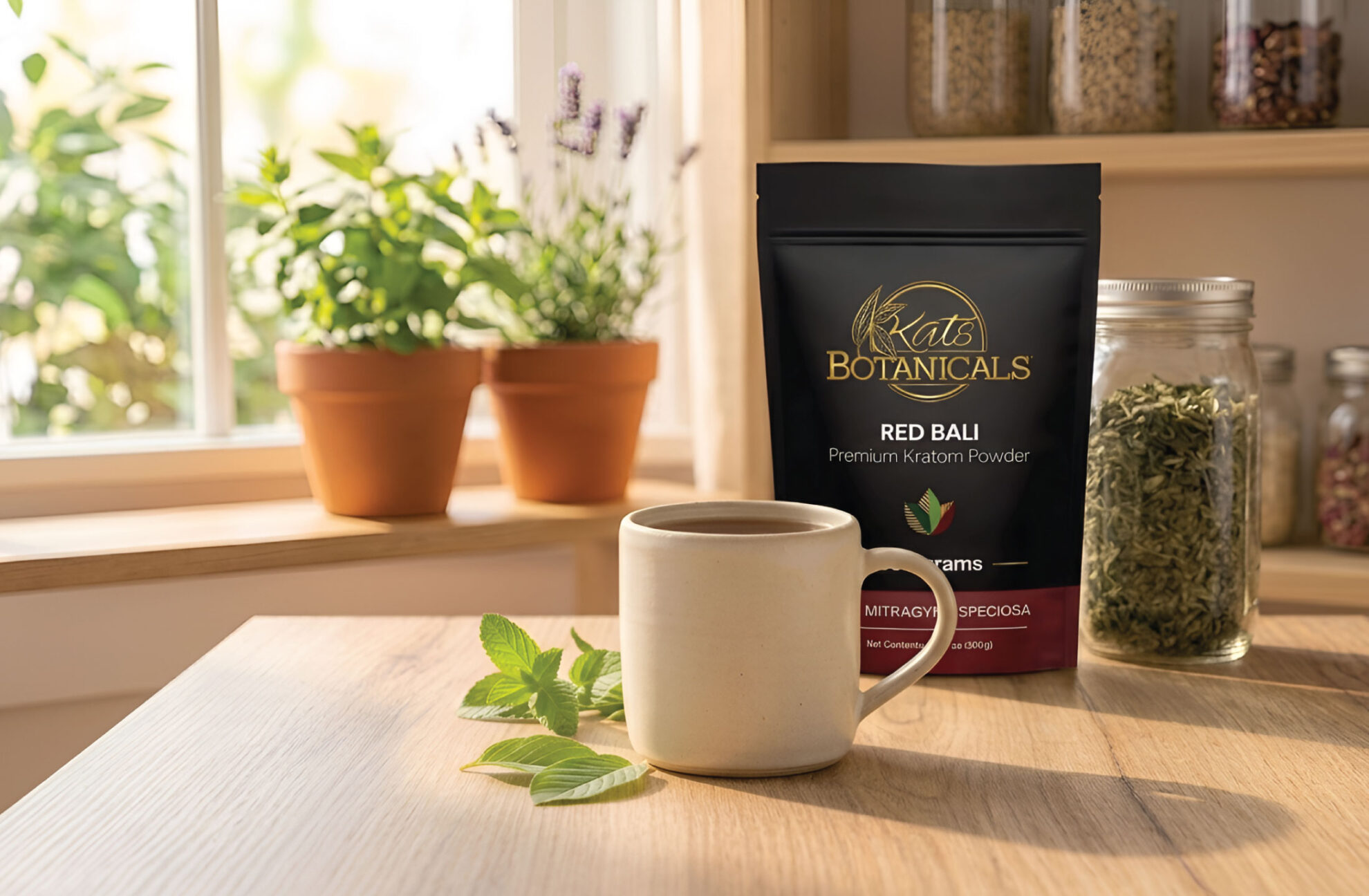
Red Bali is a single-strain red vein kratom known for a smooth, relaxed character, and it’s the gentler, more beginner-friendly option here. Like Maeng Da, the “Bali” name doesn’t mark a growing location. It borrows the calm, easygoing reputation of the Bali region as a description of the feel. Kats Botanicals sources its Red Bali from the Kalimantan region of Indonesia.
The straightforward makeup is a big part of the appeal. Red Bali is one leaf type, not a blend, so what you get is a naturally balanced red with mitragynine, 7-hydroxymitragynine, and the rest of the leaf’s alkaloid range in their native proportions. For someone new to kratom, that simplicity is genuinely useful. There’s one variable to learn instead of two.
Red Bali and Wild Red Bali
There’s a second version worth knowing about. Wild Red Bali is grown exclusively in the wild rather than on managed plots, and it runs slightly more relaxing than standard Red Bali. Some people treat it as the evening counterpart to the daytime original. If you want the calmest end of the Bali range, that’s the one to look at. If you want something you can take earlier and still function, standard Red Bali is the safer pick.
How Red Bali Is Made
Red Bali uses a shorter drying process than most reds. The leaves spend a brief stretch in burlap bags, then finish drying in a cold, air-conditioned room. That faster, cooler finish is what keeps Red Bali on the lighter, more uplifting side, which is why you’ll hear it described as a daytime red despite being a single strain. It’s a small production choice with a real effect on the final feel.
Red Maeng Da vs Red Bali: The Key Differences
The core difference is structure and strength: Red Maeng Da is a stronger red-white blend for experienced users, while Red Bali is a milder single strain that works for any experience level. Everything else follows from that.
| Red Maeng Da | Red Bali | |
| Type | Red-and-white blend | Single strain |
| Strength | Stronger, more stimulating | Milder, more relaxing |
| Best for | Moderately experienced users | Beginners and all levels |
| Typical timing | Daytime, pre/post activity | Daytime or later, wind-down |
| Character | Energetic red with calm underneath | Smooth, easygoing calm |
Strength and Experience Level
If you’re new to kratom, Red Bali is the more forgiving place to begin. Its single-strain makeup and gentler feel leave less room for surprises. Red Maeng Da rewards people who already know how their body responds, because the added white-vein content pushes it harder. A dose of Maeng Da that feels right to a seasoned user could feel like too much to someone on their first week. The first-time kratom use guide walks through how to build up from a starter amount.
The Overlap Nobody Mentions
Here’s a wrinkle worth naming. A lower dose of Red Maeng Da can feel roughly comparable to a fuller dose of Red Bali. So the choice isn’t only about which strain is stronger in the abstract. It’s about how much you plan to take. Some people prefer taking less of a stronger blend. Others prefer taking a standard amount of a milder strain and knowing exactly what to expect. Neither approach is more correct.
How These Two Compare to Other Reds
Compared to other popular reds, Red Maeng Da sits on the stronger, more stimulating end while Red Bali sits toward the relaxed middle. That framing helps if you’re weighing a wider shelf.
Red Borneo is often described as a steady, balanced red, so Red Borneo vs Red Maeng Da comes down to whether you want even keel or extra push. Red Malay tends to run smooth and long, so Red Malay vs Red Maeng Da is a question of longevity versus intensity. And if you’re eyeing whites, White Maeng Da vs Red Bali is nearly a straight energy-versus-calm split, since the white leans stimulating and the red leans relaxed. Bali is the common baseline in most of these matchups because it’s easy to read against anything else.
Choosing Between Red Maeng Da and Red Bali
Start with Red Bali if you’re newer, want something gentle, or prefer a single strain you can learn cleanly. Reach for Red Maeng Da if you already know your tolerance and want a red with more drive. Both are daytime-friendly, both come as powder and capsules, and plenty of people keep both on hand for different days.
Whichever you pick, sourcing matters more than the label on the bag. Quality control in the kratom market falls largely to the vendor, and Kats Botanicals is qualified under the American Kratom Association’s GMP Standards Program, which requires an annual independent third-party audit covering manufacturing, labeling, and batch testing for alkaloid content, heavy metals, and microbial contamination. That testing is what separates a trustworthy red from a mystery bag.
Safety note: Individual responses to kratom vary. Start with a lower amount, especially with Red Maeng Da, and talk with your healthcare provider before adding any botanical to your routine, particularly if you take medication or have a medical condition.