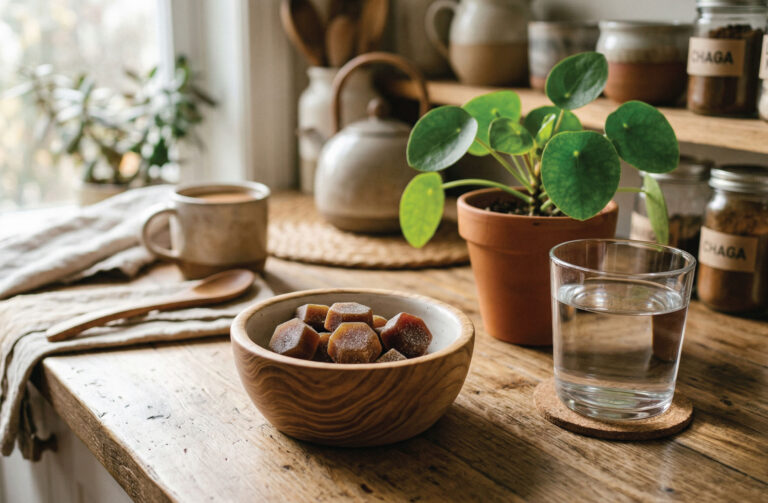

Gummies have become one of the most popular supplement formats, and functional mushrooms are no exception. Mushroom gummies now fill supplement store shelves and online marketplaces at every price point. Some are legitimately well-formulated products with clinically relevant doses of quality mushroom extract. Others are gummies with a decorative amount of mushroom powder that won’t do much of anything.
This article breaks down what different mushroom types may offer, how gummies compare to other supplement formats, and what a label needs to show before a product is worth your money.
Why Functional Mushrooms?
Functional mushrooms are a category of fungi studied for bioactive compounds that may support human health. Unlike culinary mushrooms eaten primarily for flavor and nutrition, functional mushrooms contain specific compounds, primarily beta-glucans, triterpenes, and other polysaccharides, that have been investigated for effects on immune function, cognitive health, stress adaptation, and physical performance.
The research base is still developing, particularly in human clinical trials, but a number of these mushrooms have centuries of traditional use in Ayurvedic and Traditional Chinese Medicine systems. Modern interest has shifted that traditional knowledge into supplement form, with gummies being among the more recent and accessible formats.
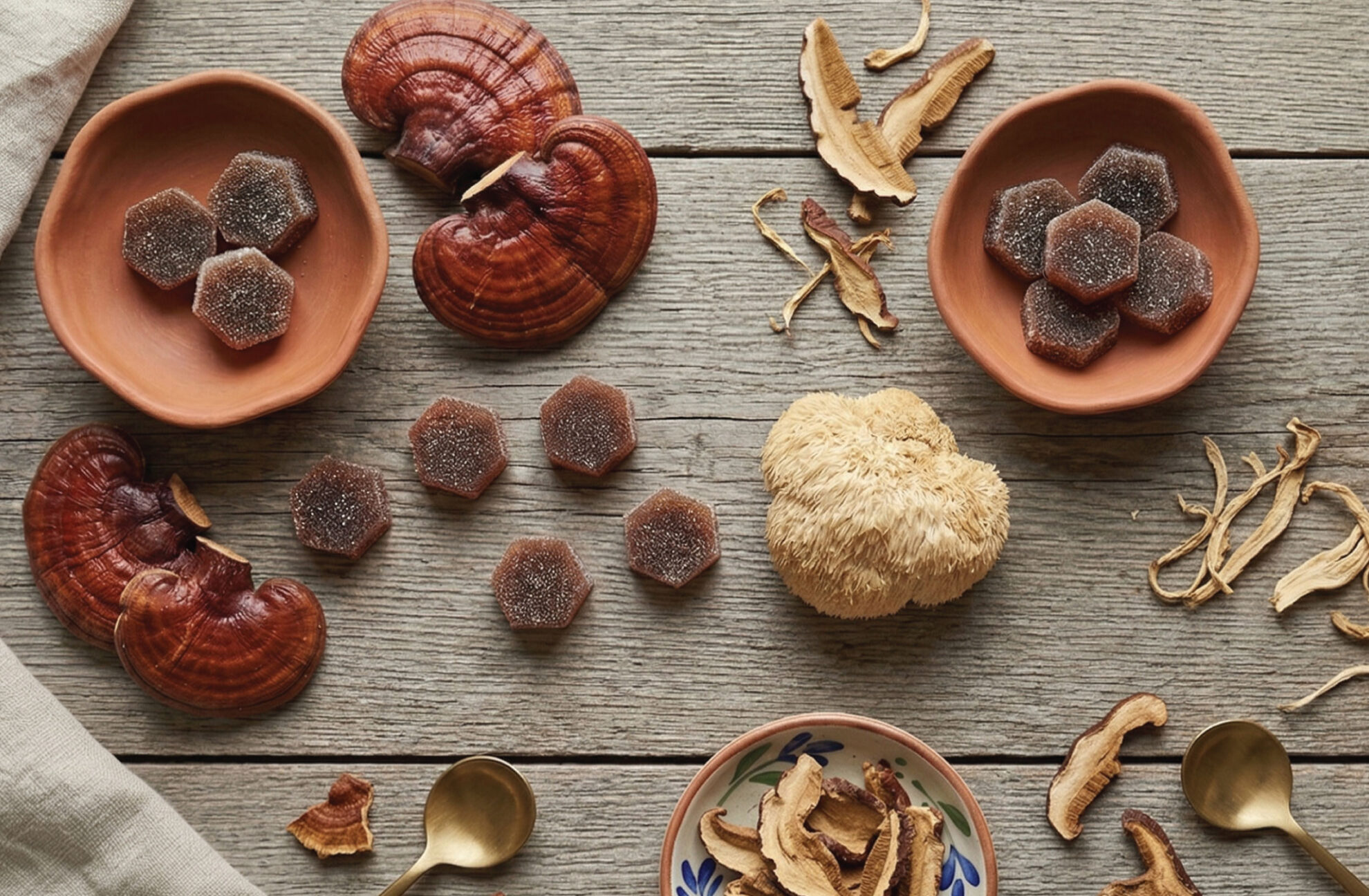
The Main Mushroom Types in Gummies
Choosing the right mushroom ingredients comes first before format. Whether you want to buy mushroom tinctures, powders, or gummies, check the label for the mushroom species included in the formula.
Lion’s Mane
Lion’s mane (Hericium erinaceus) is the most studied functional mushroom in the context of cognitive health. It contains hericenones and erinacines, two compound classes that may stimulate nerve growth factor (NGF) production. Early research, including small human trials, suggests lion’s mane may support memory, focus, and mood.
Lion’s mane gummies are popular among people who want a daily cognitive support supplement in an easy format. Quality products use hot-water extracted lion’s mane with a disclosed beta-glucan percentage rather than raw mycelium powder.
Reishi
Reishi (Ganoderma lucidum) has one of the longest research histories of any functional mushroom. It’s been studied for immune modulation, adaptogenic properties, and potential effects on sleep quality. In traditional Chinese medicine, it was called the “mushroom of immortality,” which speaks to its reputation for longevity support.
Reishi contains both beta-glucans and triterpenes, and the most bioavailable products use dual-extraction methods to capture both compound types. Reishi is often included in evening or stress-support formulations because of its calming associations.
Chaga
Chaga (Inonotus obliquus) is a fungus that grows primarily on birch trees in cold northern climates. It has a high antioxidant content and has been used in Russian and Eastern European folk medicine for generations. Its ORAC score, a measure of antioxidant capacity, is among the highest of any natural substance.
In gummies, chaga is often paired with other mushrooms rather than used alone. Look for dual-extracted chaga with specified levels of the key compound betulinic acid.
Cordyceps
Cordyceps, specifically Cordyceps militaris, is the cultivated variety used in most supplements. It’s been studied for its potential effects on physical endurance and oxygen utilization, making it a popular addition to pre-workout and performance-focused formulations. Adenosine and cordycepin are the primary bioactive compounds.
Cordyceps gummies are often marketed to athletes and active individuals. The traditional Cordyceps sinensis harvested from wild caterpillars in Tibet is rare and expensive; C. militaris is grown on grain substrate and is widely available in supplement-grade quality.
Turkey Tail
Turkey tail (Trametes versicolor) is one of the best-researched functional mushrooms for immune support. It contains two notable polysaccharide compounds, polysaccharide-K (PSK) and polysaccharide peptide (PSP), that have been studied in clinical settings, particularly in Japan where PSK has been used as an adjunct in oncology care.
Turkey tail gummies’ potential for immune-focused support, and more targeted uses, are a matter of ongoing research. As with other functional or medicinal mushroom compounds, using high-quality supplementation is recommended for best results.
Gummies vs. Capsules vs. Powders
Selecting the mushroom species you want in a supplement is step one. Step two is choosing how you want to take it. Several formats are available on today’s market.
Gummies are easy to take consistently, taste good enough that many people don’t skip them, and have no preparation involved. The downsides are that sugar (or sugar alcohols) are required to create the gummy matrix, the dose per piece tends to be lower than capsules to keep the gummy palatable, and heat processing during manufacturing can affect some sensitive compounds. Short answer: convenient, tasty, but possibly higher in sugary fillers and lower in beneficial compounds.
Capsules allow higher per-serving doses, avoid added sugars, and preserve extract integrity better than gummy processing. They’re the preferred format for people who prioritize dose efficiency and convenience.
Powders offer the most flexibility and often the highest dose per dollar, but they require mixing into a beverage or food. If you don’t find them palatable, you may find yourself skipping it.
Tinctures offer a quick and palatable way to create your own mushroom coffees or teas. For flexible dosing, consistent servings, and mushroom benefits without mess, you can’t go wrong with mushroom tincture drops.
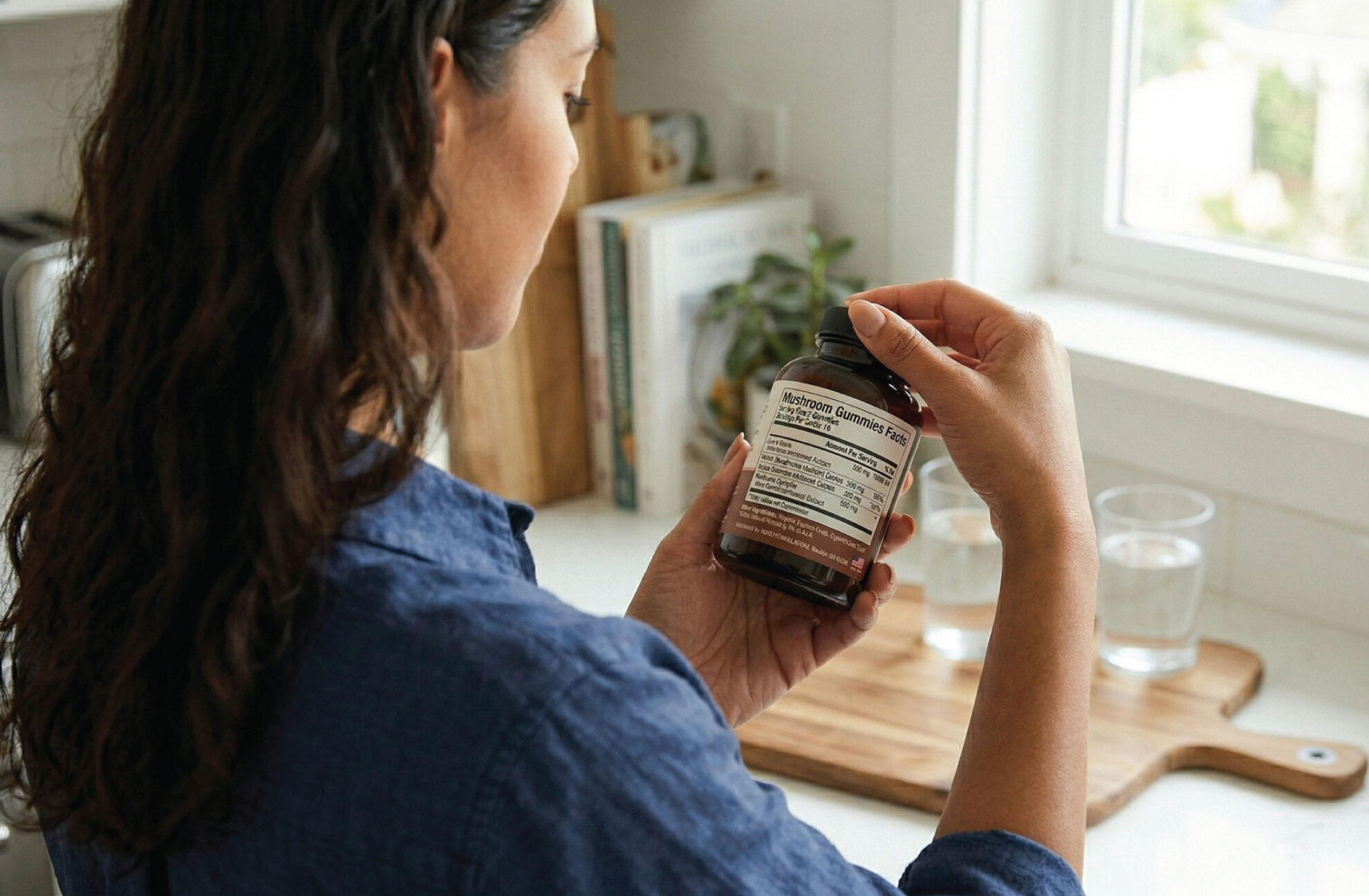
How to Read a Mushroom Gummy Label
Thirdly, you’ll want a quality product, which begins with reading the label. Before buying any mushroom gummy, these are the label elements to look for:
- Mushroom Extract vs. Mycelium Powder: The label should say “extract” rather than “powder” or “mycelium.” Whole mycelium powder has lower bioavailability and often contains the grain substrate it was grown on rather than pure mushroom material.
- No Mycelium-on-Grain: This is a quality concern specific to mushrooms grown in North America. Some products use mycelium grown on grain substrate and sell the entire dried mass, grain included, as mushroom powder, with low actual mushroom content. Look for fruiting body extracts or products that specify they are grain-free.
- Beta-Glucan Percentage: This is the key potency indicator. A quality mushroom extract will disclose the beta-glucan content per serving. If it’s not listed, the brand may not know, or may not want you to know.
- Milligrams Per Serving: Look for specific dosage numbers for therapeutic support, rather than vague “proprietary blends”. Most research on lion’s mane, for example, uses doses of 500-1000mg per day. See our guide to mushroom gummy dosage for a more detailed look.
- Third-Party Testing. Look for published certificates of analysis confirming potency and absence of contaminants like heavy metals.
See Kats Botanicals’ Good Manufacturing Procedures for a good example of product quality, transparency, and high standards in testing.
A Note on Amanita muscaria Gummies
You may encounter Amanita muscaria gummies in your search. These are in a different category from the functional mushrooms described above. Amanita muscaria contains psychoactive compounds, primarily muscimol and ibotenic acid, that affect GABA receptors in the brain. Products are processed to minimize ibotenic acid and maximize muscimol.
These products are not adaptogens in the same sense as lion’s mane or reishi. They’re closer to psychoactive supplements and are used for different purposes, sometimes for sleep support or altered states of calm. If you’re looking for cognitive or immune support from functional mushrooms, Amanita muscaria gummies are a different tool for a different goal.