Mushroom coffee has moved from fringe health stores to mainstream grocery shelves faster than most wellness trends. If you’ve seen it in your local market or in your social media feed and wondered whether it’s a gimmick or something worth trying, you’re asking the right question. The answer depends a lot on what’s actually in the product you’re looking at.
First, what is mushroom coffee? Well, it’s a coffee substitute made with ground functional mushrooms, or by dripping mushroom extracts into your regular coffee. Shopping for mushroom coffee boggles the mind, since there are so many products out there—and not all mushroom coffees are the same!
Some are thoughtfully formulated blends of quality arabica coffee and dual-extracted functional mushrooms. Others are mostly coffee with a trace of mushroom powder that barely registers in the final cup. Then, there are concentrated mushroom tinctures which can be used in coffee. Understanding what to look for separates a product that may genuinely add something to your morning routine from one that just adds a marketing label.
What Mushroom Coffee Actually Contains
Mushroom coffee is a blended beverage product that combines ground coffee (or instant coffee) with powdered extracts from functional mushrooms. The coffee itself is conventional. The mushrooms are what make it different.
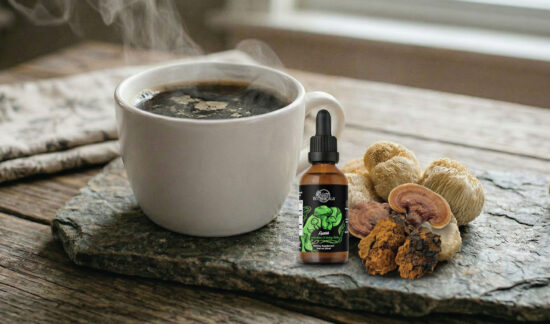
The most common mushrooms used in these blends include lion’s mane, chaga, reishi, cordyceps, and turkey tail. Each has a different research profile and a different reason to be in a cup of coffee.
- Lion’s mane (Hericium erinaceus) is the mushroom most associated with cognitive support. It contains compounds called hericenones and erinacines that research suggests may support nerve growth factor production.
- Chaga (Inonotus obliquus) is rich in antioxidant compounds and has been used in folk medicine traditions in Russia and Siberia for centuries.
- Reishi (Ganoderma lucidum) is associated with stress adaptation and immune support in traditional use and growing modern research.
- Cordyceps (Cordyceps militaris or sinensis) has been studied in the context of physical endurance and oxygen utilization.
- Turkey Tail (Trametes versicolor) is one of the most researched functional mushrooms for its potential immune-supportive properties. It contains beta-glucans and other polysaccharides that have been studied for their role in supporting gut and immune system health.
Most mushroom coffee blends use combinations of two to four of these. The specific mushroom blend, and more importantly the quality of the extract, matters more than whether a product simply lists mushrooms as an ingredient.
The Case for Mushroom Coffee
The appeal of mushroom coffee runs in a few directions. For some people, it’s about using the morning coffee ritual as a delivery mechanism for functional mushrooms they’d otherwise take separately. For others, it’s about the caffeine reduction: most mushroom coffee blends use roughly half the coffee of a standard ground blend, which may make them easier for caffeine-sensitive people to tolerate.
From a functional mushroom standpoint, the research is promising even if it’s still maturing. Lion’s mane has shown interesting results in small human trials around cognitive function and mood. Cordyceps has been studied in athletes for potential endurance benefits. Reishi has a long research history in Asia, particularly around immune modulation and stress response.
None of these mushrooms produce a fast, noticeable effect the way caffeine does. Their potential benefits are associated with consistent, regular use over weeks or months. That’s worth knowing if you’re expecting an immediate difference from your first cup.
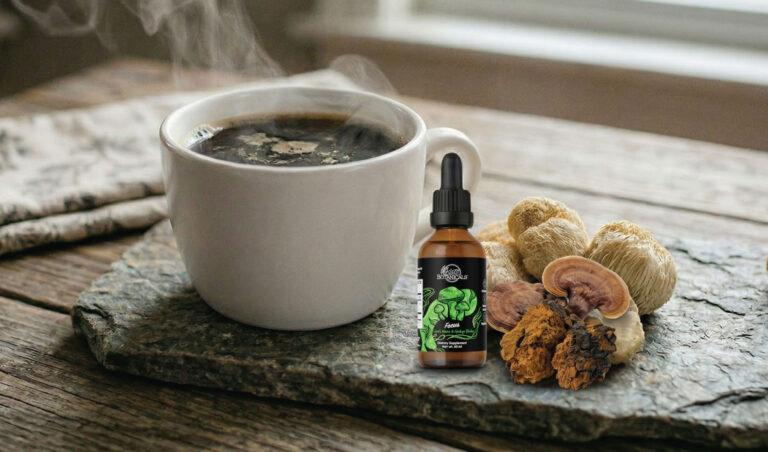
Buy functional mushroom tinctures to make your own mushroom coffees at home! All Kats blends are lab-tested for purity and formulated for your wellness needs.
What “Dual Extract” Means and Why It Matters
When you see “dual extract” on a mushroom supplement label, it refers to the extraction method used to process the mushroom. Functional mushrooms contain two main categories of bioactive compounds: water-soluble beta-glucans and alcohol-soluble triterpenes. A dual extraction process uses both hot water and alcohol to pull both compound types from the mushroom material.
Single-process extraction, whether water or alcohol only, leaves one category of compounds behind. This matters because the therapeutic profile of mushrooms like reishi and chaga depends on the combination of both compound types.
Hot water extraction alone is fine for mushrooms that are primarily beta-glucan sources, like lion’s mane and turkey tail. For chaga and reishi, dual extraction produces a more complete product. When a mushroom coffee or supplement lists its mushrooms without specifying extraction method or showing a beta-glucan percentage, that’s a signal to ask questions before buying.
How to Make Mushroom Coffee at Home
Making mushroom coffee from scratch gives you more control over ingredient quality and ratios than any pre-blended product. The basic approach is simple.
Option 1: Blend mushroom extracts into your existing coffee
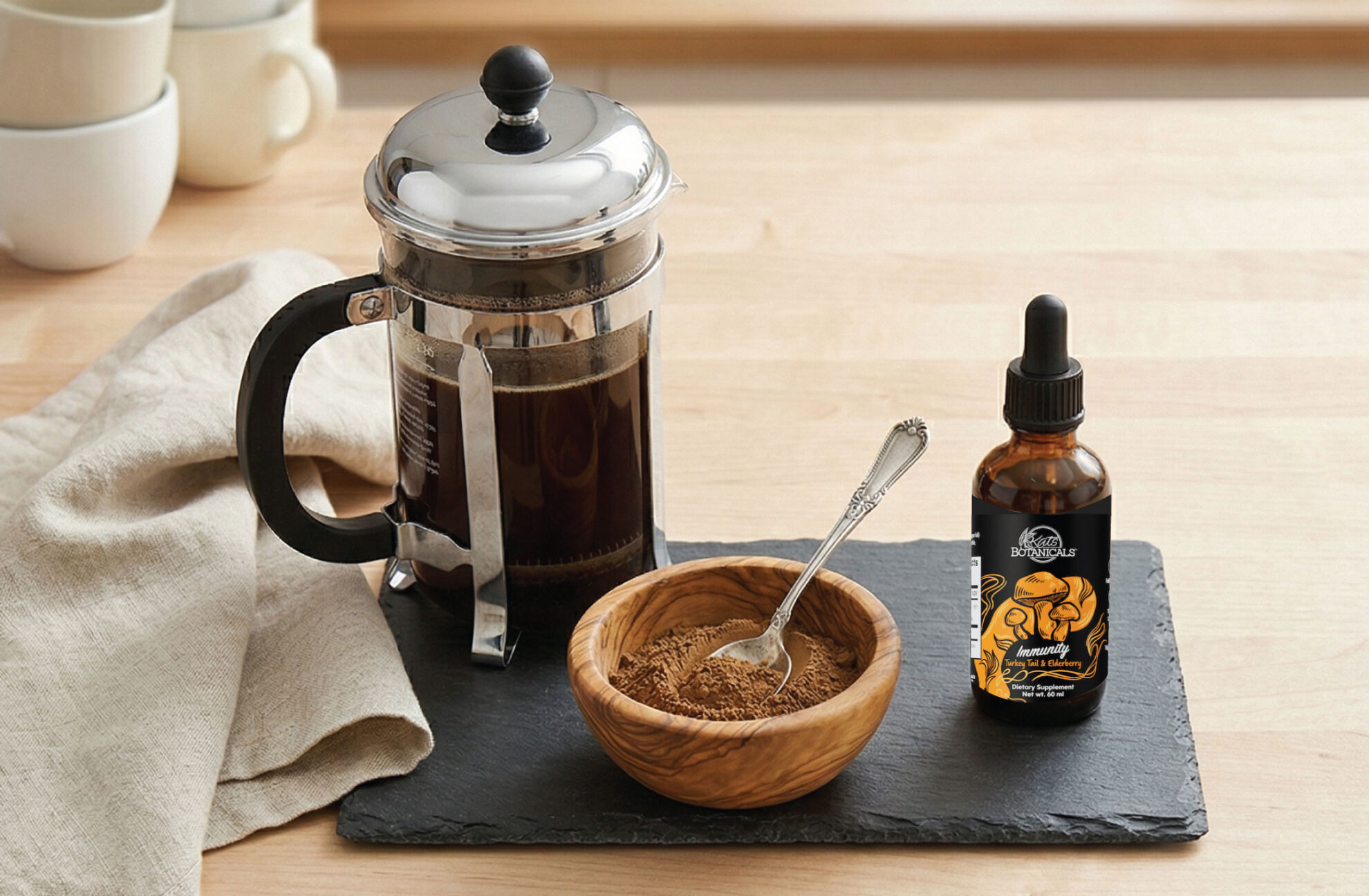
Purchase individual mushroom extract powders (dual-extracted where appropriate) and add them to your regular coffee after brewing. Start with 500mg of lion’s mane, cordyceps, or reishi per cup and adjust based on taste and tolerance. Most mushroom extracts are relatively neutral in flavor, though reishi and chaga have earthy notes that some people enjoy and others prefer to mask with a small amount of cinnamon or cacao powder.
Learn how mushroom tincture drops work and how they can make your mushroom coffee more palatable.
Option 2: Mushroom-infused coffee grounds
Some specialty retailers sell coffee grounds pre-mixed with mushroom powder. These are convenient but less customizable. Check that the mushroom content is listed in milligrams per serving and that it specifies extract rather than raw mycelium powder.
Option 3: Adaptogen lattes
For a caffeine-free version, brew the mushroom extracts in hot water with a dairy or plant-based milk, a small amount of sweetener, and a bit of vanilla. This works well as an evening wind-down drink when caffeine would be counterproductive but you still want the functional mushroom component.
To learn about how much mushroom tincture or powder you should use, see our guide to mushroom dosage.

Pre-Made Mushroom Coffee: What to Look For
If you’re buying a ready-made mushroom coffee blend, these are the markers of a quality product:
- Extract, not whole mushroom powder. Look for the word “extract” on the label. Whole mycelium powder has lower bioavailability than a properly processed extract.
- Specified beta-glucan content. Quality mushroom supplements disclose beta-glucan percentages. This is the primary bioactive compound you’re paying for.
- Milligram amounts per serving. Vague descriptions like “proprietary mushroom blend” without dose disclosure make it impossible to assess whether you’re getting a meaningful amount.
- Third-party testing. Supplements that publish certificates of analysis for potency and contaminants are more trustworthy than those that don’t.
The mushroom coffee market has plenty of products that check all these boxes. It also has plenty that don’t. Reading labels carefully is the best protection.
Note: Kats Botanicals provides a variety of mushroom tincture blends, botanical supplements like Kava and Moringa, and all with the same commitment to safety, purity, and quality. How do we do this? By implementing Good Manufacturing Procedures (cGMP) standards, strict lab testing, and making the lab reports available to our buyers.