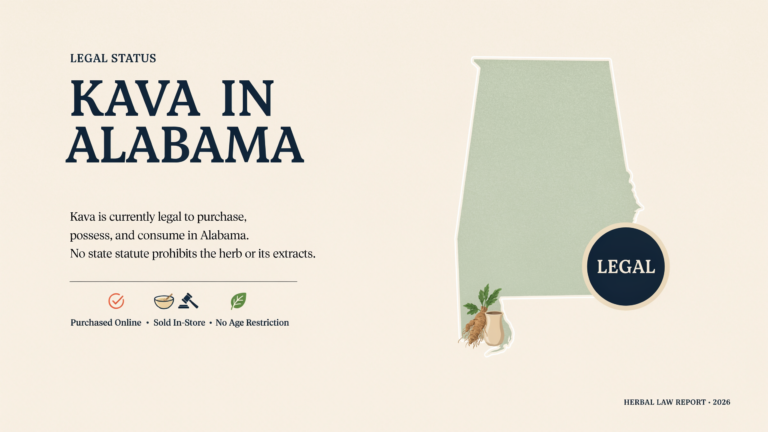
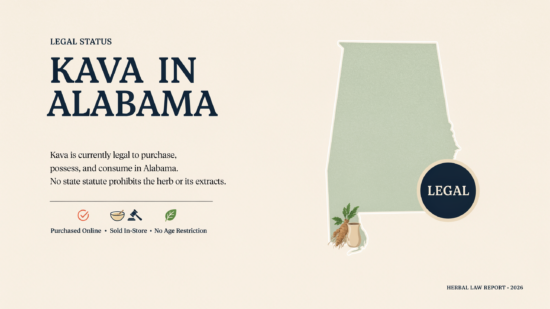
Yes, kava is legal to buy and drink in Alabama in 2026. No Alabama statute schedules it or bans it, and it sits under the same general framework that covers other botanical dietary supplements and beverage ingredients. If you landed here because of recent headlines tying the Alabama Attorney General to a botanical warning, here is the part those headlines bury: that alert concerns kratom-derived compounds, not kava root. The two plants get lumped together constantly, in search results and in casual conversation, and this page exists mainly to pull them apart so you can shop with a clear head.
Quick Answer: Kava is legal in Alabama, with no state law banning or scheduling it. It’s treated as a dietary supplement and beverage ingredient rather than a controlled substance. The 2026 Alabama Attorney General warning that pushed “kava” into some search results actually targets kratom-derived products, not the kava plant, so adults can still buy and drink kava at kava bars, specialty shops, and online.
Kava’s Legal Status in Alabama Today
Kava is legal statewide in Alabama, and it doesn’t appear on any Alabama controlled-substances list. There’s no age gate written into state law for it, no possession limit, and no special license a shop needs to pour it. You can walk into a kava bar in Birmingham or order kava powder to your door in Mobile without running into a state rule that singles the plant out. That’s the whole answer to the search that brought most people here.
The reason it stays legal is less about kava getting a special pass and more about how the law categorizes it. Kava, the root of the Piper methysticum plant native to the South Pacific, is sold in the United States as a dietary supplement and as a traditional beverage. It slots into existing rules for those products rather than standing under a statute of its own.
Where Kava Fits Under Alabama Product Rules
Kava is regulated as a dietary supplement at the federal level, which is what governs its status in Alabama by default. The Dietary Supplement Health and Education Act of 1994, the federal law that defines how botanical supplements are sold, is the framework kava products fall under, and the National Institutes of Health Office of Dietary Supplements lists kava among the botanical supplements it profiles for consumers. Alabama hasn’t layered a state-specific kava statute on top of that. So the plant is legal in the state for the same practical reason that a chamomile tincture or a valerian capsule is: nobody wrote a law naming it, and the general supplement and food-ingredient rules already cover it.
That distinction matters more than it sounds. “Legal because a law permits it” and “legal because no law restricts it” produce the same result at the register, but they behave differently over time. Kava’s status rests on the second kind. It’s available because Alabama has chosen not to schedule or restrict it, which is worth understanding when you see news that makes it sound like the state just took action against a botanical.
What “Legal” Doesn’t Cover
Legal to sell isn’t the same as tested or safe to use however you like, and that gap is where a lot of buyer confusion lives. Because kava is a supplement rather than a pharmaceutical, no state agency verifies the kavalactone content on a given bag or checks that “kava” in a product is noble kava root rather than aerial parts or a filler blend. Quality falls to the seller and, honestly, to you as the reader of the label.
Legal status also says nothing about how you use the product afterward. Alabama’s impaired-driving law applies to impairment from any substance, prescription or botanical, so a legal drink doesn’t become risk-free the moment you get behind the wheel. Kava in larger servings can leave you relaxed to the point of sedation. Treat it the way you would treat anything that mellows you out, and keep individual responses in mind, because they vary from person to person.
Why Kava Keeps Getting Pulled Into the Kratom Story
Kava keeps surfacing in Alabama legality searches because of a 2026 consumer warning from the Alabama Attorney General’s office, and that warning is about kratom, not kava. The search-engine mixup is understandable. Kava and kratom are both plant-based botanicals, both are sold at some of the same shops and bars, and both have short, similar-sounding names. When a state official issues an alert about one, the other gets swept into the same results, and readers assume the scrutiny covers both. It doesn’t.
What the Attorney General’s Warning Actually Names
The Alabama Attorney General’s office issued its 2026 alert to flag kratom-derived compounds, drawn from the Mitragyna speciosa plant, not the kava root. Reading the release directly is the fastest way to see the difference for yourself, and the office publishes its statewide cease-and-desist order targeting kratom products on the official Alabama Attorney General website. Nowhere in that action does kava, or Piper methysticum, get named. The concern the office raised is specific to kratom products, which is a separate substance with its own separate legal conversation in the state.
If you want to verify the disambiguation instead of taking anyone’s word for it, that primary release is the document to pull up. That’s exactly the step the news coverage and the thin state-name pages skip. They report the warning, or they template a generic legality page, and they leave the reader to guess whether their kava is part of the story. It’s not.
Kava and Kratom Are Not the Same Legal Question
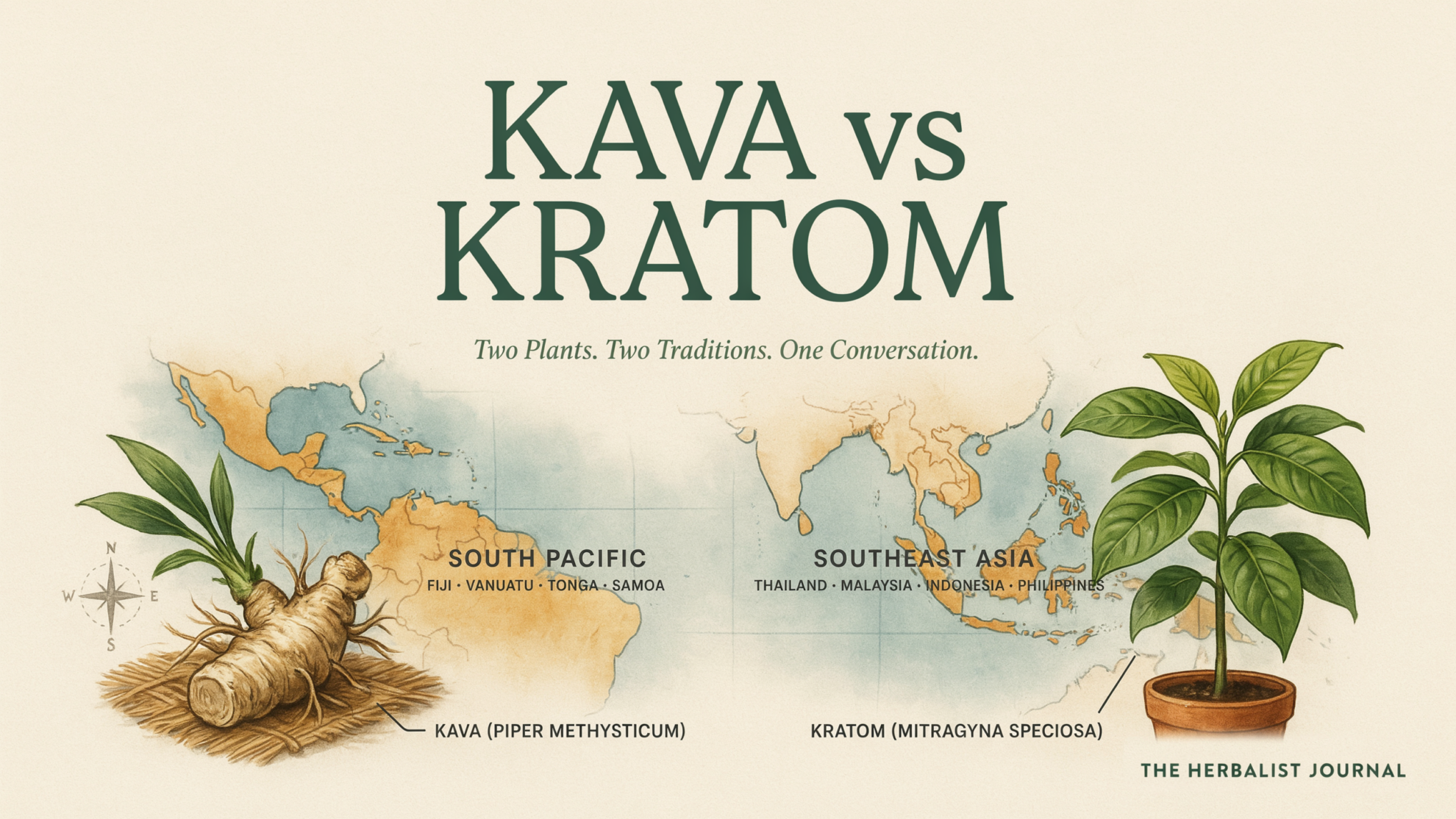
Kava and kratom are different plants that face different legal treatment, and conflating them is how good information goes wrong. Kava comes from the Piper methysticum root and has a centuries-long tradition as a ceremonial and social beverage across Vanuatu, Fiji, and beyond. Kratom comes from the leaves of a Southeast Asian tree, Mitragyna speciosa, and its alkaloids sit under an entirely separate regulatory discussion. One being in the news says nothing about the status of the other. For a fuller side-by-side of what actually distinguishes the two plants, the kava vs kratom comparison guide walks through the differences in depth. In Alabama today, kava’s standing is settled and quiet; the kratom conversation is the one generating headlines. Keeping the two straight is the single most useful thing to take from this page.

Buying and Drinking Kava in Alabama
You can buy kava across Alabama at dedicated kava bars, specialty and vitamin retailers, some smoke and botanical shops, and through online sellers that ship to the state. There’s no state-set minimum age, yet most sellers treat kava as an adults-only product anyway, and many will card at the counter. Expect a purchasing experience closer to buying a supplement or a craft beverage than anything gated behind a pharmacy.
Kava Bars and Local Retailers
Kava bars have grown into the most social way to try it, and Alabama’s larger cities have them. These are alcohol-free lounges that serve kava in traditional shell bowls or in mixed, flavored drinks, and they exist precisely because kava is legal to serve here without a liquor license. If a full bowl of traditional kava isn’t your speed, many pour lighter blends or offer kava-forward mocktails. For a first visit, ask what strain and preparation they use and start with a smaller serving. Kava’s effect tends to build, and the tongue-numbing tingle it can produce catches newcomers off guard.
Brick-and-mortar retailers, from vitamin shops to botanical stores, carry kava powder, capsules, and premade shots. Selection and quality swing widely from one shop to the next, which is the usual trade-off for buying in person: you get it today, but you get whatever is on the shelf.
Buying Online and What to Check on the Label
Buying kava online is legal in Alabama and gives you far more control over what you’re actually getting. The label is where you separate a serious product from a filler blend. Look for noble kava, the traditional cultivars grown for daily use, named on the packaging rather than an unspecified “kava” blend. Check that the part used is the root or lateral root, not aerial parts or stems, which are lower quality. Confirm the seller publishes third-party lab testing, so an independent lab, not the company, has verified the contents. And look for a clear origin, since reputable kava names its Pacific Island source, such as Vanuatu or Fiji.
Those four checks do more for your experience than any marketing line on the front of the bag. A product that names its cultivar and its origin is telling you it has nothing to hide.
Kats Botanicals’ Noble Kava Selection
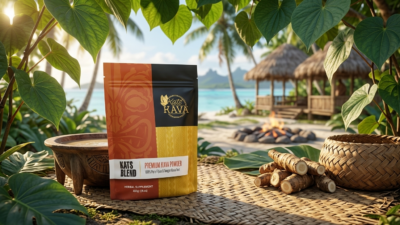
For readers who want a vetted option, the Buy Kava Powder Online – Premium Noble Kava Root & Extract collection from Kats Botanicals is built around authentic noble kava sourced from the Pacific Islands. The lineup runs from traditional kava powder to root extract,softgel capsules, atincture, and ready-to-drink kava shots and gummies, so you can match the format to how you actually want to use it. Everything is noble kava root rather than a generic blend, which is the same distinction worth checking on any label you buy. It’s one example of what the four label checks above look like when a seller actually meets them, offered here as a starting point rather than the only place kava exists.