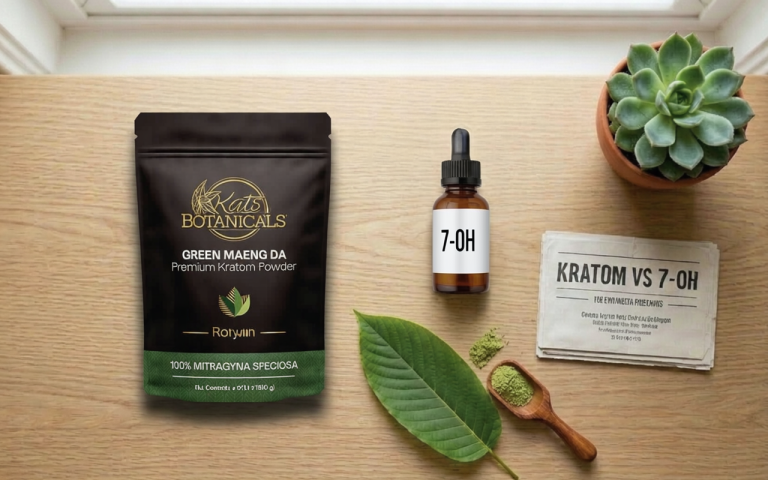
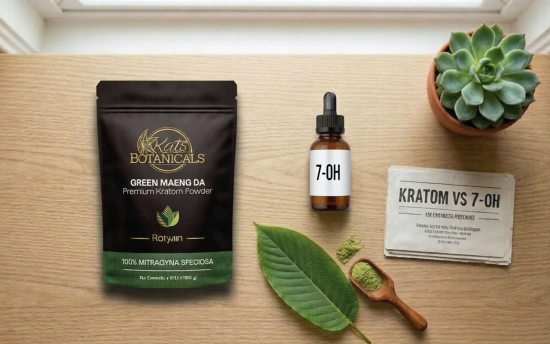
Kratom and 7-OH are not two versions of the same thing. Kratom is the whole leaf of the Mitragyna speciosa tree, ground into powder that carries dozens of kratom alkaloids. 7-OH, short for 7-hydroxymitragynine, is a single one of those alkaloids pulled out and concentrated far above the level it ever reaches in a natural leaf. So when people ask about kratom vs 7-OH, they’re really asking about the difference between a full botanical and an isolated, amplified compound. That distinction shapes everything else: how each is made, how strong it is, and how the kratom industry itself treats them.
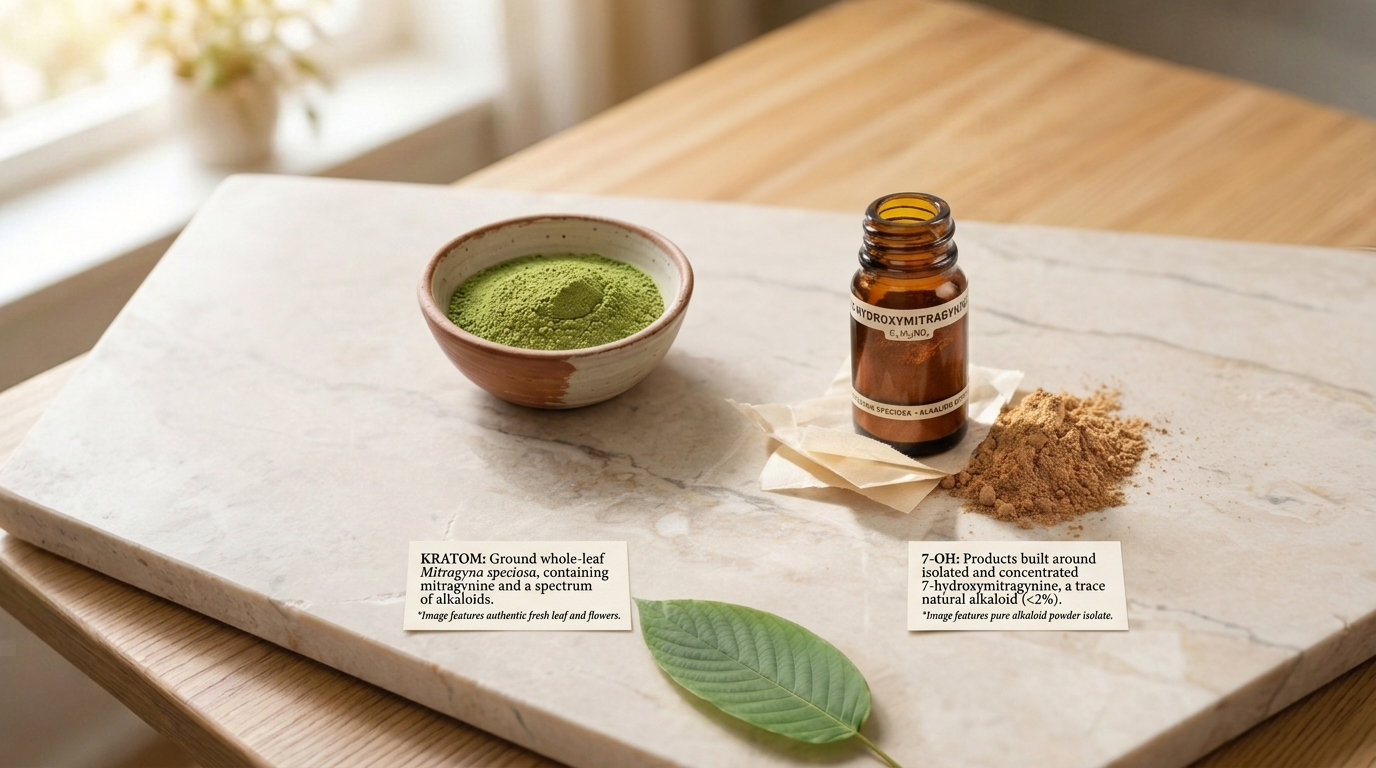
Quick Answer: Kratom is the ground whole leaf of Mitragyna speciosa, containing mitragynine plus a spectrum of minor alkaloids. 7-OH refers to products built around concentrated 7-hydroxymitragynine, a trace alkaloid that occurs at under 2% in natural leaf. The core difference is whole plant versus one isolated, enhanced compound, and the American Kratom Association draws a firm line between the two.
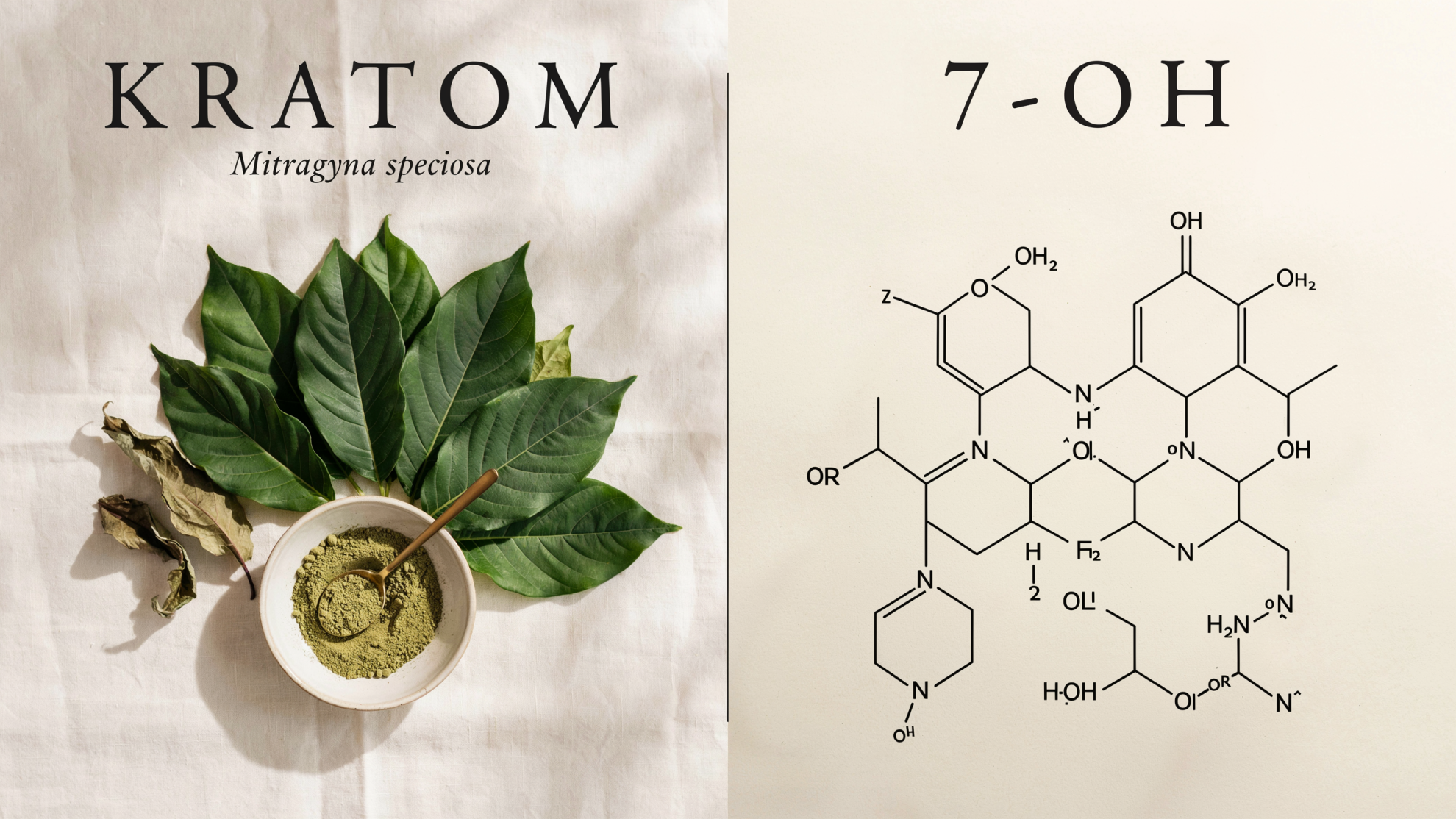
What kratom and 7-OH actually are
The confusing part is that 7-hydroxymitragynine exists inside kratom already. It just doesn’t exist there in the amounts that 7-OH products contain. Understanding that gap is the whole point.
Kratom: the full-leaf profile
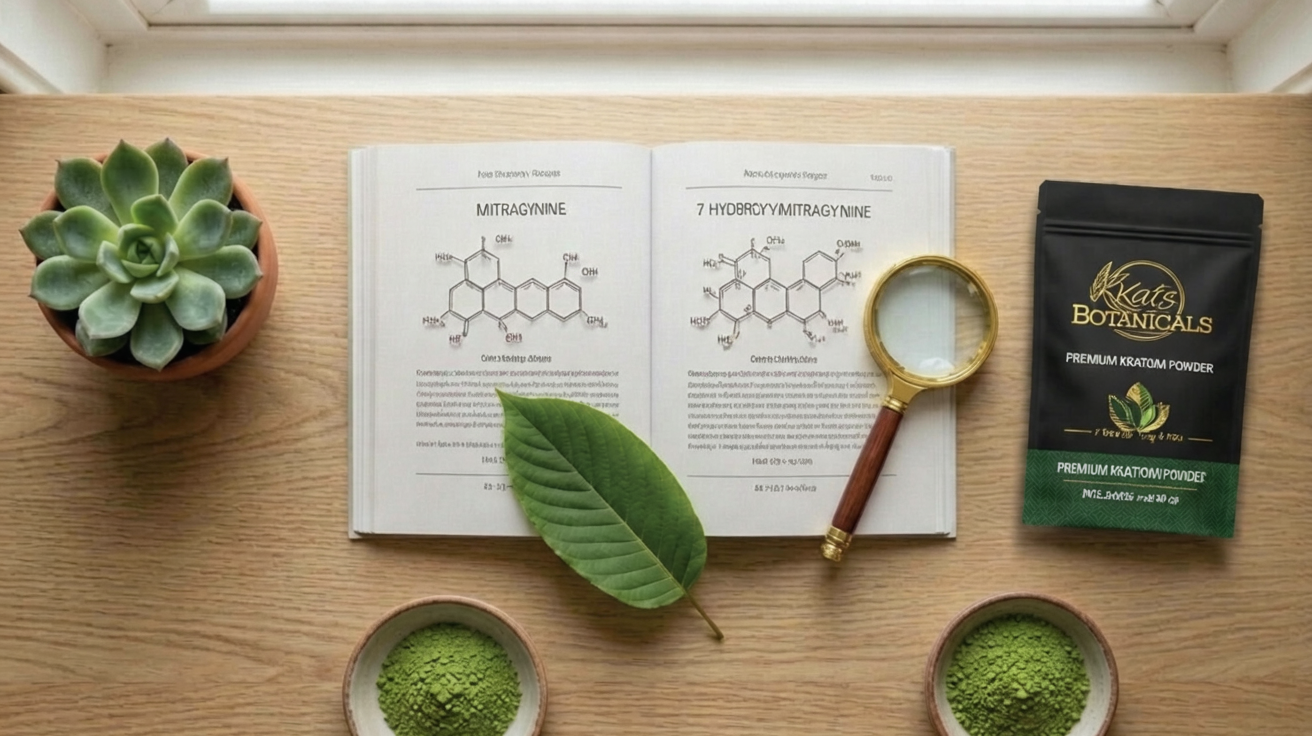
Kratom powder is dried, milled leaf and nothing more. Its chemistry is a mix, not a single ingredient. Mitragynine is the most abundant alkaloid, making up roughly 66% of the total alkaloid content in most leaves, and 7-hydroxymitragynine sits far down the list at well under 2% of alkaloids, often a fraction of a single percent. According to the FDA’s public information on kratom, 7-OH is a naturally occurring but minor constituent that comprises less than 2% of total alkaloid content in natural kratom leaves. The rest is a long tail of minor alkaloids like speciogynine, paynantheine, and speciociliatine.
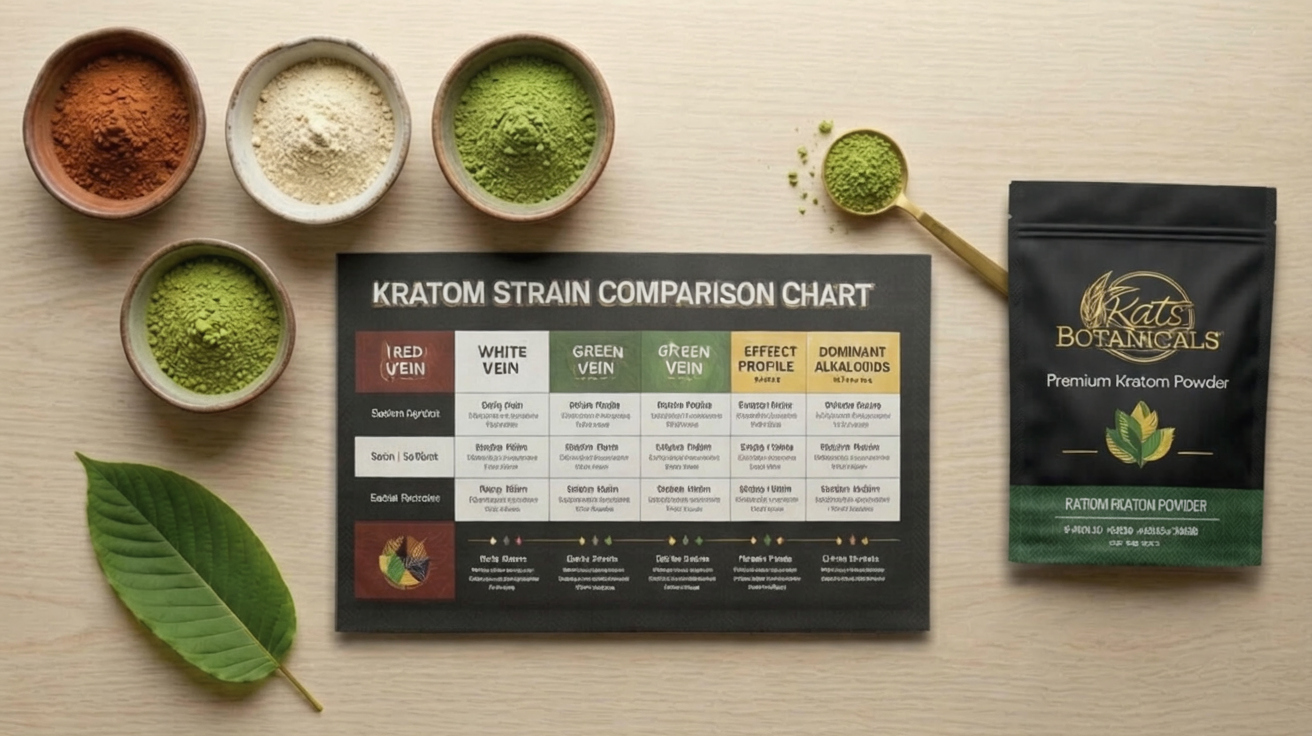
That mix is the point. When you brew a tea or take capsules, you’re getting the leaf’s own ratio, the same proportion nature produced. Vein colors and strains shift that balance slightly, which is why a red vein behaves differently from a white vein, but the underlying material is always the plant itself. Nothing has been stripped out or dialed up.
Worth naming plainly: mitragynine also converts to 7-hydroxymitragynine inside the body after you consume it. Your liver does some of that work on its own. So even a person who’s never heard of 7-OH is producing small amounts of it from ordinary leaf. The compound isn’t foreign. The concentration is what changed.
7-OH: one alkaloid, turned up
7-OH products flip the ratio on its head. Instead of leaving 7-hydroxymitragynine as the trace component it naturally is, manufacturers isolate or semi-synthesize it and build a product around that single molecule at levels the leaf never reaches. A tablet, shot, or gummy marketed as “7-OH” or under names like 7-OH Heaven is not ground leaf. It’s an engineered concentration.
Here’s the honest framing: this is a manufacturing decision, not a botanical one. Whole-leaf kratom is an agricultural product. A 7-OH isolate is closer to a lab output. Both start from the same tree, but only one of them still resembles what grows on it. If you care whether you’re taking a plant or a processed extract of one part of a plant, that’s the line that matters most. For a deeper look at the isolated compound itself, see our breakdown of what 7-OH actually is.
How the two compare
Side by side, the practical differences are easy to see.
| Feature | Kratom (whole leaf) | 7-OH products |
| Source material | Dried, ground Mitragyna speciosa leaf | Isolated or semi-synthetic 7-hydroxymitragynine |
| Alkaloid makeup | Full spectrum, mitragynine-dominant | Single alkaloid, concentrated |
| Natural 7-OH level | Under 2% of alkaloids | Amplified far beyond natural leaf |
| Processing | Minimal (dry and mill) | Extraction or synthesis and concentration |
| Industry standing | Covered by AKA GMP standards | Opposed by the American Kratom Association |
| Typical formats | Powder, capsules, teas | Tablets, shots, gummies |
The table makes the split obvious, but the number that deserves the most attention is that “under 2%.” A natural leaf keeps 7-hydroxymitragynine as a minor player. A 7-OH product makes it the entire show. Everything downstream, from strength to how regulators and trade groups view these products, traces back to that single change in proportion.
Potency and predictability
Concentration and predictability aren’t the same thing. A concentrated isolate delivers a much larger dose of one compound, which is exactly why the “start low, go slow” logic that applies to any kratom extract applies with even more weight here. With whole leaf, the built-in ratio gives you a consistent starting point across servings of the same strain. With a heavily concentrated single-alkaloid product, small changes in the amount you take represent much bigger swings in what you’re actually consuming. Individual responses vary in both cases, and neither product replaces the guidance of a healthcare provider who knows your history.
Why the difference matters to the industry
This is where kratom vs 7-OH stops being a chemistry lesson and becomes a real-world sorting question, because the organizations that advocate for kratom have already picked a side.
The American Kratom Association’s position
The American Kratom Association, the main advocacy body for the kratom community, has publicly opposed concentrated 7-OH products. In 2024 the AKA called on the FDA to take enforcement action against them, arguing that these amplified isolates are not natural kratom and shouldn’t be sold as such. The AKA’s GMP Standards Program, which asks participating vendors to submit to third-party testing for alkaloid content, heavy metals, and microbial contamination, is built around whole-leaf products, not engineered single-alkaloid concentrates.
That’s a meaningful stance to weigh. The trade group that spends its resources defending kratom access is the same one drawing a boundary around 7-OH. When the people arguing hardest for a category say a product doesn’t belong in it, that tells you something about how the category defines itself.
What the FDA has and hasn’t done
For context on the wider regulatory picture: the FDA hasn’t approved kratom for any medical use and maintains import alerts on kratom products. That applies to the leaf. Concentrated 7-hydroxymitragynine isolates raise separate questions the agency continues to examine, and in a 2025 announcement the FDA moved to restrict 7-OH opioid products specifically, while stating the action is not focused on natural kratom leaf products. None of this is medical advice about what either compound does. It’s simply the regulatory backdrop a buyer walks into. For a fuller picture of where this is heading, our guide on whether 7-hydroxymitragynine is banned tracks the latest.
Reading a product label
Practically, the way you tell them apart is the label and the lab report. A whole-leaf product lists the strain and vein, and a legitimate vendor publishes a certificate of analysis showing mitragynine and natural 7-hydroxymitragynine levels consistent with leaf. If you’re new to reading these documents, our walkthrough on how to read kratom lab test results covers what the numbers mean. A 7-OH product foregrounds the isolated compound, sometimes with a milligram figure for 7-hydroxymitragynine that no natural leaf could contain. If the marketing leads with “7-OH” as the headline ingredient, you’re looking at a concentrate, not a plant.
Which fits a natural-botanical approach
If your reason for using kratom is that it’s a plant, whole leaf is the answer that actually matches that reason. That’s not a health claim; it’s a category one. A person choosing kratom for its botanical, minimally processed character gets the opposite of that from a single-alkaloid isolate. The two products can share a starting tree and still represent different philosophies about what you want to put in your body.
This doesn’t require declaring 7-OH good or bad. It requires knowing what each one is. Whole-leaf kratom keeps the plant’s own alkaloid ratio intact and sits inside the AKA’s testing framework. 7-OH concentrates strip that down to one amplified compound and fall outside it. The information you need to choose is right there in the composition. What you do with it is yours.