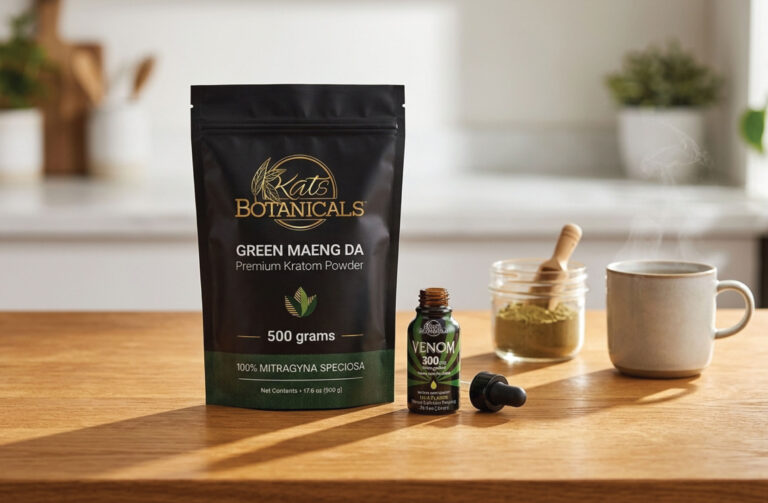
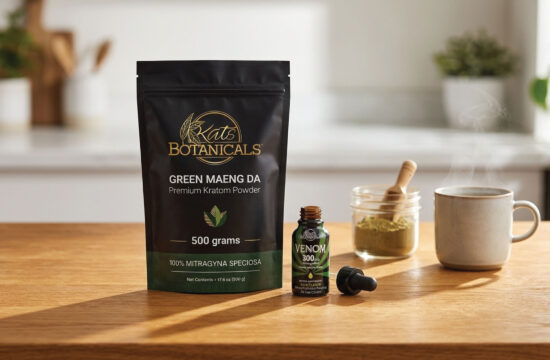
Kratom extract and kratom powder come from the same plant, Mitragyna speciosa, but they’re built for different users. Powder is the whole ground leaf with its full alkaloid range. It starts slowly and gives you room to dial in a dose. Extract is concentrated down to the heavy-hitting alkaloids, so it works faster, hits harder, and forgives fewer mistakes. If you’re new to kratom or want a steady daily routine, powder is the smarter starting point. If you already know your tolerance and want something compact and quick, extract earns its place. The rest of this comes down to how each one behaves and which trade-offs you’re willing to make.
Quick Answer: Kratom powder is ground whole leaf with a full alkaloid profile, a slower 30 to 45 minute onset, and flexible dosing in the 1 to 5 gram range. Kratom extract is a concentrated form that isolates the strongest alkaloids for a faster 10 to 20 minute onset at much smaller amounts. Powder suits beginners and daily users; extract suits experienced users who want speed and portability.
What Kratom Powder Actually Is
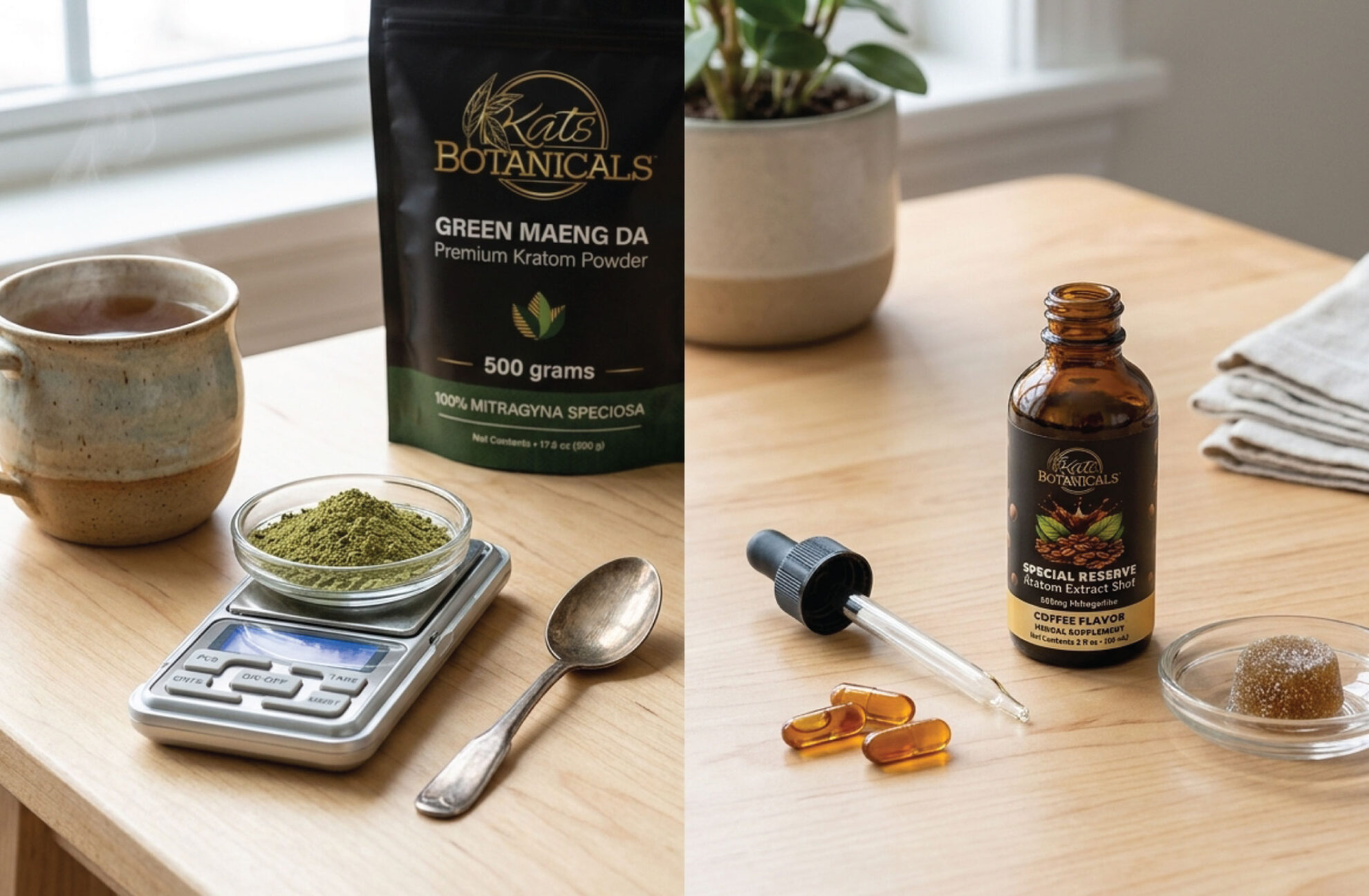
Kratom powder is dried Mitragyna speciosa leaf ground into a fine, green powder that keeps the full range of naturally occurring kratom alkaloids. That means mitragynine and 7-hydroxymitragynine, plus dozens of minor alkaloids that shape the character of each strain. Peer-reviewed chemistry of the leaf identifies mitragynine as the most abundant alkaloid, often making up a large majority of the total alkaloid content, with 7-hydroxymitragynine present in trace amounts near 2 percent.
Because nothing is stripped out, powder gives you a rounded, full-spectrum experience that changes with strain and region. That variety is the whole appeal. If you want to actually learn how your body responds to kratom, powder is where that learning happens, because you can move in half-gram steps and feel the difference. The kratom dosage guide is a good place to sanity-check those steps before you settle into a routine.
Strains and Vein Colors
Powder is sold by strain, and the vein color is a rough guide to what users report:
- Red vein kratom is associated with calm and evening wind-down.
- Green vein kratom sits in the middle, associated with balance and steady focus.
- White vein kratom, including white Indo and white Maeng Da, is associated with morning energy and motivation.
- Yellow vein kratom and specialty blends fall between the primary colors, and yellow kratom effects are often described as smooth and even.
Formats follow from the powder itself: loose powder for tea or the toss-and-wash method, kratom capsules for a no-taste option, and crushed leaf for brewing. Most people land somewhere between 1 and 5 grams per serving, with steady effects that run 4 to 6 hours.
What Kratom Extract Actually Is
Kratom extract is a concentrated form made by pulling the active alkaloids out of the leaf and reducing them into a denser product. Instead of grinding the whole leaf, producers steep raw kratom in a solvent such as water, ethanol, or a food-safe acid, then filter and concentrate the liquid until the alkaloids are far more dense than in raw powder. The result goes into shots, softgels, capsules, resins, or enhanced Bali kratom powder where regular leaf is dusted with extract.
Extract isn’t full-spectrum in the way powder is. It concentrates the dominant alkaloids and leaves much of the minor profile behind. That’s why extracts rarely carry a strain name. Once the alkaloids are isolated, the origin leaf matters less than the milligrams in the bottle.
How Kratom Extract Is Made
The process starts with raw, unprocessed leaf and a solvent chosen to separate the alkaloids without scorching them. After extraction, the liquid is filtered to remove plant material and reduced until a thick concentrate remains. Many current producers favor alcohol-free methods using solvents like citric acid or D-limonene, which pull a broader alkaloid range without harsh residue. A liquid kratom extract, an extract softgel, and a resin can all come from the same base concentrate; they just differ in delivery.
Reading Extract Labels
Here’s where buyers get burned. There’s no industry-wide standard behind ratio labels, so a “50:1 kratom extract,” a “full spectrum extract,” or a name like white diamond means whatever the vendor decided it means. A 50:1 claim is supposed to signal that 50 parts of leaf were reduced to 1 part extract, but nothing forces that math to be honest or consistent.
The number that actually tells you something is milligrams of mitragynine per serving, backed by a third-party lab report. If a product lists a ratio without a milligram figure, treat it as marketing, not information. A bottle labeled “150 mg mitragynine per shot” with a matching lab test tells you far more than “full spectrum vol 90” ever will. If you want a walkthrough of what a real report should say, the guide to reading kratom lab test results breaks it down field by field.
The Real Differences Between Extract and Powder
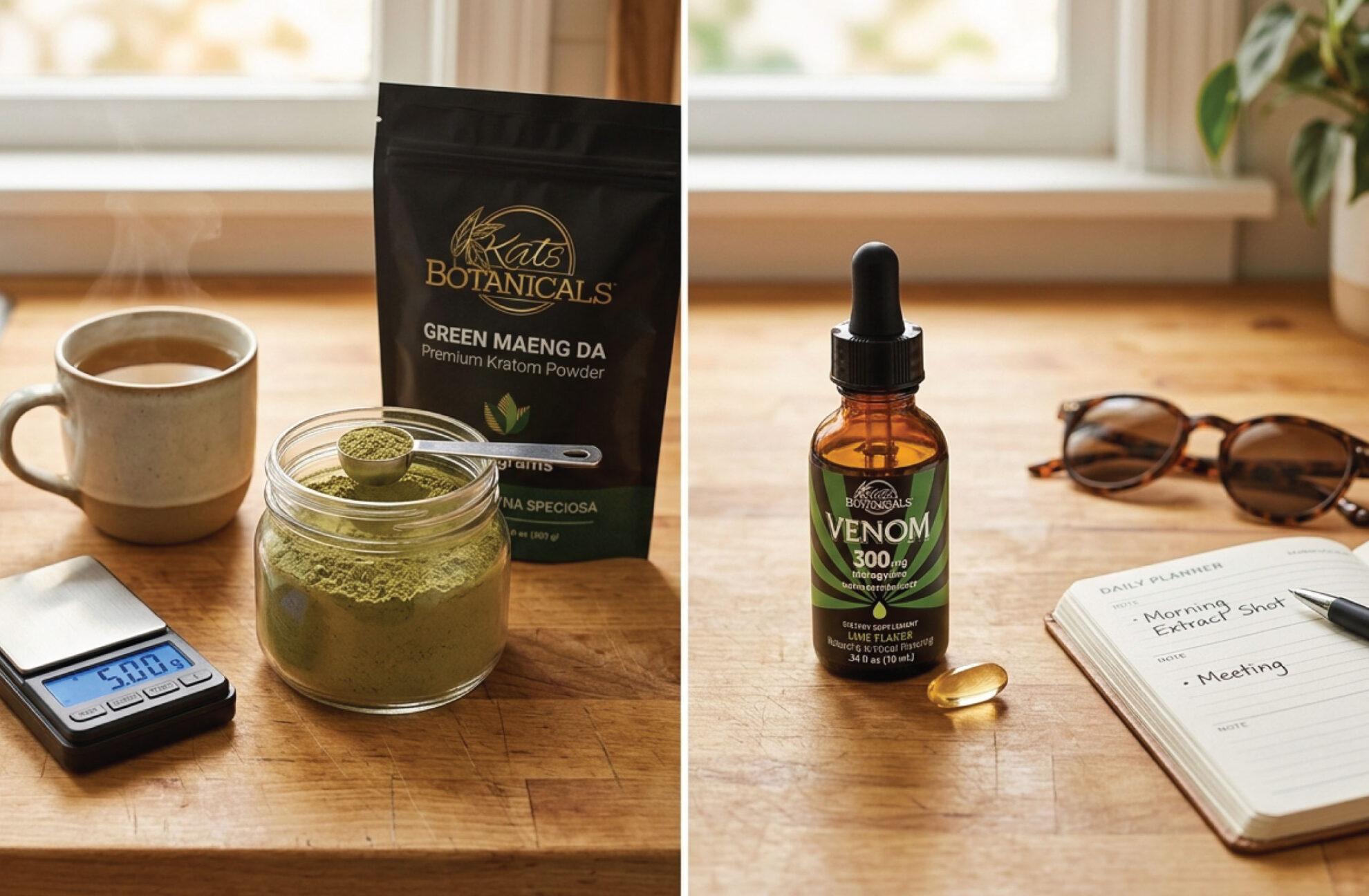
Both come from the same leaf, but the finished experience splits in almost every way that matters. One is broad and gradual. The other is narrow and fast.
Potency and Alkaloid Content
Powder carries the full alkaloid range, so its effects feel layered and strain-specific. Extract concentrates the strongest compounds and drops much of the rest, which produces a sharper, more one-note effect. If powder is a cup of coffee with flavor notes, extract is a ristretto: intense, direct, and less about nuance. Neither is “better.” They’re answering different questions.
Onset and Duration
Powder is slower to start, usually 30 to 45 minutes, and runs longer at 4 to 6 hours with a gradual climb. Extract can be felt in 10 to 20 minutes but tends to fade faster, closer to 2 to 4 hours. That quick onset is convenient, and it’s also exactly why extract is easy to overdo. People re-dose before the first serving has fully arrived.
Dosing and Control
This is the difference that matters most for a new user. With powder, you can start at 1 to 2 grams and move up slowly using a small digital scale. With extract, half a gram can carry the weight of 4 to 5 grams of powder, so there’s almost no margin for a rough guess. Extract rewards precision and punishes casual scooping. Beginners are better off with the first-time kratom use guide and a strain of powder before touching a concentrate.
Cost and Value
Per dose, powder is cheaper and easier to stretch, which adds up for anyone using it several times a day. Extract costs more upfront and more per serving, but you use far less each time. For occasional, situational use, that math can work. For a daily routine, powder is usually the better value.
| Feature | Kratom Powder | Kratom Extract |
| Alkaloid profile | Full-spectrum leaf | Concentrated, dominant alkaloids |
| Typical serving | 1 to 5 grams | 0.5 to 1 gram equivalent |
| Onset | 30 to 45 minutes | 10 to 20 minutes |
| Duration | 4 to 6 hours | 2 to 4 hours |
| Cost per dose | Lower | Higher |
| Best for | Beginners, daily routines | Experienced, situational use |
Which One Fits Your Kratom Routine
The honest answer depends on where you are as a user, not on which sounds more impressive.
When Powder Makes Sense
Choose powder if you’re still learning how kratom affects you, if you want the fuller strain-driven character, or if you plan to use kratom regularly and care about cost. Powder lets you experiment with red, green, white, and yellow vein options and build tolerance slowly. If you value control above everything, this is the format. Most people should start here and stay here for a while.
When Extract Makes Sense
Extract fits users who already have a baseline with powder and want something faster or more portable for specific moments. A liquid kratom shot, or an extract softgel, is compact and pre-measured, which is handy when brewing tea isn’t an option. The trade-off is real: you give up dosing flexibility, you pay more per use, and kratom tolerance can climb faster with concentrated products. Kats Botanicals labels each extract with its mitragynine content and backs it with third-party testing, because a concentrate you can’t verify is a concentrate you shouldn’t trust.