Functional mushrooms have earned their place in mainstream wellness, but the supplement market hasn’t made it easy to choose well. Walk into any health food store and you’ll find dozens of products with overlapping claims, similar-looking labels, and wildly different quality standards. Today, we’re sorting the fluff from the functional for shopping made easier!
This article breaks it all down for you. From the primary functional mushroom types and what each may offer, to the big question: What are the best mushroom supplements? We’ll share our favorite tips and tricks for getting the best mushroom products for your personal wellness routine.
What Makes a Mushroom “Functional”
Not all mushrooms are functional mushrooms. The term refers specifically to mushroom species that contain bioactive compounds beyond standard nutritional value. These are most often beta-glucans, triterpenes, and other polysaccharides that have been studied for health effects.
Culinary mushrooms like shiitake and portobello provide real nutritional value, but functional mushrooms like lion’s mane and reishi contain additional potential. The functional species provide other compound classes that may interact with the immune system, nervous system, and metabolic function in ways that have been the subject of formal research.
Note: The term “functional mushrooms” is preferred over the older “medicinal mushrooms” term since they’re not regulated as medicine in the U.S.
Common functional mushroom species:
- Lion’s mane
- Reishi
- Cordyceps
- Chaga
- Turkey tail
The term “nootropic mushroom” is sometimes applied to species studied for cognitive effects, lion’s mane being the primary example. “Adaptogenic mushrooms” refers to species that may support the body’s response to physical and psychological stress. Some mushrooms fall into both categories depending on how you’re using them.
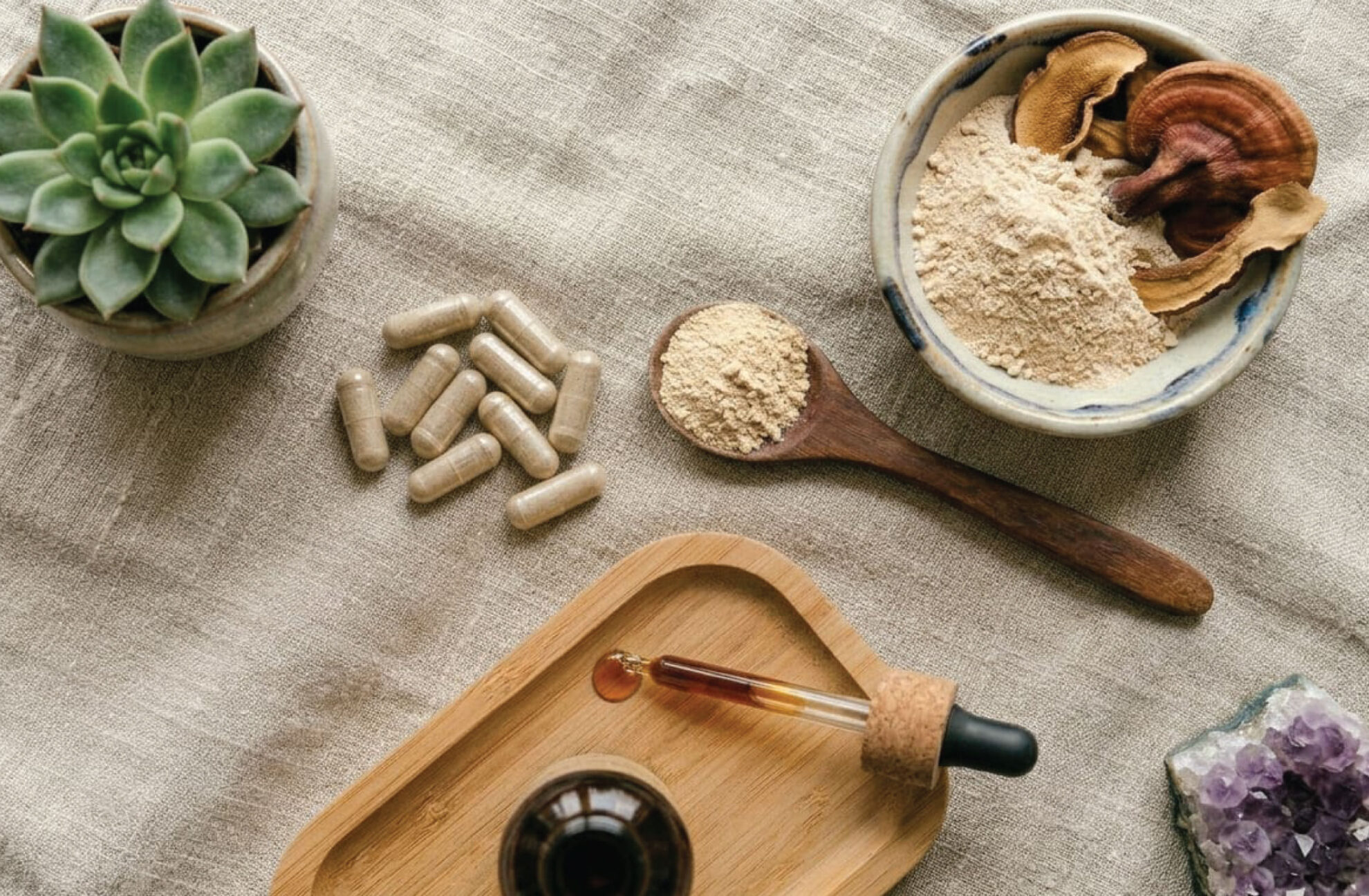
The Main Functional Mushrooms
Let’s take a closer look at the main species of functional mushrooms, and what makes each of them useful in a wellness routine.
Lion’s Mane
Lion’s mane (Hericium erinaceus) stands apart from other functional mushrooms because its research focus is specifically neurological. The compounds hericenones and erinacines found in the fruiting body and mycelium respectively may stimulate nerve growth factor (NGF) production. NGF plays a role in the development and maintenance of neurons.
Small human trials have found that lion’s mane may support cognitive function and mood in older adults. A widely cited 2009 study published in Phytotherapy Research found statistically meaningful differences in cognitive scores among older adults taking lion’s mane extract compared to a placebo group. More recent research has looked at potential applications for anxiety and depression, with early results worth watching.
For people who take one mushroom supplement, lion’s mane is often the first choice because its benefit profile is specific and the research is more targeted than most.
Reishi
Reishi (Ganoderma lucidum) has the longest historical record of any functional mushroom and one of the most varied research profiles. It’s been studied for immune modulation, stress adaptation, sleep quality, and antioxidant activity.
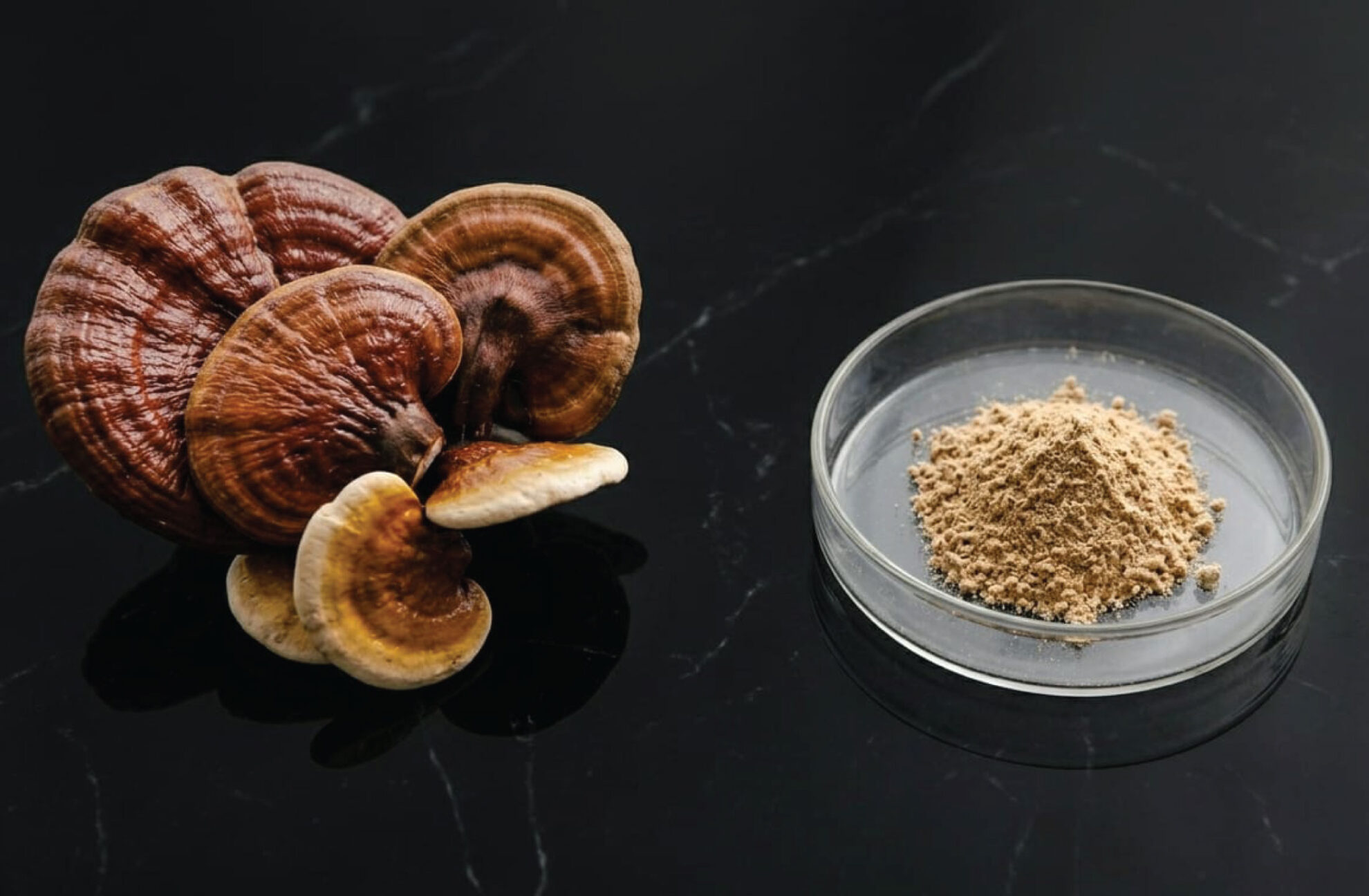
Reishi contains both beta-glucans and triterpenes, specifically ganoderic acids, that are unique to this species. The combination makes reishi one of the more complex functional mushrooms from a chemistry standpoint, and dual extraction is necessary to capture the full compound profile.
Most people who use reishi consistently describe it as a calming or grounding supplement rather than an energizing one. It’s often used in evening formulations or for stress management rather than morning focus support.
Cordyceps
Cordyceps (Cordyceps militaris) is the functional mushroom most associated with physical performance. Research has looked at its effects on VO2 max, ATP production, and oxygen utilization. The key bioactive compounds are adenosine and cordycepin.
A 2016 study in the Journal of Dietary Supplements found that supplementation with Cordyceps militaris improved VO2 max in healthy adults over three weeks. The effect size was modest, but directionally consistent with the traditional Tibetan use of cordyceps as an endurance herb.
Cordyceps is a practical option for people who want mushroom support aligned with physical activity rather than cognitive or immune goals.
Turkey Tail
Turkey tail (Trametes versicolor) has arguably the strongest clinical research base of any functional mushroom, though much of it is from Japan and focused on specific clinical applications. Its two key polysaccharides, polysaccharide-K (PSK, krestin) and polysaccharide peptide (PSP), have been studied extensively for immune support.
PSK has been used as a complementary treatment in Japan alongside conventional cancer care for decades, and multiple clinical trials have examined its effects on immune cell activity. For general wellness consumers, turkey tail is primarily used for immune support, and the research base for that application is more established than for most other functional mushrooms.
Chaga
Chaga (Inonotus obliquus) grows on birch trees in northern latitudes and has a profile dominated by antioxidant compounds. Its concentration of superoxide dismutase (SOD) and other antioxidants has been measured at some of the highest levels found in any natural substance.
Chaga is used most often in tea or extract form for general antioxidant support and immune health. Unlike lion’s mane or cordyceps, its benefits are less targeted to a specific system and more oriented toward general protective effects from oxidative stress.
Related read:How to Make Mushroom Teas
Fruiting Body vs. Mycelium: Why It Matters
One of the most consequential quality questions in mushroom supplements is whether a product uses the fruiting body of the mushroom, the mycelium, or mycelium grown on grain. This distinction is important because it affects your experience with the product, as well as getting quality for your dollars.
- Fruiting body is the part of the mushroom visible above ground, what most people picture when they think of a mushroom. It contains the highest concentrations of beta-glucans and most of the therapeutically studied compounds.
- Mycelium is the root-like underground network. It contains some bioactive compounds, particularly erinacines in lion’s mane, but generally at lower concentrations than the fruiting body.
- Mycelium-on-grain (MOG) is a production shortcut where mycelium is grown on rice or oats and the entire substrate is dried and powdered. The grain content in these products can be 50-80% of the total, meaning you’re paying for grain filler while receiving far less actual mushroom material.
Quality brands use fruiting body extracts or clearly disclose the percentage of grain-free mycelium in their products. The label should specify one of these clearly. If it just says “mushroom powder” with no further detail, that’s a reason to look elsewhere.
Comparing Supplement Formats
Different formats are available for your convenience and preference. Here’s an at-a-glance comparison of the different forms of mushroom product you are likely to see on the market:
| Format | Dose Potency | Convenience | Bioavailability | Best For |
| Mushroom Capsules | Highest | High | Good | Extract quality focus |
| Mushroom Powders | Medium | Low (mixing) | Good | Cost per mg value |
| Mushroom Gummies | Lowest | Highest | Poor (heat loss) | Compliance strugglers |
| Mushroom Tinctures | High | High | Best | Custom dosing/flexibility |
What a Good Label Looks Like
A mushroom supplement label worth trusting will show:
- Specific mushroom species name (genus and species, not just “mushroom blend”)
- Extraction method noted (extract, not powder; dual-extracted where applicable)
- Beta-glucan percentage per serving (the primary potency marker)
- Milligrams per serving disclosed for each species in blends
- Third-party testing certificates (COAs) available on request or posted publicly
Proprietary blends with undisclosed amounts and no beta-glucan data should be treated skeptically. There’s no way to evaluate a product that won’t tell you what’s in it.
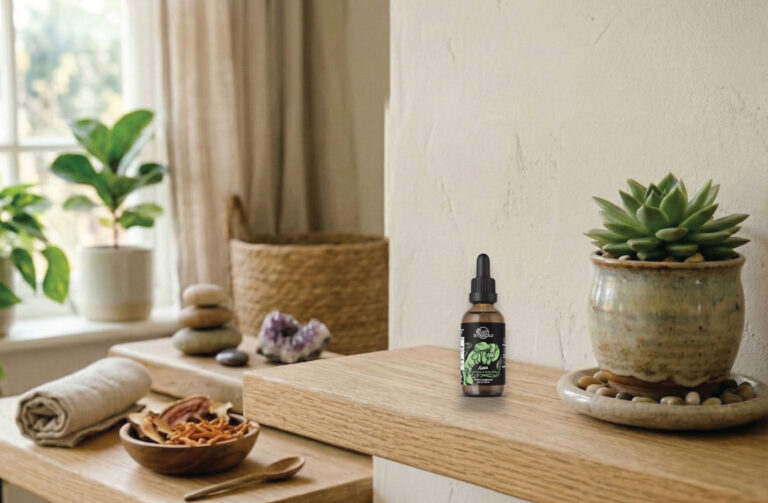
Kats’ mushroom tincture drops offer excellence in functional mushroom benefits. Beyond the high product value, we also offer detailed labeling, cGMP manufacturing standards, and batch-specific COAs—you’ll always know what’s in your bottle!