
Among natural supplements, many with little research backing up their claims, shilajit is different. Not because the marketing is better, but because the compound profile is genuinely unusual. Shilajit contains over 85 trace minerals, fulvic acid at concentrations found almost nowhere else in nature, humic acid, amino acids, and a collection of bioactive compounds. The nutritive and wellness benefits of shilajit have long fascinated researchers.
Research on botanical supplements takes decades, but Ayurvedic history often fills in the gaps. What we’re seeing with this unique substance is not only impressive, it’s exciting. Today we’re discussing the safety profile, uses and benefits of shilajit, and what makes this compound something you may want to consider in your routine.
What Makes Shilajit Biologically Interesting
Shilajit’s primary active compound is fulvic acid, which makes up a significant portion of a well-processed resin. Fulvic acid functions as a natural chelator and transporter: it binds to minerals and other nutrients and helps carry them into cells. That’s why shilajit’s mineral content is considered more bioavailable than what you’d get from a standard multivitamin. The nutrients don’t just sit in the gut; they get delivered.
ATP, the molecule that carries energy within cells, naturally declines with age. Shilajit supports ATP production as well as CoQ10, a nutrient essential to normal mitochondrial function. Both mechanisms contribute to the energy effects that users consistently report. Beyond energy, shilajit contains tyrosine, which plays a role in dopamine production. Dopamine supports motivation and focus, which is part of why cognitive improvements may also be reported.
The trace mineral profile matters too. Many people are chronically low on zinc, magnesium, and iron without knowing it. Shilajit contains all three, along with calcium, potassium, copper, selenium, and dozens more. The fulvic acid’s transport function means those minerals are more likely to actually reach where they’re needed.
Recommended Read: What Is Shilajit? Origins, Composition & How It Works

The Benefits the Research Supports
The existing body of shilajit research is promising. Let’s take a look at some key studies that pull back the curtain on shilajit benefits and uses.
Energy and Mitochondrial Function
The 2012 study we mentioned earlier showed shilajit’s effects on ATP production also shows promise for chronic fatigue applications. The 2012 study, which was performed using animal models,
found that purified shilajit preserved mitochondrial membrane potential and ATP levels while stabilizing key respiratory enzymes. This mechanism of supporting cellular energy production efficiency may explain why human users often report a steady, grounded energy effect without jitters or crashes, rather than a stimulant-like response. This is promising news for those suffering from low energy or chronic fatigue.
People who use shilajit regularly tend to describe the energy effect as grounded rather than stimulating. No spike, no crash. A steadier baseline that shows up most noticeably on days when you’d otherwise feel run down. That tracks with what the mitochondrial and ATP research suggests: it’s not adding stimulant energy, it’s improving how efficiently your cells make the energy they already produce.
Cognitive Function and Brain Health
Fulvic acid has attracted attention from Alzheimer’s researchers because of its potential role in disrupting tau protein aggregation, which is associated with cognitive decline. A 2012 study published in the International Journal of Alzheimer’s Disease found that fulvic acid reduced tau aggregation in laboratory models. The findings don’t translate to any treatment claim, but they point toward a mechanism worth watching.
The tyrosine content in shilajit contributes to dopamine production, which supports focus and motivation at a practical day-to-day level. Users consistently report improvements in mental clarity within the first few weeks of consistent use. The antioxidant activity of fulvic acid also plays a role; oxidative stress in brain cells is associated with cognitive fog, and reducing it correlates with clearer thinking.
Note here that low-quality shilajit products often lack these key cognitive compounds like fulvic acid and tyrosine due to poor processing or adulteration. Key factors in selecting a shilajit product that delivers is choosing pure Himalayan shilajit that’s been purified to remove pathogens, debris, or heavy metals, and lab-tested to show it’s got the right mixture of beneficial compounds.
Testosterone and Hormonal Health
Two reasonably well-designed clinical trials have found that men taking purified shilajit daily over 90 days showed measurable increases in free and total testosterone compared to placebo groups. The effect sizes were modest but statistically significant and consistent across both trials. Shilajit benefits for men have focused largely on shilajit effects on testosterone levels, sexual health, and vitality.
Shilajit provides trace minerals and fulvic acid that support overall endocrine function in both men and women, but it’s far less studied in women. Shilajit benefits for women have focused broadly on hair and skin health, vitality, and in some animal models, heart health, an important issue for women’s health. Some users report improvements in menstruation cycle regularity and reduced hormonal fluctuation with regular use of shilajit. Shilajit’s mineral profile is of interest for supporting women’s health, including: iron, magnesium, zinc, calcium, and copper.
Immune Support
Fulvic acid plays a role in complement fixation, a cellular-level immune response involved in isolating and neutralizing damaging particles in the body. This mechanism is part of how shilajit may support immune function over time.
A 2009 study published in the Journal of Ethnopharmacology found that shilajit exhibited complement-fixing activity in laboratory models. Complement fixation is a core part of the innate immune response. Shilajit’s fulvic acid triggers a cascade of responses in the body that enhance first-line defense against invaders without relying on adaptive immunity.
Iron and Anemia Support
Shilajit has been studied alongside iron therapy in the context of iron deficiency anemia. Animal models on fulvic acid and iron absorption have focused on fulvic acid’s chelation function. While human studies are needed, for people who run chronically low on dietary iron, that’s a meaningful potential benefit worth discussing with a doctor.
Side Effects and Safety
Purified, lab-tested shilajit is considered safe for most healthy adults at the doses used in clinical research. The key word is purified. Raw shilajit pulled directly from rock contains heavy metals at levels that aren’t safe to consume. The purification process removes them, but only third-party lab testing confirms it worked.
Reported side effects are uncommon. Some users experience mild digestive discomfort when starting, particularly at higher doses, which usually resolves within a week or two. People with heart conditions, low blood pressure, diabetes, or hemochromatosis should consult a doctor before use. Shilajit is not recommended during pregnancy or breastfeeding.
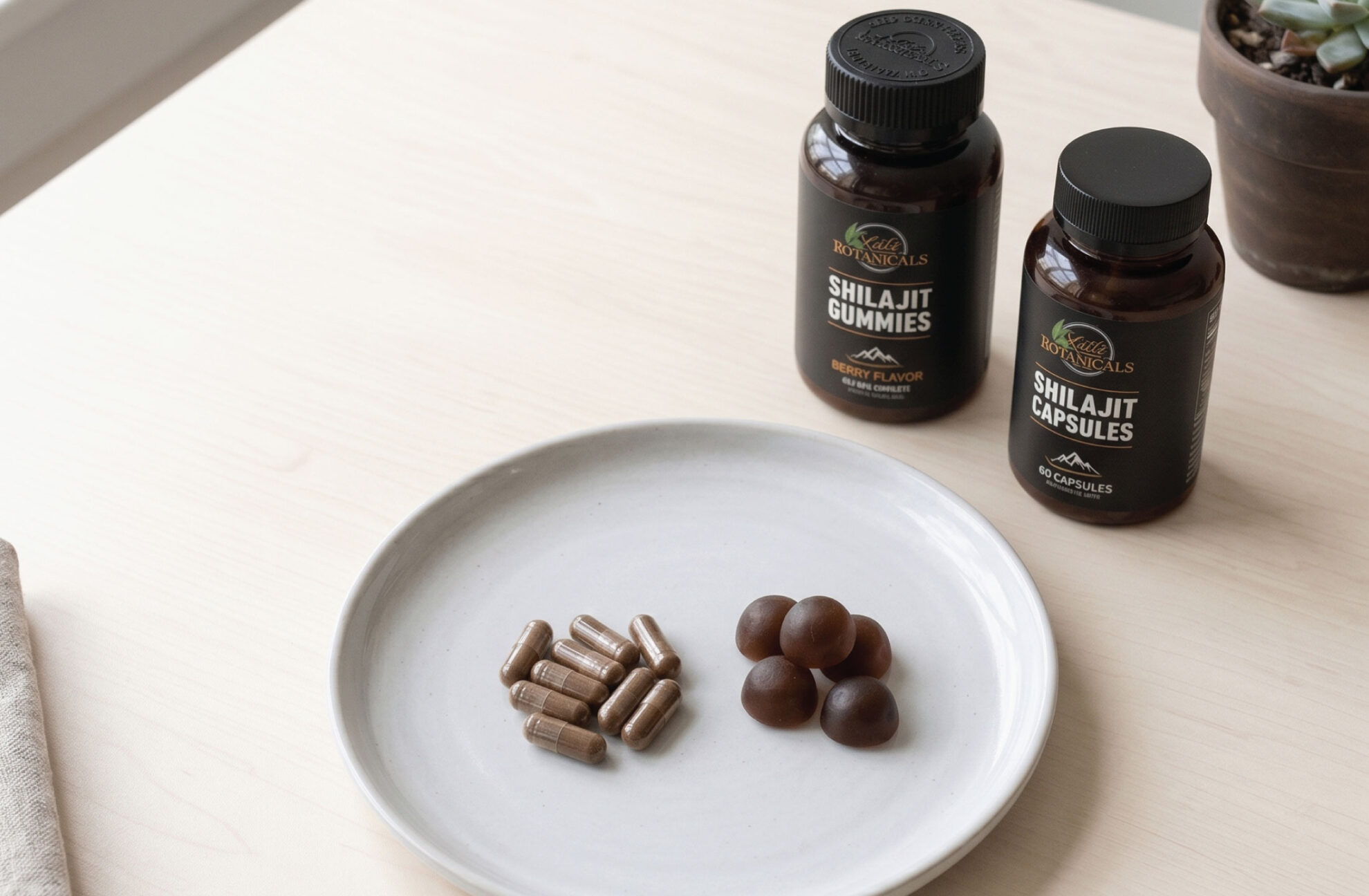
Shilajit Formats at Kats Botanicals
- Himalayan Shilajit Resin is the raw, unrefined form harvested directly from the mountains. It delivers the fullest spectrum of minerals and compounds with no extraction losses. The taste is strong and earthy; most people dissolve it in coffee or warm water. Our resin provides 300+ servings per jar.
- Himalayan Shilajit Capsules offer convenience without significantly compromising the compound profile. Pre-dosed and portable, they contain 63% fulvic acid per serving and are the most straightforward option for people who want consistent daily use without measuring.
- Himalayan Shilajit Gummies are the most accessible format, with 80% fulvic acid per serving and a berry flavor that makes daily supplementation easy. The gummy form uses extract rather than raw resin, which means some processing, but the fulvic acid concentration remains high.
All three formats are sourced from high-altitude Himalayan regions, third-party tested for heavy metals and purity, and free of fillers, additives, and preservatives. Every batch has a certificate of analysis available via the QR code on the packaging.
How to Get the Most Out of Shilajit Use
Before you begin a shilajit routine, select a lab-tested product from a reputable company, in the form you prefer. Both dosing and consistency are important to get the most out of your new routine. Here are a few tips on shilajit use, and how you can get started:
- Shilajit Forms: Choose resin, capsules, or gummies depending on your personal preferences. Consider your daily routine and what is most likely to fit seamlessly into your daily habits. Consistent use is associated with the best results. See our Shilajit Formats Guide to help you choose the best shilajit for your journey.
- Shilajit Dosage: How much shilajit should you take? It’s actually quite a small amount! We have a full Shilajit Dosage Guide for reference, but a good place to start is 100 mg of resin daily (or less), and adjust as you get a feel for it. Most of the clinical research used doses in the 250 to 500 mg range over 90 days; results below that threshold may be more modest.
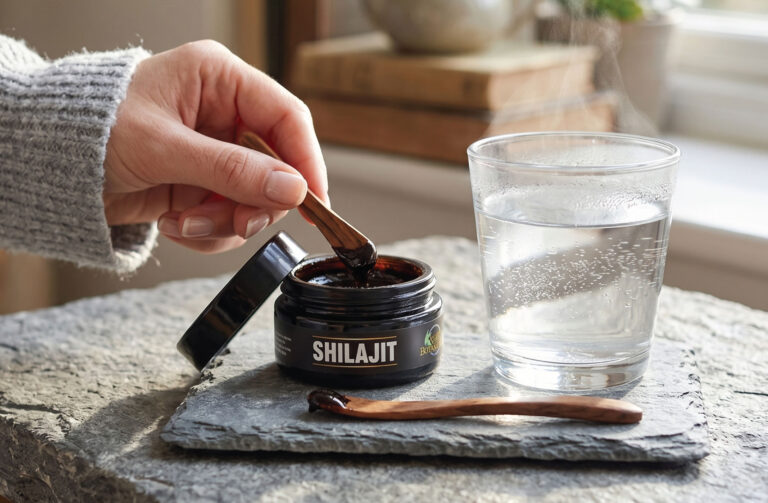
- Shilajit Use Tips: Many shilajit users work it into their morning routine, with some taking a second dose in the late afternoon (not too close to bed). Ideally on an empty stomach. Dissolve resin in warm, not boiling, water; excessive heat may degrade some active compounds. See our Shilajit Resin Guide for more information.