
Walk through the botanical supplements aisle (physical or digital), looking for shilajit and you’ll see two different names: Himalayan shilajit resin, and pure shilajit resin. The names sound like they’re describing two distinctly different products, but it’s not quite that simple. One term references sourcing, and the other refers to processing specifics. But what you need to know is, how can I tell if this shilajit product is worth buying?
So, we’re here to explain the difference in the terminology, and tell you a little more about shilajit, so you know how to buy the best shilajit for you.
What “Himalayan Shilajit Resin” Actually Means
When you see “Himalayan” used to describe shilajit, it just means that this is the region it’s been harvested from. It tells you the resin was harvested from rock formations in the Himalayan mountain range, typically at altitudes above 16,000 feet. That’s meaningful because altitude and geological environment directly affect the mineral composition of shilajit. High-altitude Himalayan sources are associated with higher concentrations of fulvic acid and a broader trace mineral profile than lower-altitude sources from other mountain regions like the Altai or the Caucasus.
It does not, on its own, tell you anything about how the resin was processed after harvest. Raw shilajit pulled directly from Himalayan rock contains heavy metals, debris, and microbial contaminants. Before it’s safe to consume, it has to go through a purification process. A product labeled “Himalayan shilajit resin” could be raw, partially processed, or fully purified. The label may not make it clear which.
That said, Himalayan origin is a great place to start when shopping for a shilajit supplement. Our blog What Is Shilajitexplains more on the discovery of shilajit and how we make modern shilajit supplements.
What “Pure Shilajit Resin” Actually Means
Pure is a processing claim, not a sourcing claim. It indicates the resin has been purified, meaning the raw material has been cleaned of contaminants, filtered, and prepared for safe consumption. A product labeled “pure shilajit resin” may have come from the Himalayas, the Altai mountains, or somewhere else entirely; the label doesn’t specify.
The problem is that “pure” is also one of the most overused and least regulated words in the supplement industry. Any brand can put it on a label. Without third-party lab testing to back it up, it’s a marketing word, not a quality standard. Two products both labeled “pure shilajit resin” can differ enormously in actual purity, fulvic acid concentration, and heavy metal content.
To verify you’re really getting pure Himalayan (or other regional source) shilajit, look for two things, specifically:
- Lab-testing performed by third-party unbiased labs.
- Proof of those tests, usually in the form of viewable or downloadable Certificate of Analysis reports.
Reputable companies are happy to show you this information so that you know you are getting the purity you’re promised. Kats Botanicals takes it a step further with industry-best standards called the Current Good Manufacturing Program, or cGMP. This is a marker of top-quality production and safety standards.
Where the Two Terms Overlap
Ayurvedic medicine has praised shilajit as “nature’s elixir” and used it for hundreds of years. The natural benefits of shilajit are well-known in areas where the sticky substance is sourced. But when you’re shopping from across the world, you rely heavily on the company’s website to tell you what’s what, before buying. Here’s where the distinction between pure shilajit and Himalayan shilajit is important.
When a product is labeled “pure Himalayan shilajit resin,” it’s making both claims simultaneously: Himalayan sourcing and purification processing. Done right, that combination represents the highest quality version of the product. The Himalayan origin provides the mineral density and fulvic acid concentration. The purification removes the contaminants that make raw shilajit unsafe.
Most of the reputable shilajit resin products on the market fall into this category. Kats Botanicals’ Himalayan Shilajit Resin is sourced from high-altitude Himalayan regions and tested by a third-party lab for heavy metals, purity, and fulvic acid concentration. Both claims are verified, not just stated.
The overlap also explains why the terms get used interchangeably so often. When a brand is doing both things right, the distinction collapses, and they stop being careful about separating the two claims because from their perspective there’s nothing to distinguish. The problem is that this makes it harder for buyers to evaluate products where only one of the two things is true.
The Real Differentiators: What to Actually Look For
Whatever monikers you prefer, quality is everything when it comes to natural supplements. Here’s how you know your shilajit is the real deal.
- Fulvic acid concentration. This is the most bioactive compound in shilajit and the one with the most shilajit studies behind it. A quality product will list the fulvic acid percentage. Anything below 50% is on the low end; 60-80% is a reasonable range for a well-processed resin. If the label doesn’t list it at all; red flag.
- Third-party heavy metal testing. Not in-house testing. Not “tested for purity” as a vague claim. An actual certificate of analysis from an independent lab showing arsenic, lead, mercury, and cadmium levels. Shilajit forms in rock that naturally contains these elements. Purification removes them, but only testing confirms it worked.
- Sourcing altitude and region. Not all Himalayan shilajit is the same. Higher altitude sources (above 16,000 feet) generally produce more mineral-dense resin. Some brands specify the region or altitude; others don’t. Specificity here is a good signal that the brand actually knows its supply chain.
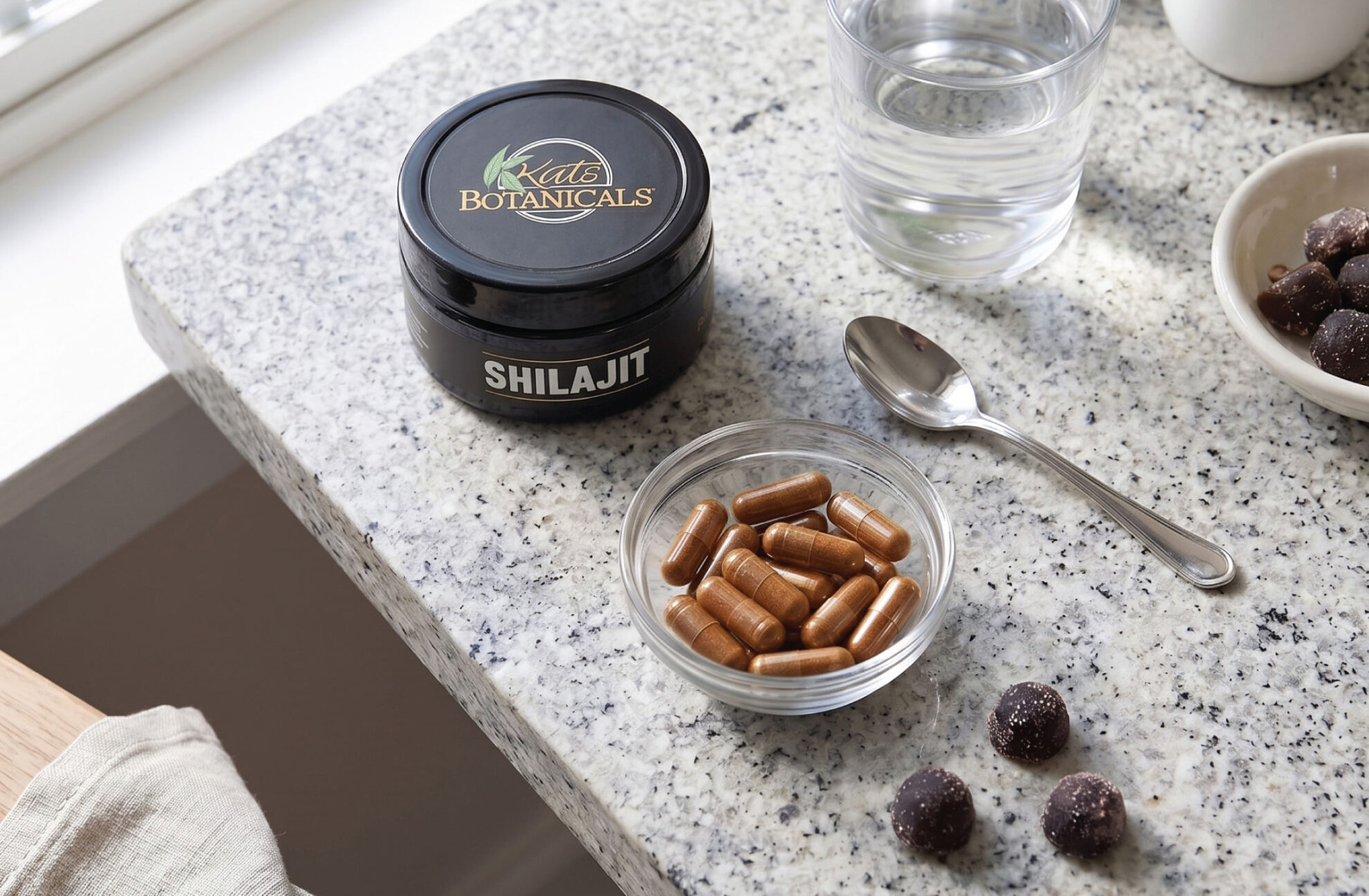
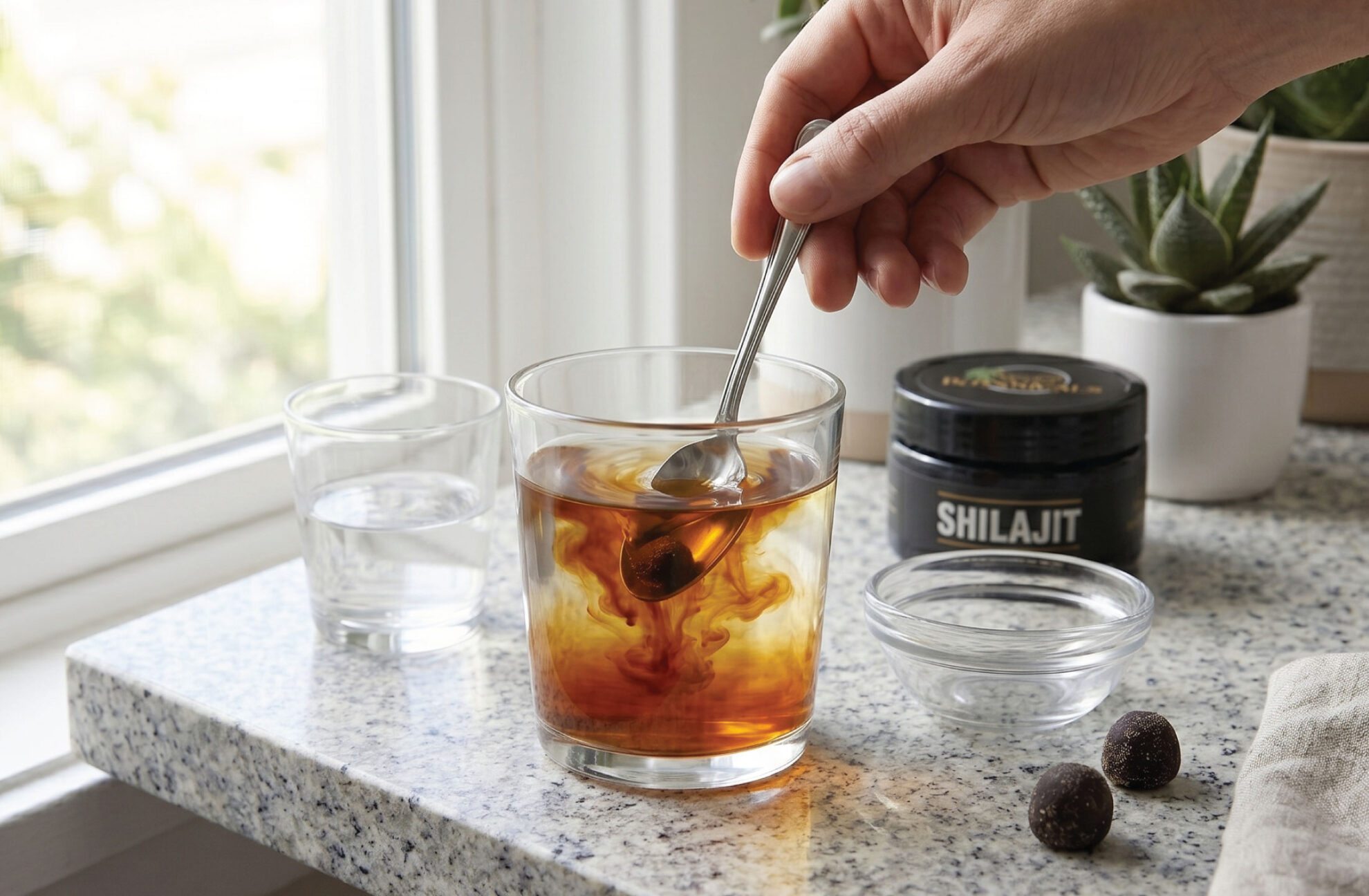
- Form and appearance. Authentic resin is dark brown to black, sticky at room temperature, and dissolves completely in warm water without residue. It will not dissolve in alcohol. It has a strong, earthy, mineral smell. Products that are oddly uniform in color, odorless, or don’t dissolve cleanly are worth questioning.
Shilajit Resin vs Other Formats
The shilajit resin vs capsule vs gummy question is related to the Himalayan vs pure question. The former addresses the product type, or form. Resin, regardless of how it’s labeled, is the least processed form of shilajit. Capsules – see how to use shilajit capsules – and gummies are made from extracted or powdered shilajit that has gone through additional processing steps, which may reduce the breadth of the compound profile.
If the resin is both Himalayan-sourced and properly purified, you’re getting the most complete version of what shilajit contains: the full spectrum of over 85 trace minerals, the fulvic and humic acid profile, and the bioactive compounds that get partially lost in further processing. That’s the practical argument for resin over other formats, independent of whatever the label says.
Himalayan Shilajit Capsules are a reasonable alternative for people who can’t tolerate the taste or want pre-measured doses.Pure Himalayan Shilajit Gummies are also an option if taste helps you stay on-routine. Just know that convenience comes with some tradeoff in compound density. For complete potency and no nutrient loss, resin is the better choice. For consistency, ease, and a more palatable experience, go with capsules or gummies.
Recommended Read: Shilajit Gummies: Benefits, Dosage & What to Look For