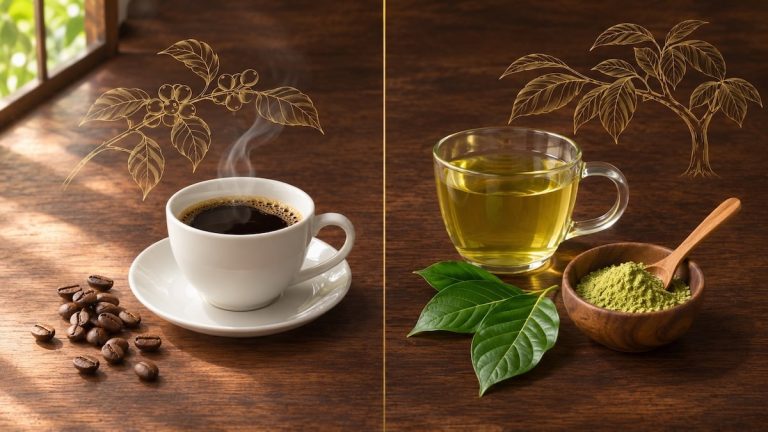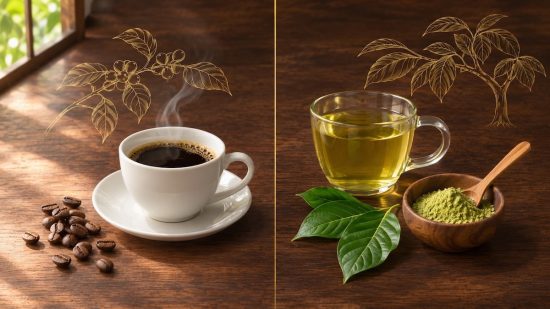
Kratom and coffee are considered botanical cousins. Both come from the Rubiaceae family, the same group of flowering plants that includes gardenias and about 13,000 other species. However, that shared ancestry is where the similarity mostly ends.
Coffee works through caffeine, a compound that blocks adenosine receptors and helps you feel awake. Kratom works through alkaloids like mitragynine, which interact with the body in a different way and produce a different kind of lift. People compare the two because they fill the same slot in a morning routine, not because they work the same way chemically.
Quick Answer: Kratom and coffee both belong to the Rubiaceae plant family, but they act through different compounds. Coffee delivers caffeine for alertness, while kratom delivers alkaloids like mitragynine that many users describe as a smoother, more layered lift. People often switch when coffee’s jitters or afternoon crash stop working for them.
Same Plant Family, Different Chemistry
The Rubiaceae connection is real and worth understanding, because it explains why kratom shows up in “coffee alternative” conversations so often. Coffee comes from the genus Coffea, native to Ethiopia. Kratom comes from Mitragyna speciosa, a tropical tree native to Southeast Asia. They evolved on different continents but descend from the same botanical branch.
What the Two Actually Share
Both plants are grown for their leaves and seeds, and both have long histories of daily use in the regions where they grow. Farmers in Thailand and Malaysia have chewed fresh kratom leaves for generations, much the way coffee became a fixture of daily life across East Africa and the Middle East.
Both are often enjoyed as brewed drinks. Kratom tea and a cup of coffee are prepared in similar ways: steep the plant matter in hot water, strain, and drink, so it’s easy to see why people tend to group them together.
Here’s the part most comparisons skip: being in the same family doesn’t mean the plants contain the same active compounds. In fact, kratom has no caffeine at all. So when someone says kratom is “like coffee,” they’re describing the routine and the general category of a pick-me-up, not the mechanism.
Where the Chemistry Splits
Caffeine is a single, well-mapped molecule. An 8-ounce cup of brewed coffee contains roughly 95 milligrams of it, according to USDA data, and it works by occupying adenosine receptors so your brain doesn’t register fatigue. Its half-life sits around five hours, which is why an afternoon cup can follow you to bed.
Kratom’s chemistry is more complicated. The leaf contains dozens of alkaloids, with mitragynine typically making up around two-thirds of total alkaloid content, depending on strain and harvest. These compounds don’t touch adenosine receptors the way caffeine does. That difference in mechanism is the whole reason the two feel distinct, and it’s why swapping one for the other isn’t a straight one-to-one trade.
How Kratom and Coffee Actually Feel Different
The actual lived difference comes down to the shape of the effect over time. Coffee tends to spike and fade. Kratom tends to be more gradual and, for many users, more even throughout the course of a full day.
Onset and Duration
Coffee moves fast. Most people feel it within 15 to 45 minutes, hit a peak, then ride it down over several hours as caffeine clears. Kratom’s timeline depends on format and dose, but many users report onset within 20 to 40 minutes with a longer, flatter curve. If coffee is a sharp hill, many people describe kratom as a longer, gentler slope.
The Crash Question
This is where coffee loses people. The caffeine crash, that flat, foggy dip once the peak wears off, sends a lot of drinkers back for a second and third cup. Kratom users frequently report less of that hard drop-off, though this varies from person to person and depends heavily on dose. Take too much kratom, and you trade energy for drowsiness, which is its own kind of ceiling. Neither plant is free from the law of diminishing returns.
Vein Color Changes the Comparison
Coffee gives you one general effect that you dial up or down by the cup. Kratom splits by vein color, and that matters for anyone eyeing a swap. White vein kratom is the vein most people compare to coffee, since users describe it as the most energizing and clear-headed of the group. Green sits in the middle, while Red vein kratom leans toward calm and isn’t the one you’d reach for as a morning replacement.
So “kratom vs coffee” isn’t quite the right frame. It’s really white kratom vs coffee for the morning-energy use case specifically. For a deeper dive into the comparison, see our guide: Kratom and Coffee: What Happens When You Combine Them.
Why People Switch From Coffee to Kratom
The most common reason is simple: coffee stopped delivering. After years of daily use, some drinkers find they need more cups for the same effect, and the jitters, stomach acid, and mid-afternoon crash start to outweigh the lift. Kratom offers a different profile that some people find fits their day better.
Others switch for the energy profile. Coffee’s push can feel wired. Some users describe white kratom as focused without the edge, which is a subjective read, but it’s a common one. If you’ve ever felt anxious and buzzy after a large coffee, you understand the appeal of looking for something with a different texture.
There’s also the recovery angle. Some people who used to drink coffee before physical activity now reach for white kratom as a pre-workout option instead, and report feeling more comfortable during and after a workout. That’s a user preference, and responses differ. But it explains why kratom shows up in fitness and recovery routines where coffee once lived.
One honest caveat belongs here. Switching from a substance you know intimately to one you don’t means learning a new response curve. Coffee is predictable. Kratom takes a few sessions to understand, and starting low is the only sensible approach.
What Can Replace Your Morning Coffee
If you’re testing a swap, the format matters as much as the strain. Different kratom products for sale fit different corners of a morning routine.
Kratom Coffee Shots
The most direct answer to the coffee question is a kratom coffee shot: a ready-to-drink format built specifically for the morning-cup slot. It pairs the convenience of a grab-and-go shot with a measured serving, so you skip the brewing, the measuring, and the guesswork. For anyone who genuinely uses coffee as a fast, functional part of getting out the door, shots easily fit into this routine. No messy powder to weigh, no bitter tea to steep.
Kratom Tea
If ritual is part of what you’ll miss about coffee, brewing kratom tea keeps the brewing routine intact. You steep kratom powder or crushed leaf in hot water, strain, and drink it much the way you would a morning cup. It takes more effort than a shot, and the taste is earthy and bitter, which not everyone tolerates. A squeeze of lemon or honey helps. This is the closest thing to the traditional Southeast Asian preparation, and for some people the slower process is the point.
Powder and Capsules
Straight powder is the most flexible and usually the most economical way to buy kratom, and it lets you fine-tune your serving to the gram. Kratom capsules trade that flexibility for convenience and a fixed dose. If you’re brand new and nervous about measuring, capsules remove one variable. Just know you’re paying a premium for the packaging.
Whatever format you choose, buy from a source that publishes third-party lab results. The American Kratom Association’s GMP Standards Program calls for independent testing of alkaloid content, heavy metals, and microbial contamination, and reputable vendors make those results available. Kratom quality isn’t evenly distributed across the market, so this is one place worth being picky.
How to Make the Switch
Don’t quit coffee cold and expect kratom to fill the gap seamlessly. Caffeine withdrawal is real and can leave you foggy for a few days regardless of what you replace it with. A gentler path is to taper coffee down while introducing a small kratom serving, then adjust from there.
Start low. A modest serving of white kratom in the morning tells you how your body responds before you commit to a full swap. Give it a few sessions. Your first experience is rarely your typical one, and finding the amount that fits your day takes a little patience. Consult the kratom dosage guide for serving ranges by format, and if you take other supplements or medications, talk to your healthcare provider before adding kratom to your routine.
Can You Take Kratom and Coffee Together?
You don’t have to pick one. Plenty of people pair a small serving of white or green kratom with a single cup of coffee, and because the two act through different mechanisms, the effects tend to layer rather than pile up. The dosing logic changes when you combine them, though, so if that’s the route you’re considering, read our guide to combining kratom and coffee before you start.