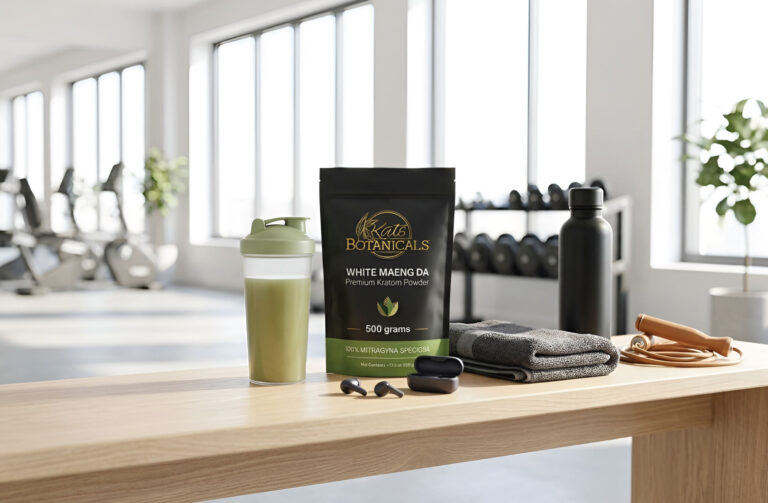
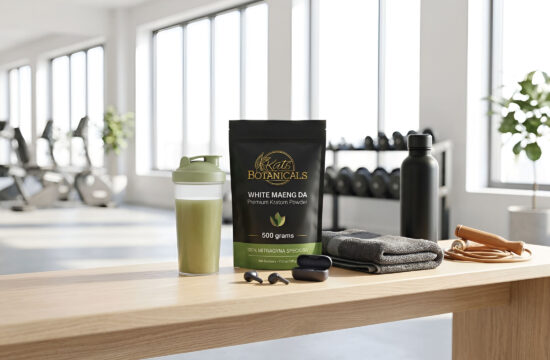
The best kratom for a pre-workout is usually a white or green vein strain, taken 30 to 45 minutes before you train, at a starting dose of 2 to 2.5 grams of powder. Users reach for whites and greens when they want energy and focus before lifting, running, or a long hike, while red veins lean toward relaxation and fit better afterward. White Maeng Da, White Bali, Green Maeng Da, and Green Malay come up most often in gym conversations. Kratom isn’t a caffeine bomb like a scoop of synthetic pre-workout, and it shouldn’t be treated like one. It comes from a tree, its effects shift with dose, and the smart move is to start small and see how your body answers before you build a routine around it.
Quick Answer: For pre-workout, choose an energizing white or green vein kratom strain such as White Maeng Da or Green Malay, and take 2 to 2.5 grams of powder (or the equivalent in capsules) about 30 to 45 minutes before training. Beginners should start at 1 to 2 grams. Save red vein strains for after your session, when relaxation matters more than drive.
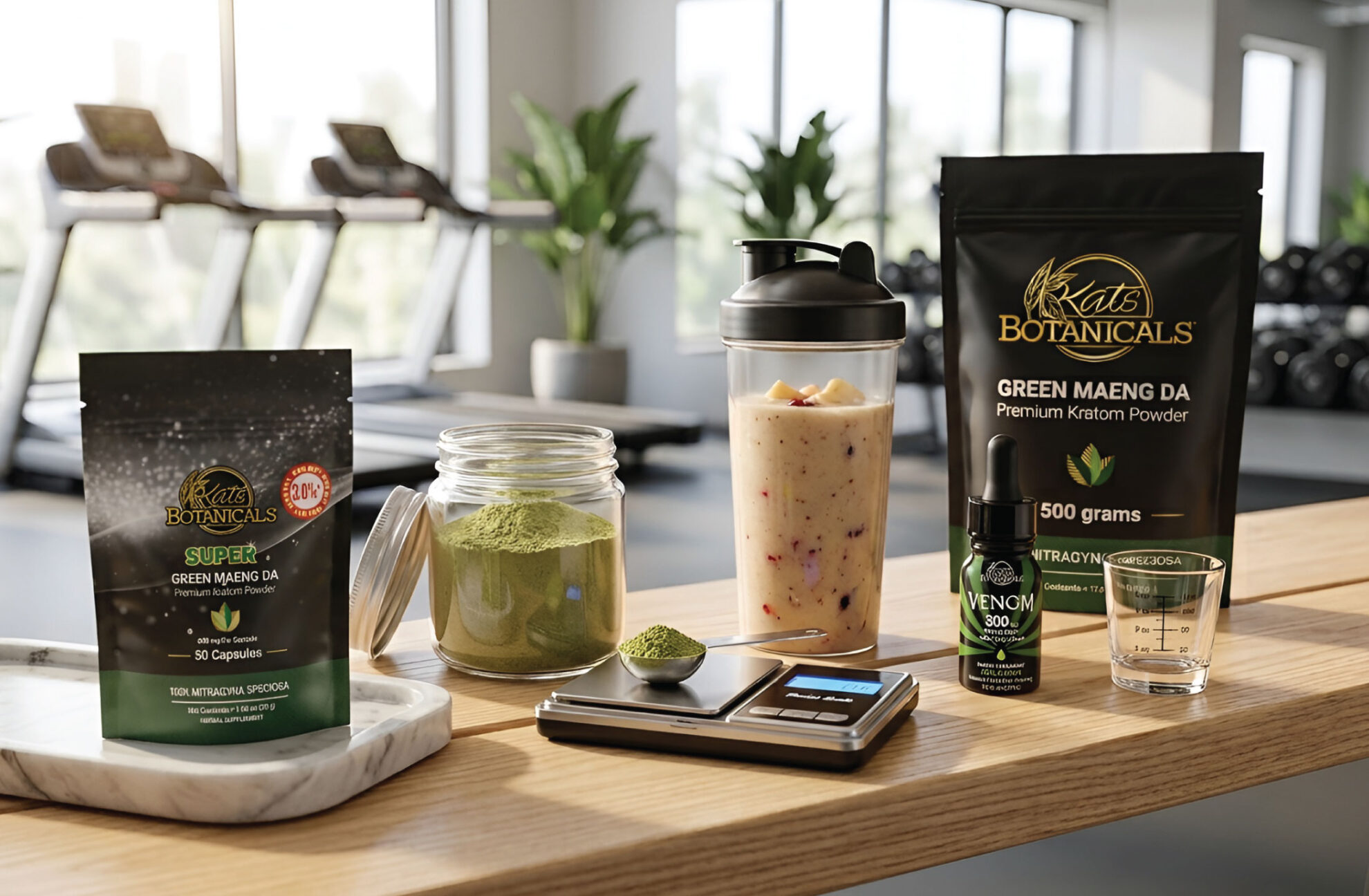
What Kratom Is and Why It Shows Up in Fitness Routines
Kratom comes from the leaves of Mitragyna speciosa, a tropical tree in the coffee family that grows across Thailand, Malaysia, and Indonesia. That coffee-family detail is worth sitting with, because it explains a lot. Farm and field workers in Southeast Asia chewed the fresh leaves for generations to get through long shifts in heat, and that practical, keep-you-moving reputation is exactly why it drifted into gym bags.
A 2017 survey by Grundmann, published in Drug and Alcohol Dependence and drawing on roughly 8,000 kratom users, found that energy and improved focus were among the most commonly reported reasons people used it. That’s self-reported data, not a clinical trial, and it matters that you read it as what people experience rather than proof of a physical effect. Still, the pattern is consistent enough that “kratom pre workout” has become a real search, not a fringe one.
The Alkaloids Behind the Effect
The active compounds in kratom leaves are alkaloids, and two do most of the heavy lifting: mitragynine and 7-hydroxymitragynine. Mitragynine is the most abundant by far, and it’s the one most closely tied to the alert, motivated feeling white and green strains are known for. These alkaloids interact with receptors in the body and shift how you feel, which is why the same gram amount can read as energizing at a low dose and mellow at a higher one.
Different growing regions produce leaves with different alkaloid balances, so a White Maeng Da and a Red Bali are genuinely different products, not marketing labels on the same powder. That’s the whole reason strain choice matters for a workout.
Is Kratom an Opioid?
No, kratom isn’t an opioid. It’s a plant in the coffee family, and its alkaloids are structurally different from opiates like morphine. Some of those alkaloids interact with opioid receptors, which is where the confusion starts, but that receptor activity doesn’t make the leaf an opioid any more than caffeine’s receptor activity makes coffee one. The FDA hasn’t approved kratom for any medical use and maintains an import alert on it, so treat kratom as a botanical supplement you research and use responsibly, not a shortcut.
Best Kratom Strains for Pre-Workout
For pre-workout, white and green vein strains are the practical picks, because users associate those colors with energy, drive, and focus rather than winding down. The naming is simple once you know the code: a strain name is a vein color plus a region or an industry name, so White Borneo is white vein from the Borneo region, and Green Malay is green vein from Malaysia. For a fuller breakdown of vein color differences, see the red vs white kratom comparison.
Here is how the vein colors generally break down for training:
| Vein color | General tendency | Best fit |
| White | More energizing and alert | Morning or pre-workout |
| Green | Balanced, between white and red | Daytime or pre-workout |
| Red | More relaxing | Post-workout or evening |
| Blends | Lean toward the dominant vein | Depends on the blend |
If I had to name the single most reliable pre-workout category, it would be the whites. They’re the most forward on energy and the least likely to leave you feeling heavy mid-set. Greens are the diplomatic choice when a straight white vein kratom feels like too much.
Pre-Workout Strains for Beginners
If you’re new to kratom, start gentle and predictable. White Bali is a common first white because it tends to be smoother than the punchier Maeng Da varieties. Green Bali is a good green-vein entry point, less bitter and earthy than some, which makes it easier to mix into a smoothie before you head out.
Begin with 1 to 2 grams, take it about 45 minutes before you train, and pay attention. You’re gathering information, not chasing a big effect on day one. The first-time kratom use guide is worth a read before your first dose.
Pre-Workout Strains for Experienced Users
Once you know how your body responds, most experienced users land on Maeng Da for the gym. White Maeng Da is the most stimulating of the bunch, and the one people reach for when they want obvious drive before a hard session. Green Maeng Da gives you a similar push with a slightly softer edge. Yellow Maeng Da, which is often a white-dominant blend, splits the difference for people who want energy with a touch of calm underneath.
A word on kratom and performance-enhancing expectations: kratom isn’t a steroid, not a stimulant stack, and it won’t build muscle or replace training. Users report motivation and focus, which can make it easier to show up and push, but the work is still the work. Anyone in competitive or drug-tested sports should check their governing body’s rules before using it, since kratom alkaloids can be flagged on some panels.
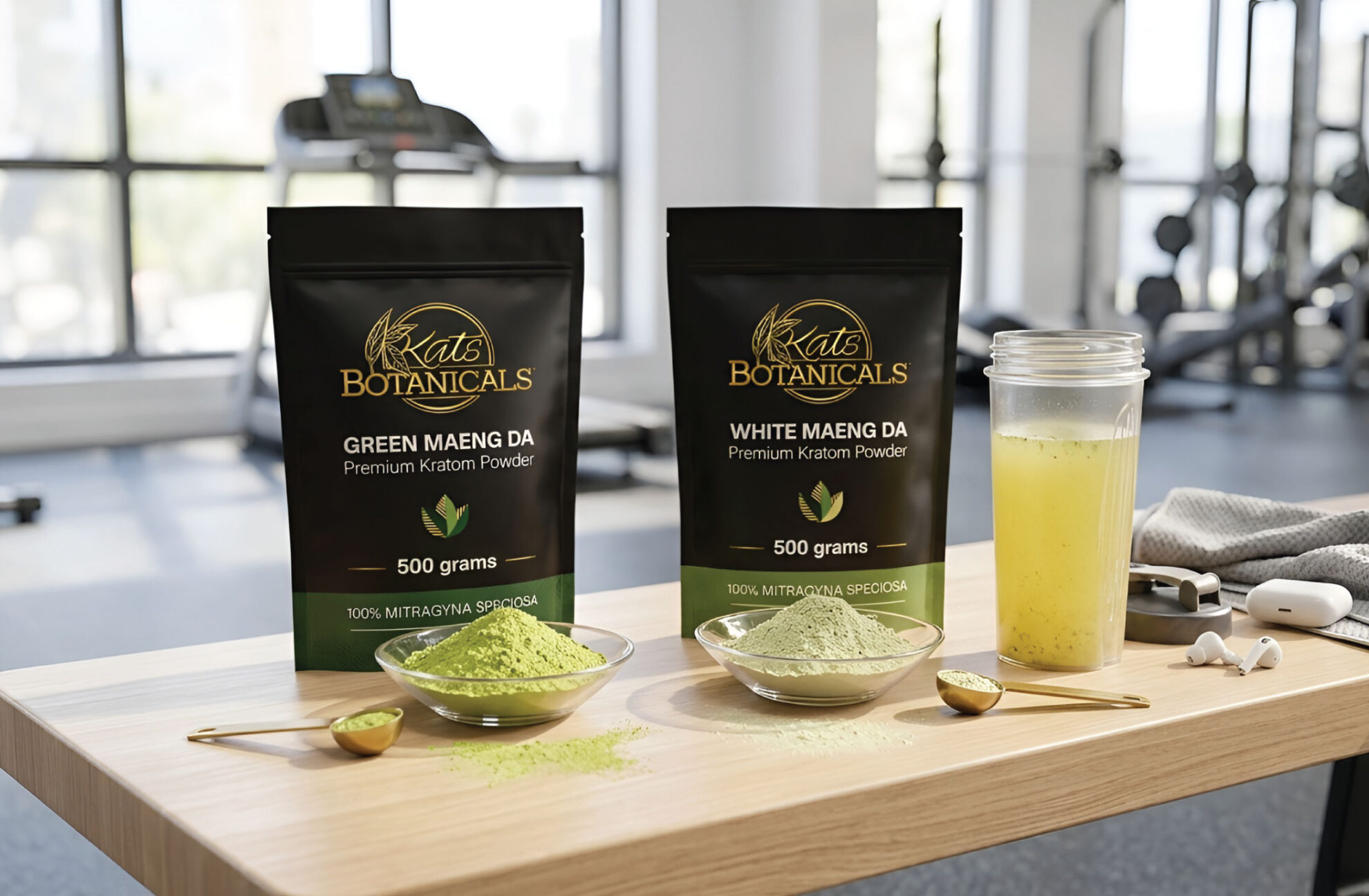
Choosing a Kratom Form for the Gym
The form you choose is really a question of control versus convenience, and for pre-workout that trade-off is worth thinking through before you buy. All three forms below can work before a session. They just fit different habits.
Powder
Powder gives you the finest control over your dose, which is the whole appeal for anyone who likes to measure and adjust. The average serving is around 2.4 grams, and beginners should start at 1 to 2 grams. The powder blends easily into a pre-workout smoothie, though the taste is earthy and bitter, so a banana-and-blueberry base helps. The downside is obvious: you need a scale or scoop, and it’s the least portable option for a gym bag. For a deeper look at prep methods, the guide to using kratom powder covers the basics.
Capsules
Capsules are the low-friction choice and, honestly, the most gym-bag-friendly. There’s no measuring, no bitter aftertaste, and no spill risk in your bag. Kats Botanicals kratom capsules are built around a four-capsule serving, so you can take fewer if your body wants less. The trade-off is that capsules take a little longer to kick in than powder, so give them a slightly earlier head start before you train. Kratom capsules pre-workout make the most sense for people who train early and don’t want to fuss with prep.
Shots and Extracts
Kratom shots are small bottles of liquid extract, and they’re the most concentrated option here. That potency is the point and the caution at the same time. A shot is fast and portable, but because it’s made from extract, one bottle can contain several servings, so check the label and measure rather than sipping the whole thing. Extracts suit experienced users who already know their tolerance. The guidance for anything extract-based stays the same: start low, go slow.
How to Time and Dose Kratom Before a Workout
Take kratom 30 to 45 minutes before your workout so the alkaloids are active by the time you warm up. Powder tends to come on faster than capsules, so if you’re using capsules, lean toward the earlier end of that window. A typical pre-workout dose is 2 to 2.5 grams of powder, with beginners starting at 1 to 2 grams and adjusting from there. The full kratom dosage guide breaks the numbers down by experience level and format.
A few practical habits make the difference between a useful routine and a frustrating one:
- Drink water. Kratom can be drying, and dehydration wrecks a workout on its own. Hydrate before and during.
- Do not exceed two doses in 24 hours. This applies to every form and strain.
- Keep a simple log. Record the strain, dose, timing, and how the session felt. After a week, you’ll know your own numbers better than any general guide can tell you.
- Follow the serving sizes on the packaging. They exist for a reason.
Safety note: Talk to your doctor before adding kratom to your routine, especially if you take other medications or supplements. Kratom is for adults 21 and older, is not for use by pregnant or lactating women, and may be habit-forming.
Kratom After a Workout
For the post-workout window, red vein kratom strains are the ones users lean on, since reds are associated with relaxation and everyday comfort rather than energy. After a hard session, when the goal shifts from drive to winding down, a red makes more sense than a stimulating white. Many people brew a red into a cup of tea in the evening to support a restful night, which matters more for training than most people admit. Sleep is where recovery actually happens.
Wild Red Bali is a solid starting red if you want to try it. Make a relaxing cup after you train, keep the dose modest, and let it be part of your wind-down rather than another performance tool.