Kava dosage can vary based on the format of the product you’re using. A scoop of traditional root powder and a single softgel might both count as “one serving,” but the kavalactone content between them can differ by a factor of ten or more. That’s the part most beginner guides skip, and it’s where people end up taking too little to feel anything or more than their body is ready for.
This guide walks through dosage by format. It covers powder, capsules, softgels, extracts, gummies, and tinctures, along with the kavalactone math behind each one. The aim is to give you a frame of reference, not a prescription. Your best dose depends on your body, your tolerance, and the specific product format.
What Determines a Kava Dose
Kava’s active compounds are kavalactones, a group of six main molecules that account for most of the effects users describe. Quality Kava sits in a concentration range that most sources put between 3% and 20% kavalactones, depending on the format. Traditional root powder hovers near the lower end of that range. Concentrated extracts can push toward the upper end.
This is why format matters more than milligrams of product. Eight grams of fresh root powder delivers a much smaller kavalactone payload than 200 milligrams of a 30% extract. When people ask “how much Kava should I take,” the honest answer starts with “how much kavalactone is in it?”
A commonly cited reference range for kavalactones is 70 to 250 milligrams per serving, with most daily intakes in published guidance staying at or below 250 milligrams. That’s the benchmark we’ll work backward from for each format below.
Always check the label. Kavalactone percentages vary widely between products, even within the same format. Brands that don’t disclose kavalactone content on the label are not typically reputable Kava brands. Learn more about premium American Kava vendors at the American Kava Association website.
Traditional Kava Powder
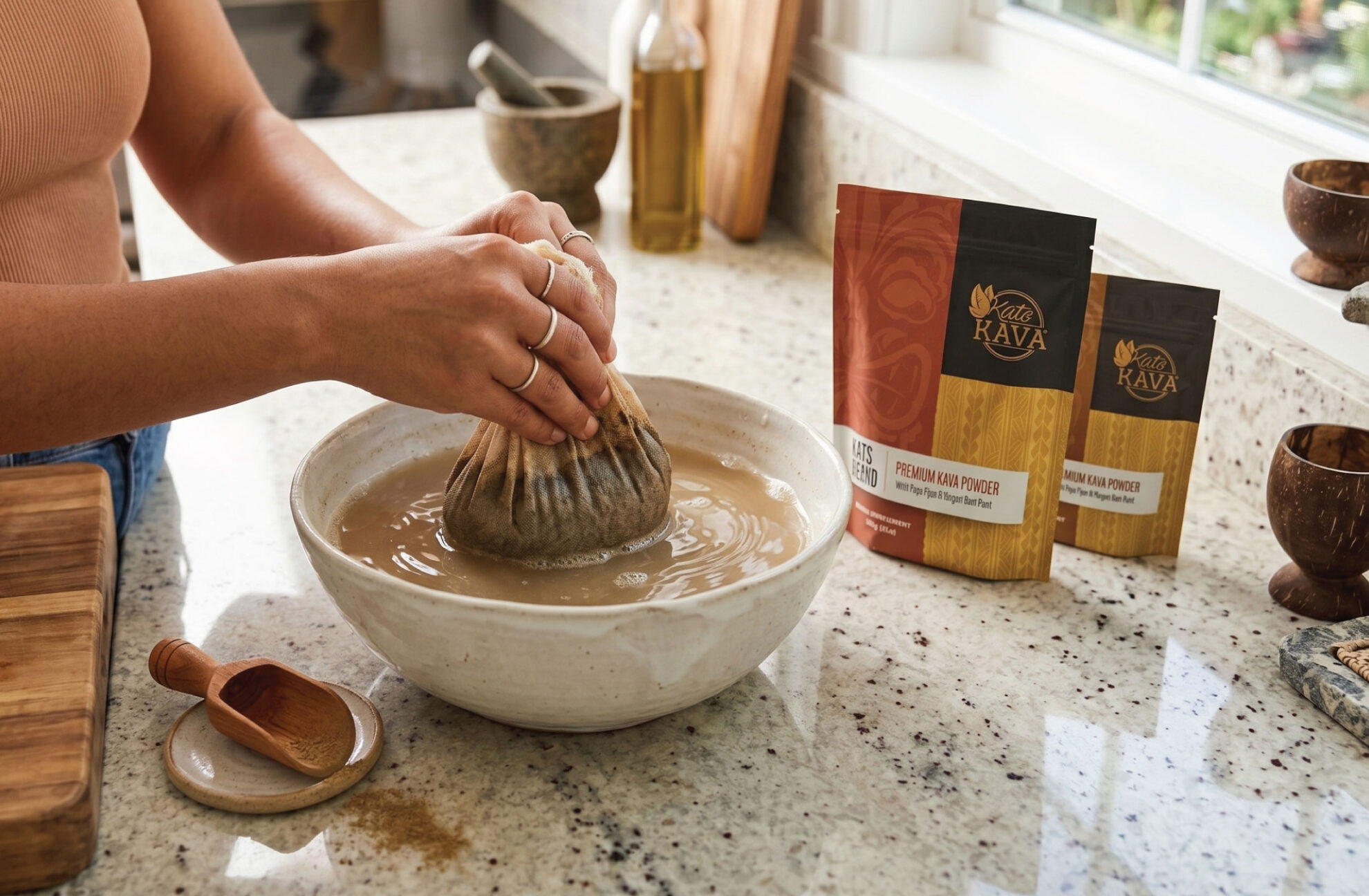
Kava root powder is the oldest format and still the one most closely tied to how Kava is consumed in the South Pacific. It’s made by grinding dried root into a fine powder, which you then knead into water and strain through a cloth or fine mesh bag. This produces a liquid called Kava tea.
A typical serving sits around 2 to 4 tablespoons of powder (roughly 16 to 32 grams of dry root) prepared in water. That sounds like a lot, but most of the fiber stays in the strainer. What you drink is the water-soluble kavalactone fraction.
For a standard root powder with 4% to 8% kavalactones, a 3-tablespoon (24 g) serving might deliver somewhere in the range of 100 to 200 milligrams of kavalactones. The math isn’t exact because extraction efficiency depends on water temperature, how long you knead the powder, and the fat content in the water (some people add a splash of coconut milk to pull more kavalactones into solution).
The powder route offers traditional ritual and the full-spectrum profile. It’s slower to prepare and has that famous earthy, slightly bitter taste. For new users, this is the format that gives you the most control over strength at the cost of convenience.
Try Kats Kava Powders
Premium noble Kava is the best Kava to use. For lab-tested, premium-grade Kava, try one of our regional Kava cultivars:
- Premium micronized Fiji Kava Powder
- Kats Kava Vanuatu, the “champion of Kava”
- The Ultimate Zen: Kats Kava Blend
- Smooth and Gentle Solomon Kava
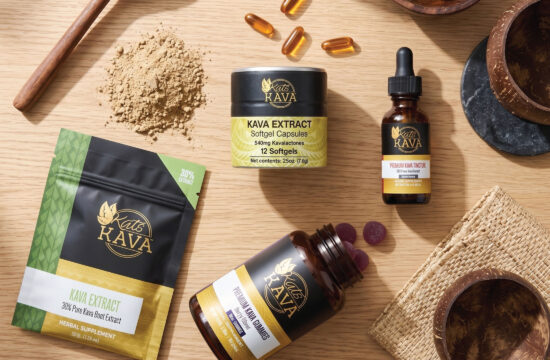
Kava Capsules
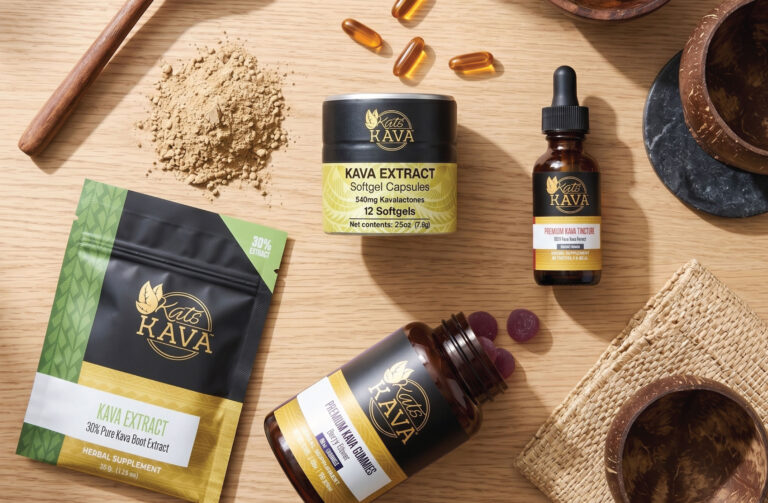
Capsules take the same ground root and put it into a measured dose you can swallow without prep. One capsule typically contains 250 to 500 milligrams of Kava root powder, so a serving of two to four capsules covers roughly 1 to 2 grams of powder (around 40 to 160 milligrams of kavalactones, depending on the listed extract ratio).
Capsules are the convenient option, not the strongest one. You’re ingesting the powder itself rather than a water extract, so absorption is slower and the experience tends to come on gradually, usually over 45 to 90 minutes.
A reasonable starting approach is two capsules with a meal that contains some fat. If you don’t feel much after an hour, a third capsule can round out the serving. Most product labels will give a suggested serving of two to four capsules; stay inside that range until you know how your body responds.
Kats Botanicals Kava Capsules are coming soon in 2026!
Kava Softgels
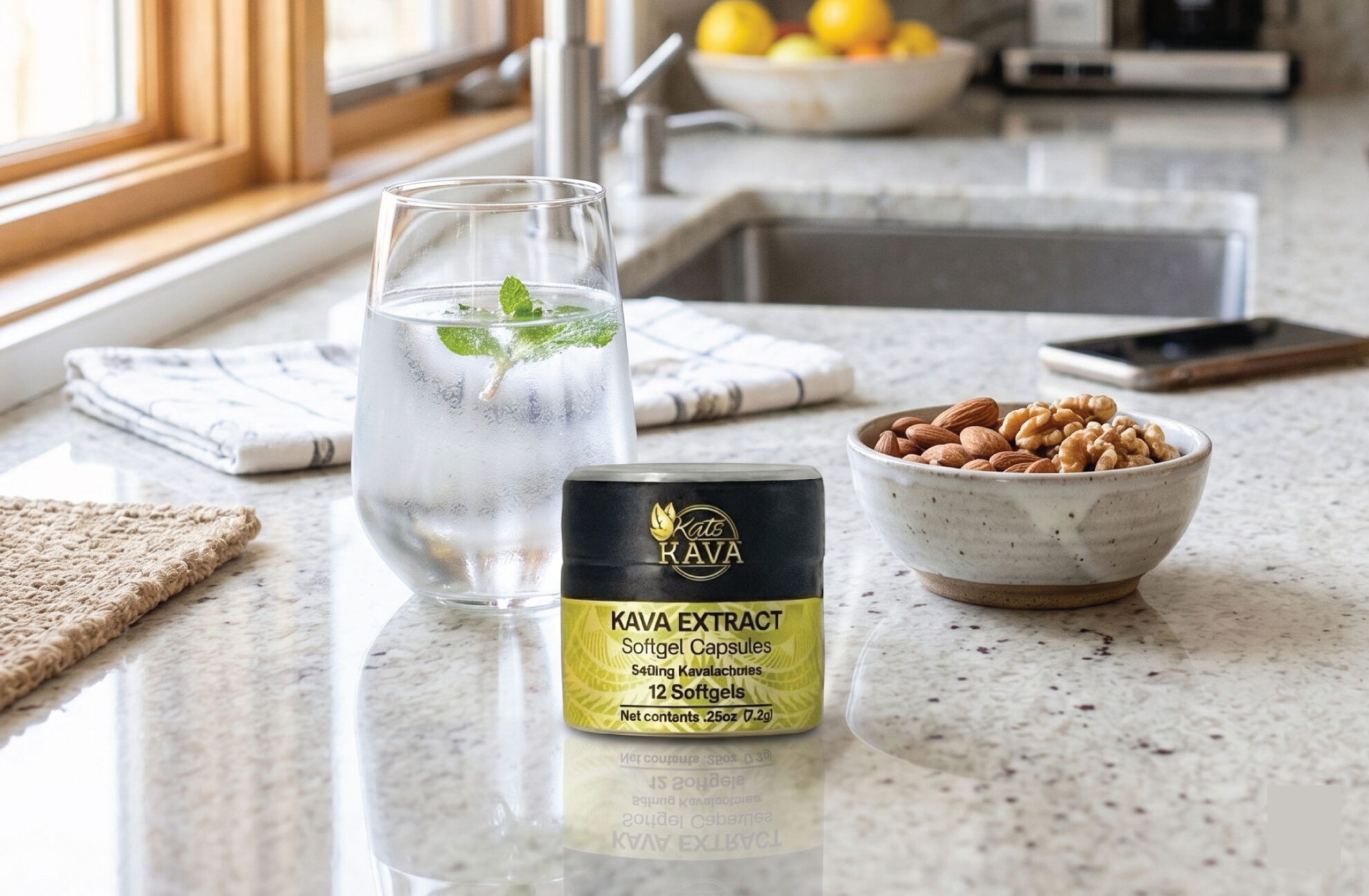
Kava Softgels are the newer format, and they solve one of Kava’s oldest problems: bioavailability. Kavalactones are fat-soluble, which means they absorb better when they come dissolved in an oil carrier. Softgels deliver a pre-dissolved concentrate in a lipid base, which can mean a stronger effect at a smaller physical dose than a comparable capsule.
A typical Kava softgel contains around 75 to 150 milligrams of standardized extract, often sitting at 30% to 50% kavalactones. Two softgels can easily land you in the 100 to 150 milligram kavalactone range, which is why softgel labels typically suggest one or two per serving rather than the three or four common with powder capsules.
For someone coming from traditional powder, one softgel first is the smart move. The onset is faster (usually 30 to 60 minutes), and the profile can feel tighter, meaning the peak effect is more pronounced and the duration shorter than with a slow water-extracted brew.
Kava Extracts
Kava Extracts are concentrated preparations, usually in the form of liquid drops or thick pastes. Labels list them by ratio (e.g., 30:1) and by kavalactone percentage. A 30% kavalactone extract runs far stronger than traditional powder on a milligram-per-milligram basis.
Serving sizes for these products are small, often 1 to 2 milliliters of liquid or a portion of a gram of paste. At 30% kavalactones, 500 milligrams of extract delivers around 150 milligrams of kavalactones. That can be a full daily serving in a single dose.
Extracts are the format where dosage discipline matters most. It’s easy to overshoot if you treat them like you would root powder. The rule of thumb: start at half the suggested label dose for the first session, then adjust upward only after you know how your body reacts.
Kava Gummies
Kava Gummies combine a measured extract with a sweet base, which fixes Kava’s main palatability problem. A standard gummy usually delivers between 25 and 100 milligrams of kavalactones per piece, depending on the product.
A serving is typically one or two gummies. At the lower end of that range, two gummies might give you around 50 milligrams of kavalactones, which is on the mild side of a typical session. At the upper end, a single gummy can be a full serving on its own.
Gummies absorb slightly slower than softgels because the gelatin base needs to break down first. Onset tends to run 45 to 75 minutes. Convenience and taste are the main draw. They’re a good entry point if you’ve never tried Kava and don’t want to deal with the earthy flavor of traditional preparations.
Kava Tinctures
Tinctures are alcohol- or glycerin-based liquid extracts, usually packaged with a dropper. A typical dose is 1 to 2 milliliters held under the tongue for 30 to 60 seconds before swallowing.
Kavalactone content varies more in tinctures than in any other format. A quality product will list milligrams of kavalactones per milliliter of liquid; if it doesn’t, skip it. At 40 milligrams of kavalactones per milliliter, a 2 mL dose delivers 80 milligrams, which lands in the mild-to-moderate range.
Tinctures have the fastest onset of any format because sublingual absorption skips the digestive process. Many users report feeling effects within 15 to 30 minutes. That speed is useful if you’re using Kava for acute moments of tension rather than a slow wind-down.
Note: If you enjoy a liquid format, try Kava Shots and Kava + Kratom Shots.
How Much Kavalactone Per Day
Most published guidance for adults puts the upper end of safe daily kavalactone intake at around 250 milligrams. Some traditional use exceeds that, but modern supplement products and the research that informs them stay in that range.
A practical daily target for most people sits between 70 and 250 milligrams of kavalactones, split across one or two servings. Beginners should start closer to 70 milligrams. People with Kava experience can work up toward the higher end if their body tolerates it well.
The part worth being opinionated about: chasing higher and higher doses is not how you get more out of Kava. The return on additional kavalactones flattens quickly, and pushing past 250 milligrams in a day doesn’t reliably produce a stronger experience. It just raises the odds of next-day grogginess.
Buying High-Quality Kava
Lastly, look for two important factors in Kava’s strength and efficacy. Make sure the product you are using has been third-party lab-tested to screen for heavy metals, microbes and pathogens, and to determine the exact kavalactone content. Then verify the kavalactone content by requesting the Certificate of Analysis from the manufacturer.