
Kava takes anywhere from 10 to 60 minutes to kick in, and the format you reach for is the biggest reason that window is so wide. A traditionally prepared powder drink usually arrives fastest, often within 10 to 20 minutes on an empty stomach. Capsules and softgels run slower because your body has to break down the shell and digest the kavalactones before anything happens. A tincture lands somewhere in the middle, and can beat powder if you hold it under your tongue.
None of that timing is random. Kavalactones, the group of fat-soluble compounds behind kava’s calm feel, absorb at different speeds depending on how they reach your bloodstream. What follows is a realistic onset window for each format, plus the handful of factors that push kava faster or hold it back.
Quick Answer: Kava typically kicks in within 10 to 60 minutes. Traditionally prepared powder is fastest at 10 to 20 minutes, tinctures land at 5 to 15 minutes when held sublingually, and softgels and capsules take 30 to 60 minutes because they have to be digested first. An empty stomach, a higher kavalactone dose, and your own history with kava all shift where you fall in that range.
What “Kicking In” Actually Feels Like
When kava kicks in, most people describe a settled, loose-limbed calm rather than a sudden switch flipping. It tends to creep in rather than crash over you. Your shoulders drop, conversation feels easier, and the mental noise of the day quiets down a little.
There’s an earlier signal worth knowing about, and it isn’t the effect itself. Within a minute or two of drinking a traditional prep, you’ll often feel a mild tingling or numbness on your lips and tongue. That’s the kavalactones making direct contact with the tissue in your mouth, and honestly it’s the most reliable “the kava is real and working” marker you’ll get. It fades quickly. The calm shows up a bit later.
Does It Lean Toward Sleepy or Social?
That depends almost entirely on how much you take and when. A smaller daytime serving leans toward relaxed sociability, the kind of ease people once found in a glass of wine without the alcohol. A larger evening serving leans sedating, which is why plenty of drinkers save kava for winding down at night. If you’re asking whether kava makes you sleepy, the honest answer is that it can, and the dose is the dial you turn to land where you want.
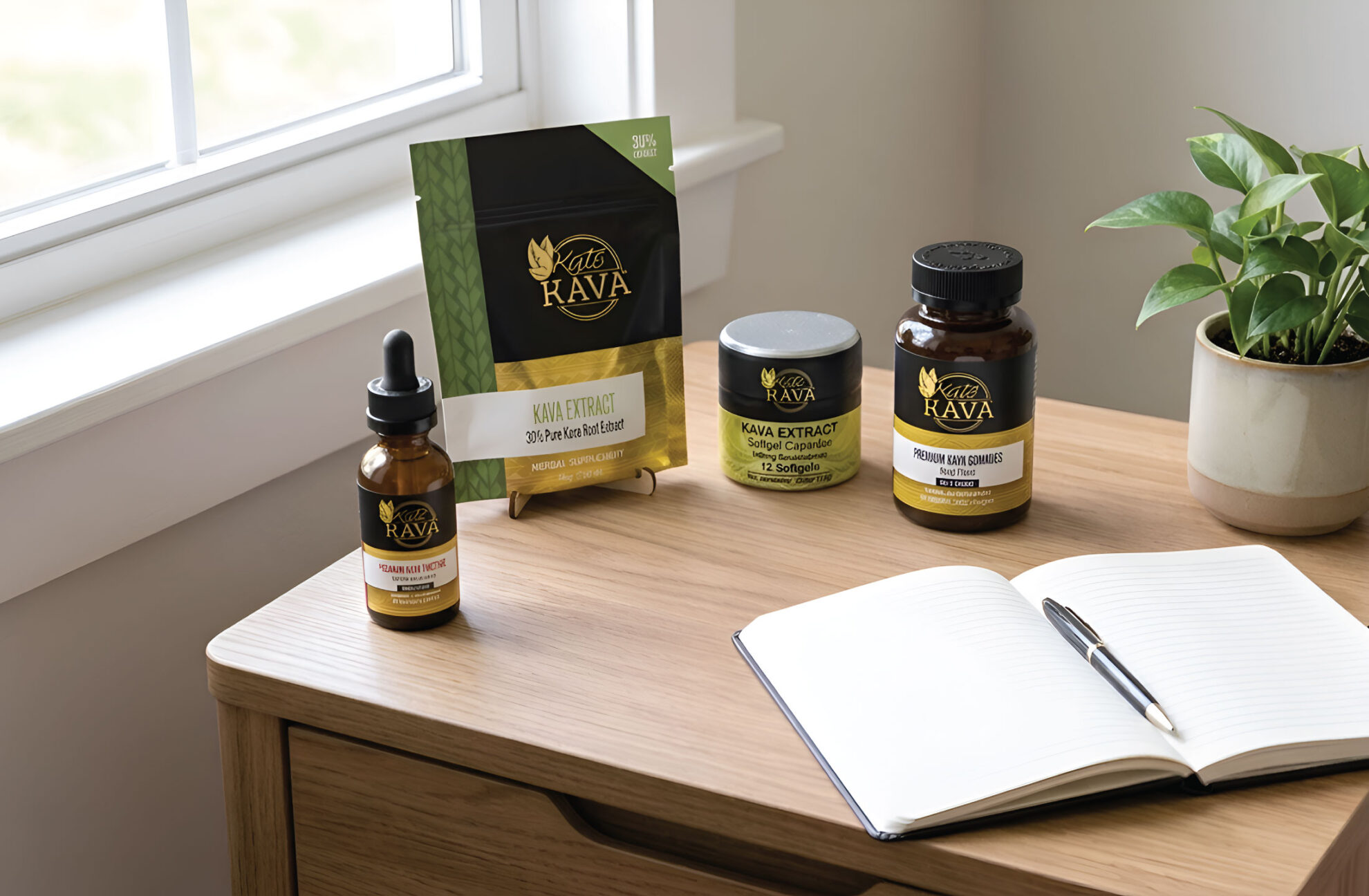
Kava Onset Times by Format
Every kava format delivers the same kavalactones. What changes is how fast those compounds clear the barrier between your mouth or stomach and your bloodstream. Here’s how the common formats compare.
| Format | Typical onset | Why |
| Tincture | 5-15 min | Held under the tongue, kavalactones absorb through oral tissue and skip digestion |
| Powder (traditional prep) | 10-20 min | Fat-soluble kavalactones hit fast, especially on an empty stomach |
| Softgels | 30-45 min | Kavalactones come pre-dissolved in oil, so digestion has less work to do |
| Capsules | 30-60 min | The shell and dry powder must break down before absorption starts |
Powder
Traditional powder prep is still the fastest way to feel kava, and it’s the benchmark every other format gets measured against. You knead the powder in water, strain it, and drink the resulting liquid. Because the kavalactones are already suspended in water and fat when they reach your stomach, absorption starts quickly, usually 10 to 20 minutes in.
The trade is taste and effort. Traditional kava is earthy and bitter, and the prep takes a few minutes. If speed is what you’re after, though, nothing beats it. This is also the format with the deepest cultural roots; kava has been prepared this way across the South Pacific, including Vanuatu and the Solomon Islands, for centuries.
Tincture
A kava tincture can actually outrun powder, but only if you use it correctly. Held under the tongue for 30 to 60 seconds, the kavalactones absorb through the tissue in your mouth and enter your bloodstream without waiting on digestion. That puts onset at roughly 5 to 15 minutes. Swallow it straight down instead, and you lose that edge, because then it’s just going through your stomach like anything else.
Softgels
Softgels are the underrated option for people who want capsule convenience without the slower onset. Since kavalactones are fat-soluble, delivering them already dissolved in oil gives your body a head start on absorption. Onset tends to land around 30 to 45 minutes, and the fat delivery may improve how much you actually take up. If you dislike kava’s taste but don’t want to sacrifice much on timing, this is the format I’d point you toward first.
Capsules
Kava capsules are the slowest of the group, and there’s no way around it. The shell has to dissolve, then the dry powder inside has to break down in your stomach before absorption begins. Expect 30 to 60 minutes, sometimes longer if you took them after a large meal. Do kava pills work? Yes, the kavalactones are the same. You’re just paying for convenience and a taste-free experience with a longer wait.
What Changes How Fast Kava Works
Two people can take the same softgel and feel it 20 minutes apart. A few variables explain most of that gap.
Empty vs. Full Stomach
Food is the single biggest lever. Kava on an empty stomach can kick in twice as fast as kava chased after a heavy dinner. A 2022 clinical pharmacokinetic study in the Journal of Ethnopharmacology found a significant reduction in kavalactone absorption when standardized kava was taken with food. That said, an empty stomach also makes nausea more likely for some people, which is a real trade some drinkers accept and others don’t. A light snack is a reasonable middle ground.
Kavalactone Content and Dose
Onset speed and strength aren’t the same thing, but they’re linked. Kava products list kavalactone content because that’s the number that actually matters, and a serving with a higher kavalactone load will generally be felt sooner and more clearly. Six major kavalactones do most of the work, among them kavain, dihydrokavain, and methysticin. When you’re comparing products, that percentage tells you far more than the gram weight on the label.
Reverse Tolerance
Here’s the one that surprises first-timers and fills up kava threads: kava has a reverse tolerance. New drinkers sometimes feel little to nothing the first few sessions, then feel the full effect once their body adjusts. It runs backward from how most substances work. So if your first serving seemed to do nothing at the 30-minute mark, that may not be a timing problem or a dud product. It may just be reverse tolerance, and it usually resolves after a few sittings.

How Long Kava Lasts Once It Kicks In
After kava kicks in, the effects typically last 2 to 4 hours, with the calm peaking in the first hour or two and then tapering off. The exact length depends on the same factors that govern onset: dose, kavalactone content, whether you ate, and your own sensitivity. A larger evening serving may carry a relaxed, sleepy tail longer than a small daytime one.
Because the window is only a few hours, some people split kava across an evening rather than front-loading it all at once. That’s a matter of preference, not a rule. If you’re new, feel one serving out completely before deciding whether you want more. For a closer look at daily-use questions, see the guide on kava daily use versus dependence.
Beginner note: Start with a single, modest serving and give it a full 45 to 60 minutes before adding anything, regardless of format. Kava rewards patience, and stacking servings too quickly is the most common way people overshoot the calm they were after.