The best kava capsules are made from noble kava root, list a specific kavalactone percentage on the label, and come with a third-party lab report you can actually read. Everything else is packaging. Kava has been consumed across the South Pacific for centuries as a root beverage that helps people relax and settle in socially, and capsules are the modern shortcut for anyone who wants that without measuring powder or drinking something earthy and bitter. The catch is that not all capsules are built the same. Some are honest about what’s inside. Many aren’t.
Quick Answer: A quality kava capsule is made from noble kava root, states its kavalactone concentration on the label, and is backed by third-party testing for potency and contaminants. Sourcing and lab verification matter more than brand name or price, so read the label and the certificate of analysis before you commit.
What Kavalactones Are and Why the Percentage Matters
Kavalactones are the active compounds in kava, and the percentage listed on a capsule tells you how concentrated it actually is. There are 18 identified kavalactones in kava root, but six do most of the work: kavain, dihydrokavain, methysticin, dihydromethysticin, yangonin, and desmethoxyyangonin. Pharmacology reviews attribute roughly 96 percent of kava’s activity to these six (ScienceDirect overview of kavalactones). The blend and ratio of these compounds give each kava its character, from mellow and heavy to lighter and more sociable.
Whole kava root typically contains somewhere between 3 and 20 percent kavalactones by weight, depending on the cultivar and how it was grown. That’s a wide range. A capsule that says nothing about kavalactone content is guessing on your behalf, and you have no way of knowing whether you’re getting a meaningful dose or filler. If a product won’t tell you the number, treat that as your answer.
Standardized Extract vs Whole Root Powder
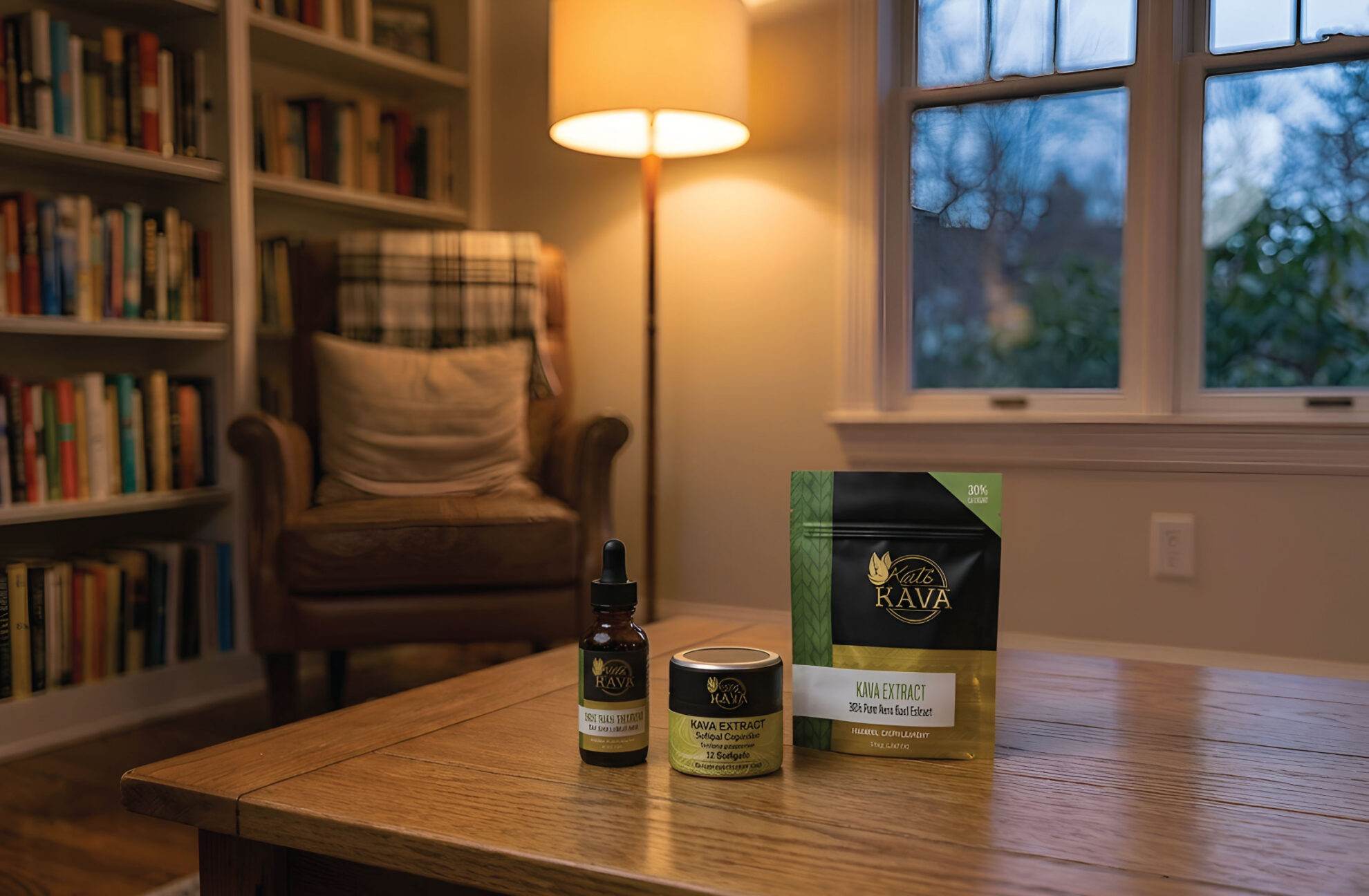
Capsules generally fall into two camps. Whole root powder packs the ground root directly, which keeps the full kavalactone spectrum intact but delivers a lower concentration per capsule. Standardized kava extracts are processed to hit a fixed kavalactone percentage, so each dose is more predictable. Neither is automatically better. Whole root gives you the traditional profile; a standardized extract gives you consistency capsule to capsule. What matters is that the label is specific about which one you’re holding and how much kavalactone content comes with it.
Why Noble Kava Sourcing Comes First
Noble kava refers to the cultivars that South Pacific communities have selected and consumed for generations, and it’s the only kind worth putting in a capsule. The alternative is what growers call “tudei” kava, a nickname derived from “two-day,” because its effects were said to linger uncomfortably long. Tudei varieties are cheaper to grow and higher in certain compounds like flavokavain B, which is one reason careful producers avoid them.
Vanuatu took this seriously enough to legislate it. The Vanuatu Kava Act of 2002, first passed in 2002, restricts kava exports to noble varieties and prohibits the export of tudei and wild kava. So when a capsule specifies noble kava from a named origin, that isn’t marketing garnish. It’s a sourcing decision with a paper trail behind it.
Reading Origin and Cultivar
Look for a stated country of origin. Vanuatu, Fiji, and Tonga are the growing regions most associated with quality noble kava, and reputable brands will name theirs rather than saying “sourced from the South Pacific” and leaving it there. If a label mentions a specific cultivar or lists the region, that’s a producer that knows its supply chain. Solomon Islands kava is another origin worth knowing if you’re comparing regions. Vague sourcing language usually means the seller either doesn’t know or would rather you didn’t ask. Organic certification is a bonus, though it matters less than noble variety and testing.
What the Third-Party Lab Report Should Show
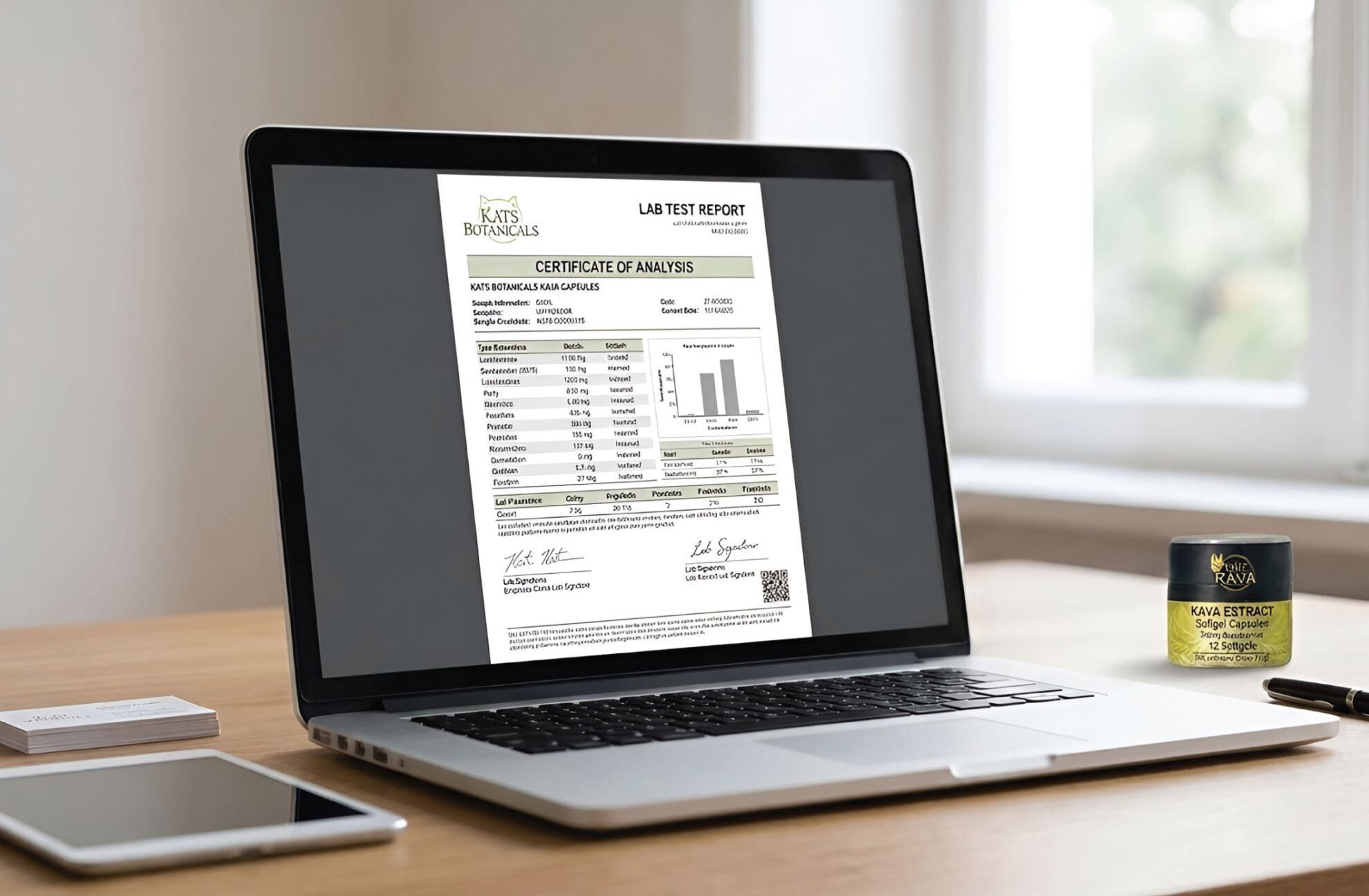
A credible kava capsule comes with a certificate of analysis from an independent lab that confirms kavalactone concentration and screens for contaminants. This is the single most useful document a kava buyer can look at, and it’s the fastest way to separate a serious product from a hopeful one.
At minimum, the report should verify the actual kavalactone percentage, which lets you check the label’s claim against reality. It should also screen for heavy metals like lead, arsenic, cadmium, and mercury, since plants draw whatever is in their soil up into the root. Microbial testing for mold, yeast, and bacteria matters too, because kava root is dried agricultural material and drying conditions vary. A brand that runs these tests through a third-party lab and publishes the results is telling you it has nothing to hide. One that only says “lab-tested for quality” without a document behind it is asking you to take its word.
Experienced kava buyers on community forums circle back to this point constantly: they judge a product by whether it publishes a real certificate of analysis, not by how the bottle looks or what the price is. That instinct is correct.
Capsules vs Softgels and Other Formats
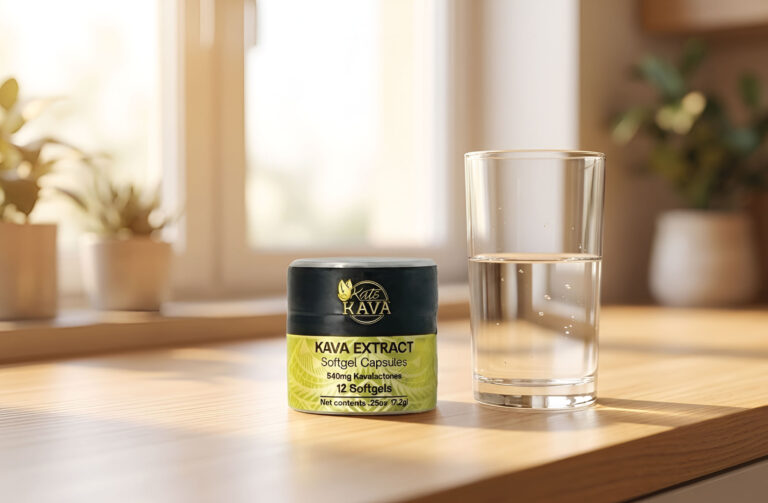
Capsules hold dry kava powder or extract, while softgels suspend kavalactones in oil, and that difference affects absorption. Kavalactones are fat-soluble, meaning they dissolve in fat rather than water. A softgel or oil-based extract can carry them in a form your body absorbs more readily, while a dry powder capsule relies on whatever fats are already in your system. This is also why traditional preparation kneads kava root in water with a little coconut milk. The fat helps.
That said, dry capsules have a straightforward advantage: no taste, no prep, no cleanup. Traditional kava tea made from powder delivers the full experience but comes with a flavor that most newcomers describe charitably as an acquired one. A tincture sits somewhere in between, offering fast, adjustable dosing but the same bitterness held under the tongue. If you want to compare formats side by side, the kava capsules vs powder breakdown walks through the tradeoffs in more detail. Capsules trade a bit of ritual and possibly a little absorption efficiency for the simplest routine on the shelf.
Where Capsules Fit Your Routine
Most people reach for kava capsules in the evening, when they want to downshift after a long day without pouring a drink. That’s the honest use case, and it’s part of why kava often comes up as an alternative to alcohol for a calm, sociable feeling. Capsules make that easy to fold into a routine because there’s nothing to measure and nothing to taste. If you value convenience and consistent dosing over the traditional preparation experience, capsules are the format that fits. If you want the ceremony and the full-spectrum root, powder, or a bowl of the traditional drink is closer to the real thing.