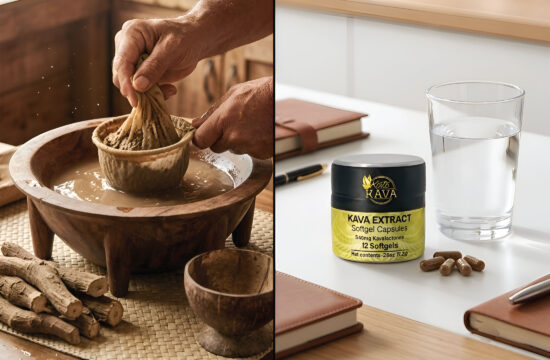
Kava comes in enough formats now that picking one can feel like comparing laptops. For most people new to kava, the real choice narrows quickly to two: traditional root powder (the format kava has been taken in for centuries) and modern capsules (the format built around convenience). This guide is for anyone trying to decide between those two.
We’ll cover the differences that actually matter: how strong each format is, how fast it kicks in, how accurately you can dose it, and what you’ll spend per serving. There’s no universal winner here. The format that works best is the one that fits how you actually plan to take kava, not the one with the most impressive label.
Quick Answer: Kava capsules win on convenience, travel, and dosing precision; kava powder wins on cost per serving, faster onset (15-45 minutes vs. 45-90 for ground-root capsules), and the fuller kavalactone expression you get from water extraction. Pick capsules for daily ease, powder for the traditional preparation, or keep both for different occasions.
How Kava Capsules and Powder Are Made
Kava root powder is dried, ground kava root, and capsules are that same root (or a concentrated extract of it) packed into a swallowable shell. The process for powder: harvest the root and lateral rhizomes of the kava plant, dry them, grind them to a fine consistency. A quality powder comes from noble kava cultivars, specific varieties with a kavalactone profile suited for daily consumption.Vanuatu’s Kava Act 2002 only allows noble kava cultivars (planted at least three years before harvest and cultivated using organic methods) to be legally exported from the islands, which is part of why most kava in the US is imported from the South Pacific, usually Vanuatu or Fiji.
Kava capsules are filled in one of two ways. The first type contains the same ground root powder, just encapsulated for easy swallowing. The second type contains a standardized extract, where the kavalactones have been concentrated into a smaller amount of material. The second kind is typically listed on the label as “30% kavalactones” or similar and costs more per capsule.
Knowing which kind you have changes everything about dosing. A capsule of ground root powder behaves like a small scoop of powder. A capsule of standardized extract can be five to ten times more concentrated by weight. Thecomplete guide to kava drops and extract tinctures covers how concentrated formats compare to traditional preparations.
Kavalactone Content by Format
Kava’s effects come from a family of six lactone compounds called kavalactones, and the amount per serving is what determines how strong any format actually is. Eighteen different kavalactones have been identified; however, approximately 96% of the total pharmacological activity can be attributed to six: methysticin, dihydromethysticin, kavain, dihydrokavain, demethoxyyangonin, and yangonin. Different cultivars produce different ratios of those six, which is part of why two kava products at the same total kavalactone percentage can feel slightly different. Published guidance for adults typically sits at 70 to 250 milligrams of kavalactones per serving, with daily intake usually staying at or below 250 milligrams.
Traditional Powder
Traditional kava powder contains roughly 4% to 8% kavalactones by dry weight. A 3-tablespoon (around 24 g) serving prepared in water delivers a variable amount, usually in the 100 to 200 milligram kavalactone range depending on extraction efficiency.
Extract Powder
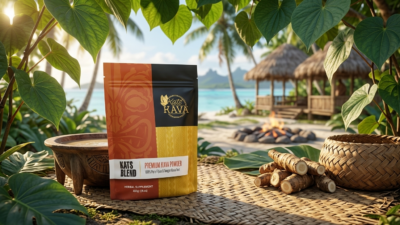
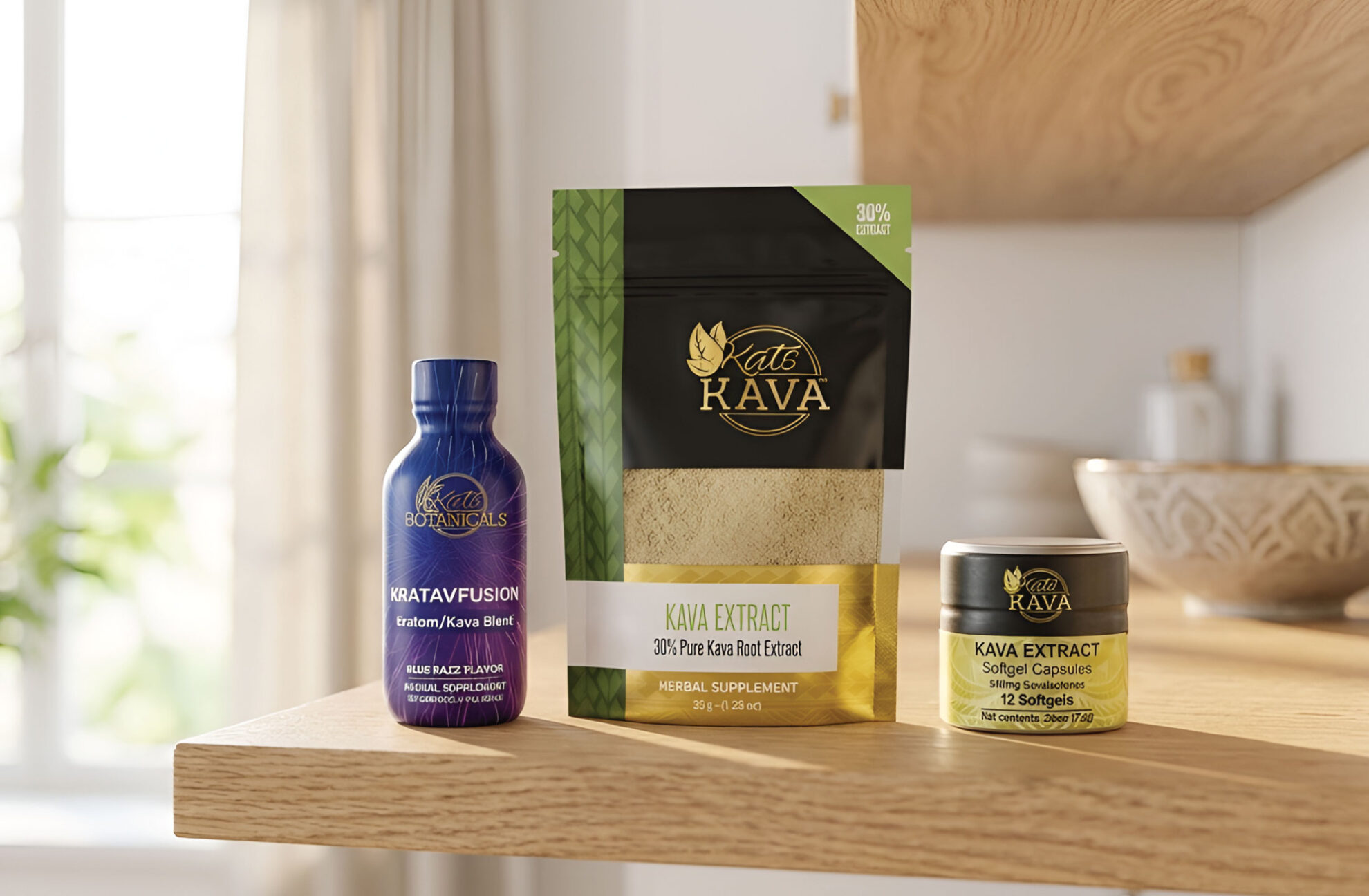
Kava extract powder contains more kavalactone content by gram of product for a more concentrated serving. Less powder can be used for a rich cup ofkava tea. The Kats Botanicals version is lab-tested to verify 30% kavalactone content.
Ground-Root Capsules
Ground kava powder capsules typically hold 250 to 500 milligrams of material per capsule. At 6% kavalactones, a four-capsule serving (2 g of powder) gives you around 120 milligrams of kavalactones.
Standardized Extract Capsules
Standardized kava extract capsules concentrate the active compounds. At 30% kavalactones, a 250 mg capsule contains 75 milligrams of kavalactones, so two capsules puts you at 150 milligrams in a dose the size of a vitamin gelcap.
Kava and Kratom Combinations
For anyone using kava alongside kratom (or curious about the combination), the Kratavfusion kava-kratom shot offers another option, combining features of both in a liquid form.
- 100% pure Mitragyna speciosa extract (60 mg) per serving / 150 mg MIT per bottle
- 100% pure Piper methysticum extract / 100 mg kavalactones per serving
- L-Theanine / 25 mg per serving
- Ashwagandha / 160 mg per serving
The Convenience of Kava in Capsule Form
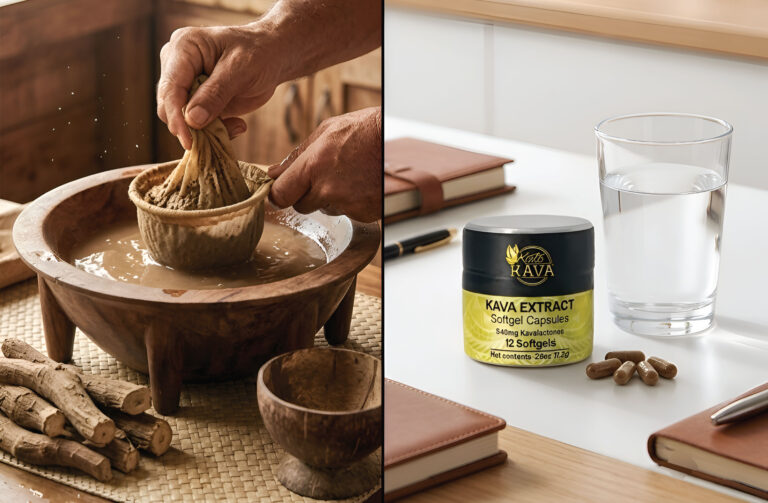
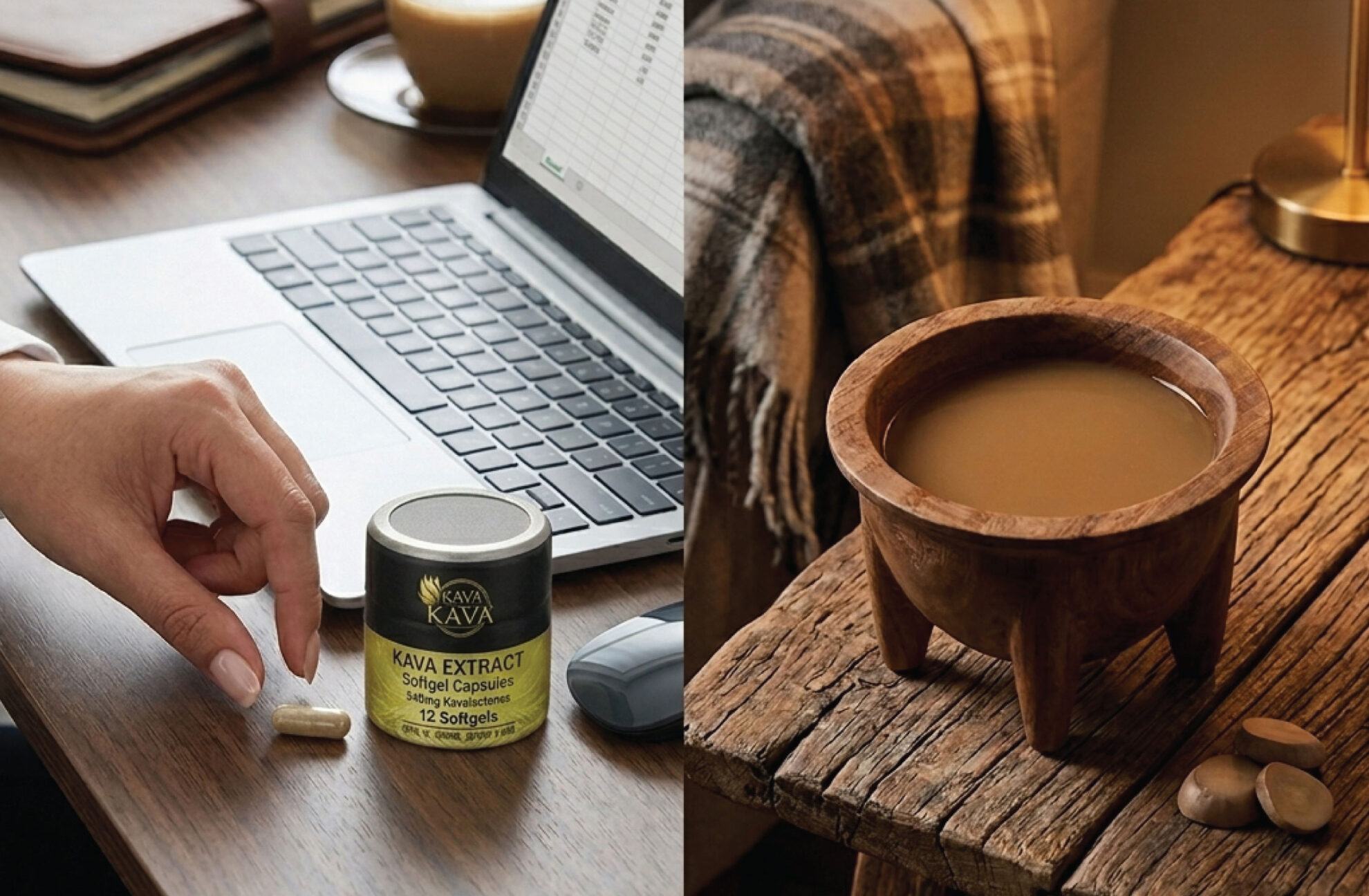
Capsules remove almost every step of traditional kava prep, which is the entire reason they exist. Powder requires preparation. You measure it, knead it into warm water (usually in a strainer bag), squeeze and strain until the liquid turns muddy-tan and slightly bitter, then drink. A standard session takes 5 to 10 minutes of active prep time, and that’s assuming you have the bag, the bowl, and a warm kitchen. Travel makes it harder. Taking powder to work is doable but awkward.
If you’re not after the ritual of kava ceremony,kava capsules are a convenient way to go. You swallow them with water, the same way you’d take any other supplement. They travel cleanly. No equipment. No cleanup. No earthy taste lingering in your mouth. Traditional kava powder beverages can also make your mouth and lips tingle, which is part of the experience for some drinkers. If you don’t enjoy that sensation, capsules skip it entirely.
The capsules are efficient. The powder is ceremonial. Neither is wrong.
Onset Time
Kava in a water-extracted form hits faster than kava in a capsule, usually by 30 to 60 minutes. When kavalactones are dissolved in liquid and hit your stomach as a liquid, absorption starts right away. When kavalactones sit inside undissolved powder inside a capsule shell, your digestive system has to work through the capsule and then the powder particles before anything gets absorbed.
Typical onset times:
- Powder drink: 15 to 45 minutes for first effects
- Capsules of ground root powder: 45 to 90 minutes
- Capsules of standardized extract: 30 to 60 minutes (faster than ground-root capsules because the kavalactones are already isolated from the fiber)
This matters less if you’re planning a long wind-down evening. It matters more if you want kava for a specific window, like before a social event or during a high-tension afternoon. Powder lets you time the effect more tightly. For a deeper look at when effects actually land, the guide onhow long kava takes to kick in breaks it down by format and stomach contents.
Dosage Accuracy
Capsules win on dosing precision, and it’s not close. A capsule is a measured dose. You know exactly how many milligrams of material are in each one, and if the label also lists kavalactone percentage, you know how many milligrams of kavalactones you’re taking per capsule. Scale up or down by changing the number of capsules.
Powder is looser. A “tablespoon” of powder varies by how packed it is. Extraction efficiency varies by how long and how hard you knead. Two sessions with the same weight of powder can deliver measurably different kavalactone payloads.
For people who want consistency (especially those new to kava and trying to dial in a comfortable starting dose), capsules take one major variable out of the equation. You get the same thing every time.
The tradeoff: extract-form capsules are strong enough that going over the label dose is easy to do without realizing it. A four-capsule serving of ground root delivers around 120 mg of kavalactones. A four-capsule serving of 30% extract can deliver 300 mg, which is over the typical daily ceiling in a single sitting. Read the label on your product, consider your sensitivity, and adjust your dose accordingly. If unsure, start low and go slow.
Cost per Serving
Powder is the cheaper format per milligram of kavalactones, especially in bulk. Price per milligram of kavalactone varies between formats:
| Format | Typical Cost Per Serving | Cost Per 100 mg Kavalactones |
| Bulk root powder | $1.00 to $2.00 | $0.70 to $1.50 |
| Capsules of ground root | $1.50 to $3.00 | $1.20 to $2.50 |
| Capsules of standardized extract | $2.00 to $4.00 | $1.30 to $2.70 |
The price gap has narrowed over the past few years as extract-capsule products have gotten more competitive, but powder still wins on pure cost-per-dose math.
Whether that matters depends on how often you use kava. For daily or near-daily users, the cost difference adds up. For occasional users (a couple times a week), the convenience of capsules usually outweighs the markup.
Kava Taste
For many first-time users, the taste of traditional powder is the single biggest barrier to building a daily routine. Kava tastes earthy and slightly bitter, and it produces a mild numbing sensation in the mouth from the kavalactones. Some people get used to it. Some learn to find it pleasant in the same way people learn to enjoy espresso or IPA. Some never do.
If you’ve tried kava powder and can’t get past the flavor, capsules are the format that makes the habit stick. The shell isolates the active material from your taste buds, so the experience is closer to taking any other supplement than to drinking a traditional shell.
Which Kava Format Is Right for You
A few honest heuristics:
- Choose capsules if: you want consistent dosing, travel often, don’t love the taste of kava drink, or are new to kava and want to establish a comfortable baseline before experimenting with anything stronger.
- Choose powder if: you like the ritual of traditional preparation, prioritize the full kavalactone spectrum of water extraction, want the lowest cost per dose, or use kava for specific time windows where faster onset matters.
- Buy both if: you’re like many long-term kava users who keep powder at home for wind-down evenings and keep capsules in a bag or desk drawer for when the prep time isn’t available.
There’s no rule saying you have to commit to one format. If you’re weighing kava against other relaxation options, thekava vs ashwagandha comparison covers how the two stack up for stress and evening use.
A Few Notes on Kava Quality
Kava powders and capsules are both easy to manipulate for profit. This is something you, as an informed shopper, should consider when you set out to buy kava products online or in your local health food store.
Low-quality kava often contains cheap fillers like rice flour, cornstarch, maltodextrin, or excess cellulose that dilute active kavalactones and reduce potency. Look for products listing only kava root as the primary ingredient (95%+), with lab-verified levels and no unnecessary bulking agents.Research published in PMC notes that potential safety issues with kava applications arose when several cases of liver damage were associated with kava consumption, with poor-quality raw material implicated and traditional noble-cultivar use suggested as a preventative measure, which is why sourcing matters as much as format.
To verify your kava product, look for the Certificate of Analysis tied to the batch number on your product. There, you’ll see the screening for harmful compounds, the exact kavalactone content, and information about other ingredients in the product.
Kats Botanicals shares the Certificate of Analysis for every product you buy from us. We believe safety, honesty, and transparency in the supplements industry are non-negotiable, and we’re happy to go the extra mile to provide those for our customers.