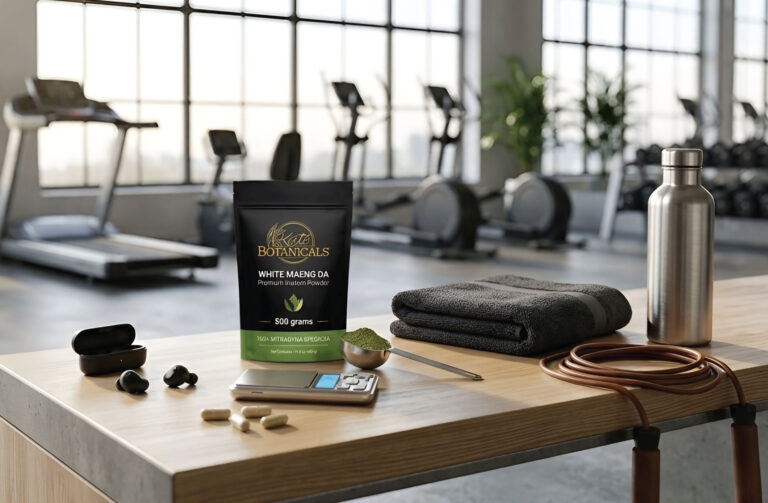
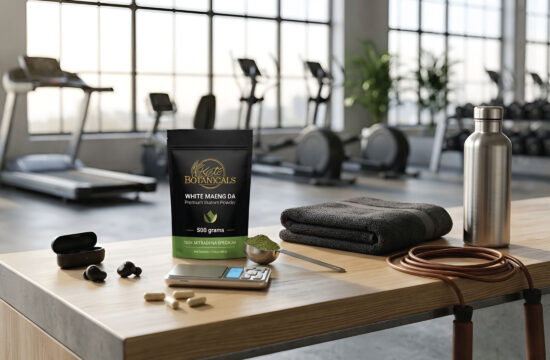
Kratom for working out has moved from a niche forum topic to a real question people bring to the gym. The short version: some lifters and cardio athletes use white or green vein kratom before a session for energy and focus, and reach for a red vein afterward when they want to settle down and unwind. Kratom isn’t a proven ergogenic aid, and it won’t replace protein, sleep, or a real training plan. What it may do, according to how many users describe it, is help set the mental tone around a workout. That distinction matters, and it shapes everything below.
Quick Answer: You can use kratom around a workout, and many people do. White and green vein strains are the common pre-workout picks for energy and focus, while red veins are more often used post-workout to relax. Kratom isn’t a performance-enhancing drug, so treat any effect as a possible complement to training, not a substitute for it. Start with a low dose (2 to 3 grams) taken 30 to 45 minutes before training, and match the kratom strain to the side of the session you’re targeting.
Can Kratom Actually Help With Working Out?
Kratom’s connection to physical work is older than the modern gym. In Thailand and Malaysia, laborers and farmers traditionally chewed fresh kratom leaves to keep going through long shifts in the heat, a use documented in ethnobotanical surveys going back decades. That history is the honest starting point. Kratom was a work aid before it was a workout aid, and the two aren’t the same thing.
What’s happening chemically is dose-dependent. Kratom’s primary alkaloids, mitragynine and 7-hydroxymitragynine, tend to produce more stimulating effects at lower amounts and more relaxing effects as the amount climbs. This pattern is described across the pharmacology literature, including a 2022 review in Frontiers in Pharmacology on the chemistry and pharmacological properties of mitragynine. For training, that means the amount you take and the strain you choose do more to shape your experience than the plant itself.
Here’s the part marketing usually skips. There’s no clinical trial showing kratom builds muscle, extends endurance, or speeds recovery. Anyone selling it as a pre-workout in the way creatine or caffeine are studied is getting ahead of the evidence. What exists is a large body of user reports and a plausible mechanism for the energy-versus-calm split. Use that framing, and you’ll set realistic expectations.
Pre-Workout Kratom: Energy and Focus
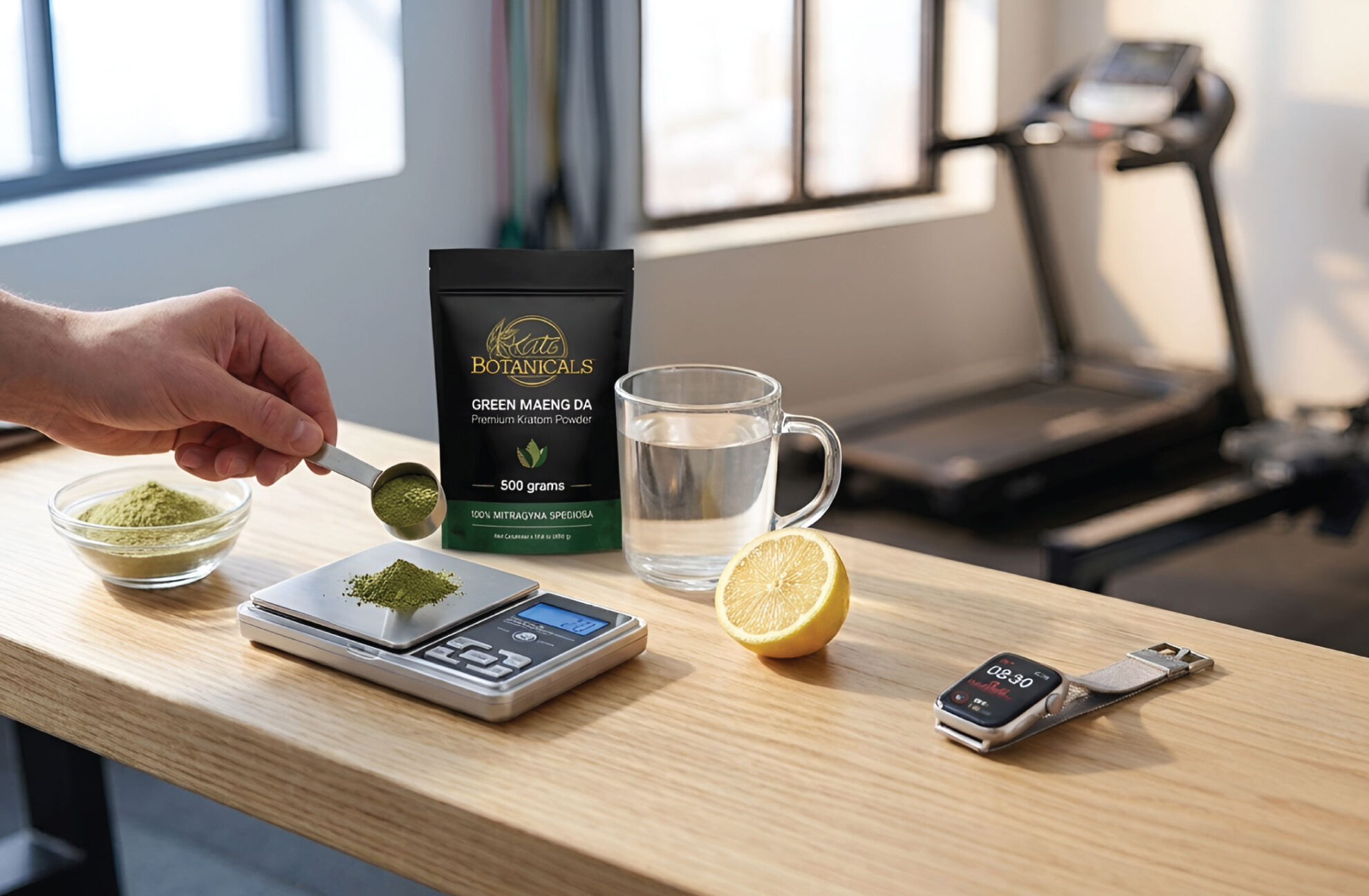
For pre-workout use, most people gravitate toward white vein and green vein kratom, taken 30 to 45 minutes before training so it has time to come on. The goal isn’t a jittery caffeine spike. Users describe it more as a clean sense of drive and mental sharpness that makes it easier to start and stay engaged with a session.
White vein strains for a stronger push
White vein kratom is the most energizing family, which is why it dominates pre-workout conversations. White Maeng Da is the strain people reach for most, with users reporting noticeable energy and focus at a 2 to 3 gram dose. If your training is heavy on cardio or high-rep circuits and you want alertness without heaviness, this is the logical first pick. It’s also the strain most likely to feel like “too much” if you overdo it, so restraint pays off here.
Green vein strains for a balanced start
Green veins sit between white and red. They tend to offer a milder lift than a straight white, with a smoother edge that some lifters prefer for longer sessions where they don’t want a sharp peak and drop. Green Maeng Da and Green Malay come up often for weight lifting, where the appeal is steady focus across multiple sets rather than a fast burst. If white vein leaves you feeling wired, green is the more forgiving option.
Timing and format
Powder mixed into water or juice acts fastest, which is why it’s popular for pre-workout timing. Kratom capsules are more convenient and travel better, but they take longer to kick in because the shell has to dissolve first. If you’re new to this, start with the lower end of your strain’s range on a day you’re not chasing a personal record. The point of the first attempt is to learn how you respond, not to test your ceiling.
Post-Workout Kratom: Winding Down
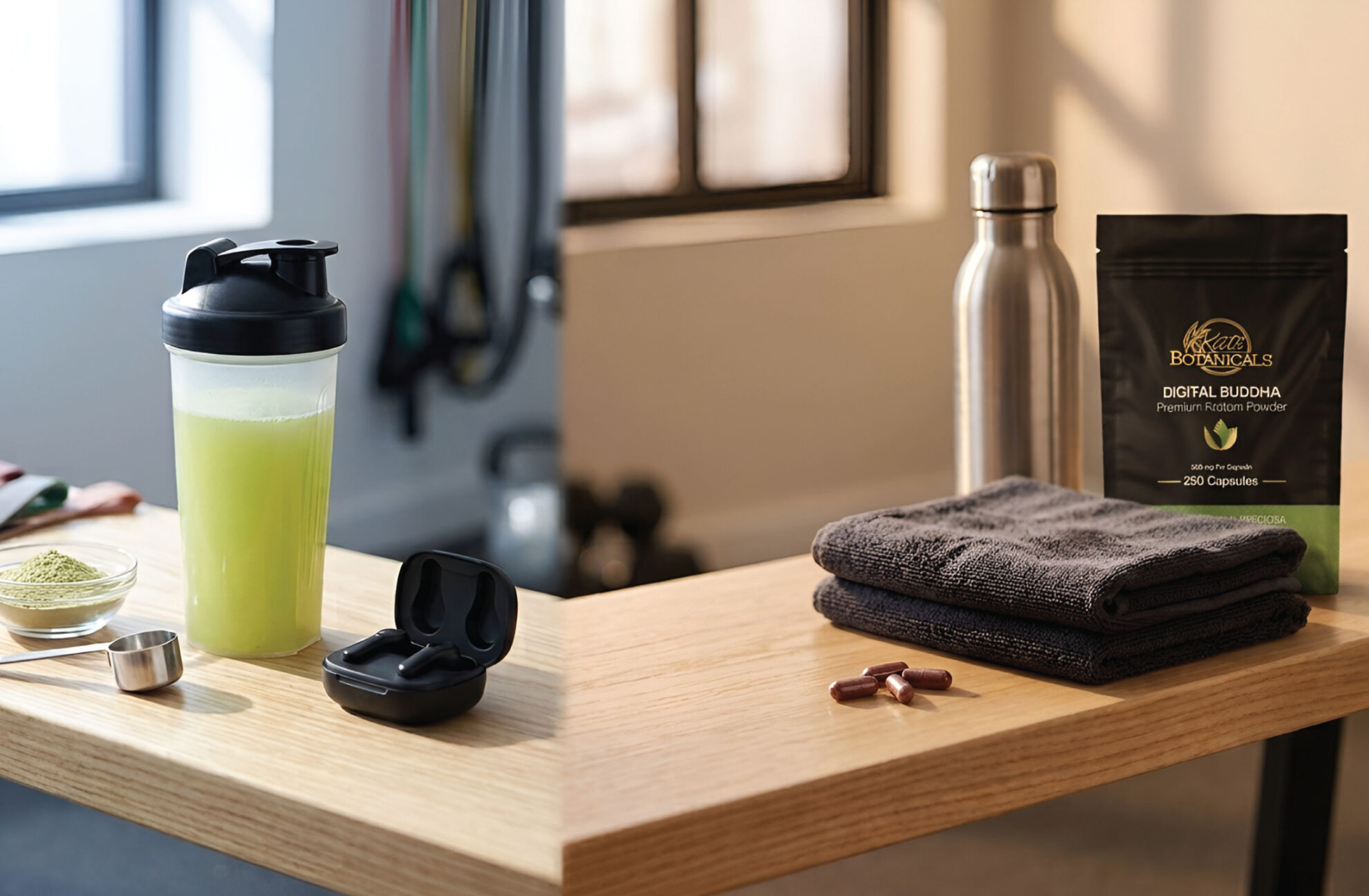
After a hard session, the appeal flips. Post-workout kratom use leans toward red vein strains, which are the most relaxing family and are typically used in the evening to unwind. Where a white vein is about ramping up, a red is about coming down from the adrenaline and tension a workout leaves behind.
Red veins for recovery-time calm
Red Bali and Red Maeng Da are the common post-workout choices. Users describe them as helpful for the wind-down window when the workout is done, but the body still feels switched on. This is about comfort and settling, not about repairing tissue; the recovery itself still comes from your sleep, nutrition, and rest days. Think of a red vein as something that may make that recovery time feel more relaxed, rather than something that does the recovering for you.
A note on expectations
It’s worth being blunt about muscle growth. Questions like “does kratom and muscle growth go together” show up constantly, and the honest answer is that there’s no evidence kratom builds muscle. Hypertrophy is driven by progressive overload, adequate protein, and recovery. If kratom plays any role for a lifter, it’s on the margins of mood and energy around a session, not in the muscle-building process itself. Buying it expecting gains is buying it for the wrong reason.
Choosing the Best Kratom for Working Out
The “best” kratom for working out depends on which side of the session you’re targeting, so match the strain to the goal instead of looking for one product to do everything.
| Goal | Strain type | Common picks | Typical timing |
| Pre-workout energy | White vein | White Maeng Da | 30-45 min before |
| Balanced focus | Green vein | Green Maeng Da, Green Malay | 30-45 min before |
| Post-workout wind-down | Red vein | Red Bali, Red Maeng Da | Evening, after |
One thing worth being opinionated about: sourcing matters more than strain hype when you’re putting something in your body around exercise. Look for kratom that’s third-party lab tested for alkaloid content, heavy metals, and microbial contamination, ideally from a vendor following the American Kratom Association’s GMP Standards Program. The FDA hasn’t approved kratom for any use and doesn’t regulate it as a supplement, which means testing is on the vendor, not the government. A strain name means nothing if you don’t knowwhat’s actually in the bag.
How to Dose Kratom Around Training
Start low and adjust from there. A common beginner range is 2 to 3 grams, and for training purposes, staying on the lower end keeps the effect in stimulating territory rather than tipping into the sedation that comes with larger amounts. If you take too much before a workout, you may feel heavy and unfocused, which is the opposite of what you wanted. The full kratom dosage guide breaks down ranges by experience level if you want a wider reference.
Tolerance is the other honest consideration. Using the same strain at the same amount every single training day tends to blunt the effect over time, and many longtime users rotate strains or take days off to keep things consistent. Daily pre-workout dosing isn’t a free ride. Space it out, and you’ll likely get more from less.
Safety note: Individual responses to kratom vary widely, and it can interact with medications and other stimulants. Talk to your healthcare provider before adding kratom to a training routine, especially if you take other supplements, have a heart condition, or use pre-workout products that already contain stimulants.
What Lifters Report on Reddit and Forums
Search “kratom and weight lifting reddit,” and you’ll find the same themes repeated. People describe green and white veins for getting into a focused headspace before lifting, and red veins for the after. The recurring caution in those threads is honest and worth repeating: users warn each other about tolerance building fast with daily use, and about the difference between a low energizing amount and a higher amount that makes them want to sit down instead of squat.
The community consensus, if there is one, is that kratom is a mood-and-energy tool at the edges of a workout, not a substitute for a good program. That lines up with the actual evidence better than most supplement marketing does. When the people using something daily are more measured than the people selling it, that tells you something.