Green vein kratom captures a balance between the uplifting and calming sides of other veins. Reds lean toward calm. Whites lean toward stimulation. Greens sit in the middle, with a steady lift and a soft edge that makes them the daytime pick for users who don’t want either extreme.
If you’re ready to consider green vein strains, here’s a practical breakdown of what to look for, what to expect, and how to get the most out of your green vein experience.
Quick Answer: Green vein kratom is the middle-ground vein color, offering an even lift with mild calm rather than the sharper stimulation of whites or the sedation of reds. Most users start at 1 gram or less, with a single serving capped at 2.4 grams and no more than two servings in 24 hours.
What Makes a Kratom Vein “Green”
Green vein refers to leaves picked at a middle stage of maturity and dried with limited sun exposure, often partly indoors. That harvest-and-dry choice keeps the leaf vein greener and shapes the alkaloid ratio that gives green its character. Every kratom product starts with the same plant, Mitragyna speciosa, a tree in the coffee family Rubiaceae, native to Southeast Asia including Indonesia, Thailand, Malaysia, and Myanmar. The vein color on the label is not a separate species. It’s a processing signal.
The two alkaloids that get the most attention are mitragynine and 7-hydroxymitragynine, but a green leaf also carries minor compounds like speciogynine and paynantheine in the mix. Kratom contains at least 54 alkaloids, including mitragynine, 7-hydroxymitragynine, speciociliatine, corynantheidine, speciogynine, paynantheine, mitraphylline, and rhynchophylline. The minor alkaloids are part of what differentiates a green’s feel from a white’s.
Shopping Hot Tip: When you’re shopping online for green kratom, look for information about how the leaves were harvested and cared for. That’s a sign of good manufacturing partnerships, and good sourcing makes the difference to your next cup of kratom tea.
What Green Vein Kratom Feels Like
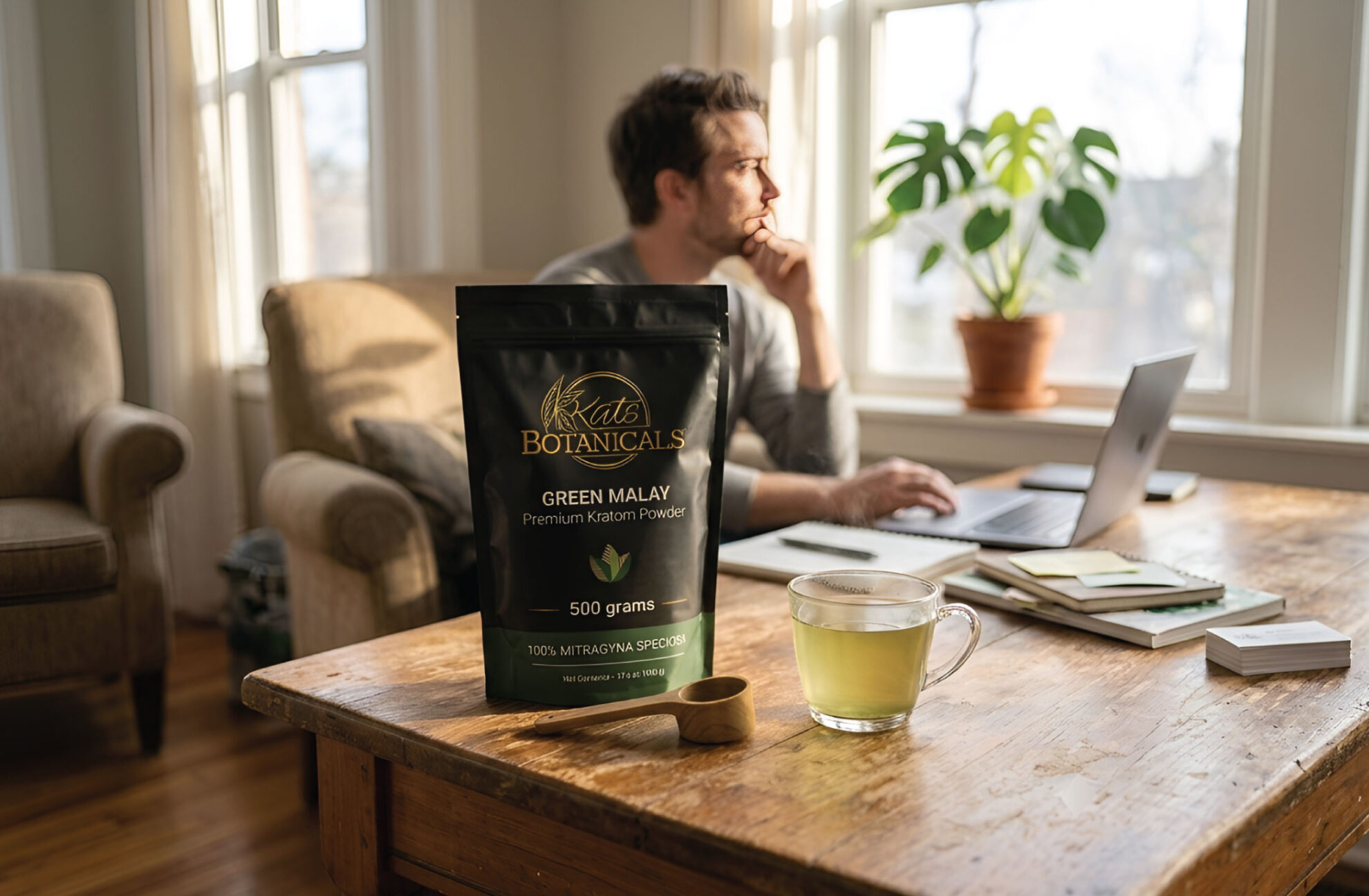
Most green vein users describe a steady, even lift rather than a spike. Mitragynine still leads the alkaloid profile, so expect a little pep. But unlike the perky white vein kratom strains, green veins carry more of the minor alkaloids, which round out the edges of the feel. Greens work well for midday, or for mornings when a little less edge is desired. If white veins make you feel wired, settle into a green and see if that feels better.
That said, “balanced” means different things at different doses. Smaller servings usually feel more on the energizing side. Larger servings can tip toward the relaxed end. Your own response depends on your tolerance, your body, and what else is in your system. The first time with any new green strain is a feeling-it-out session, not a set-it-and-forget-it routine.
Green vs White vs Red: A Quick Comparison
Green vein is easiest to place by contrast with the other two vein colors. The chart below summarizes how each vein typically lands.
| Vein | Alkaloid lean | Commonly reported feel | Typical timing |
| White | Mitragynine dominant | Sharper stimulation, focus | Morning |
| Green | Mitragynine forward with more balancing alkaloids | Even lift with mild calm | Midday |
| Red | More 7-hydroxymitragynine influence | Easing, settling | Evening |
This is a generalization, and individual results vary more than any chart can show. Use it as a starting map, not a guarantee. For a deeper side-by-side, the kratom strain comparison chart goes further.
The Green Vein Strains Worth Knowing
Green vein is a category, not a single product. With a little sampling, you’ll learn whether you favor a single green from a particular region, a kratom blend heavy on the green vein, or an enhanced green with more mitragynine. Here’s an overview of some of the most well-loved green veins.
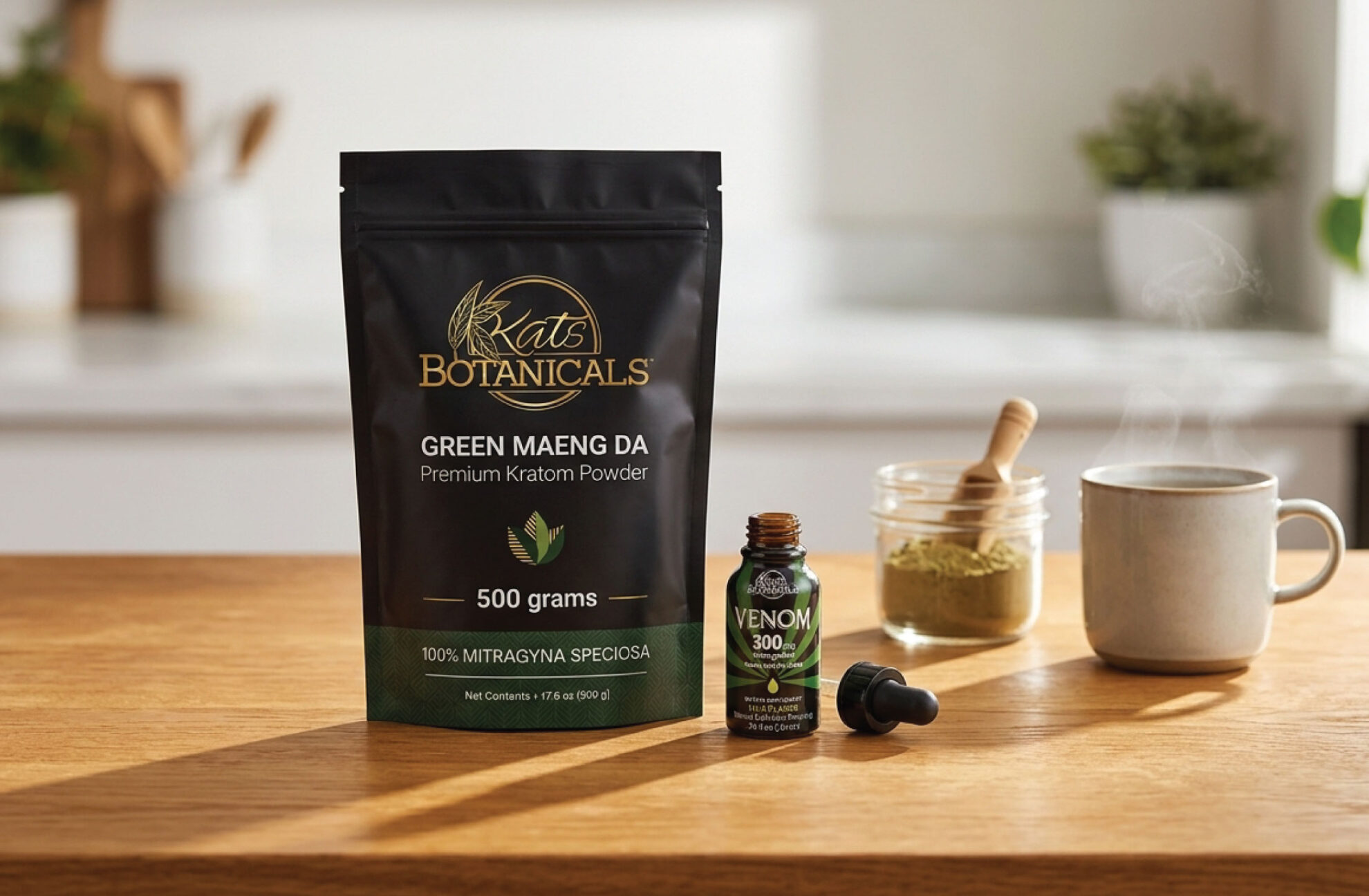
Green Maeng Da
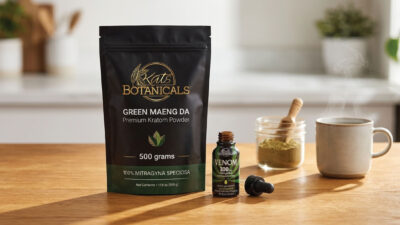
Green Maeng Da is the best-known green by a wide margin. It’s a blend, roughly 80% green vein and 20% white vein, sourced from the Bunut region of Indonesia. That splash of white is what gives it a bit more push than a single-strain green. If you want green’s balance with a touch more get-up-and-go, this is the usual recommendation. The strain is popular with moderate to experienced users, but beginners may prefer a single-strain green like Bali or Malay.
Green Malay
Harvested in the Bengkulu region, Green Malay is 100% green vein. Growers strip the stems before drying the leaves for about a day, which holds the green color and the alkaloid content. Users tend to describe its effects as long-lasting, and many find it stronger than other greens. Start with lower amounts as you’re learning a new strain.
Green Borneo
Green Borneo is one of the most common green strains. Balanced and straightforward, this one works well as an every-day, reliable green.
Green Bali
Green Bali is a smoother, gentler green that people often slot into the afternoon. It runs similar to Green Maeng Da in profile but tends to feel a little softer, which makes it a reasonable pick for a first green.
Green Hulu Kapuas
Sourced from the Kapuas Hulu Regency, Green Hulu Kapuas rivals Green Bali for smoothness and gentle flavor. It runs less bitter than many greens, so it folds into a tea without much sweetener. The lift is mild rather than overpowering, which suits a mid-morning routine.
Green Thai
Green Thai is known for being a bit brighter and more energizing than many other greens. It fits the classic green profile but leans a little more toward focus and alertness, which can make it a good pick for mornings or when you need a mental nudge during the day.
Green Sumatra
Green Sumatra is another well-known green strain that usually reads as gentle and easygoing. It’s a good option for those who want a mellow green experience, one that still keeps the balanced lift green vein is known for without feeling too heavy or too sharp.
Green Elephant
Green Elephant is a larger-leaf green strain, named for the size of the harvested leaves. It’s generally considered a balanced green with a slightly heavier, more grounded feel than faster options like Maeng Da.
Specialty Green Kratom Strains and Blends
Specialty blends, green-forward mixes, and green strains paired with extra mitragynine or another vein color let you expand on the basic green experience. Vendors’ products in this category vary based on their vision for the strains and the formulas they develop.
Shopping Hot Tip: Choose a respectable, ethical vendor and you’ll feel more comfortable sampling among the strains. Beginners should start with the basics (single strains) and get to know their baseline doses with green strains before moving on to blends or enhanced formulas.
A green vein blend prominently features green vein kratom in the formula. Plantation Maeng Da is a good example, with 70% green vein kratom and 30% white vein kratom for those who want a perkier green. Spacebird Kratom has all three veins but half of the formula is green.
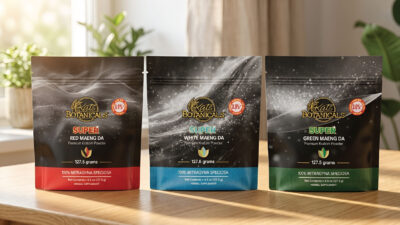
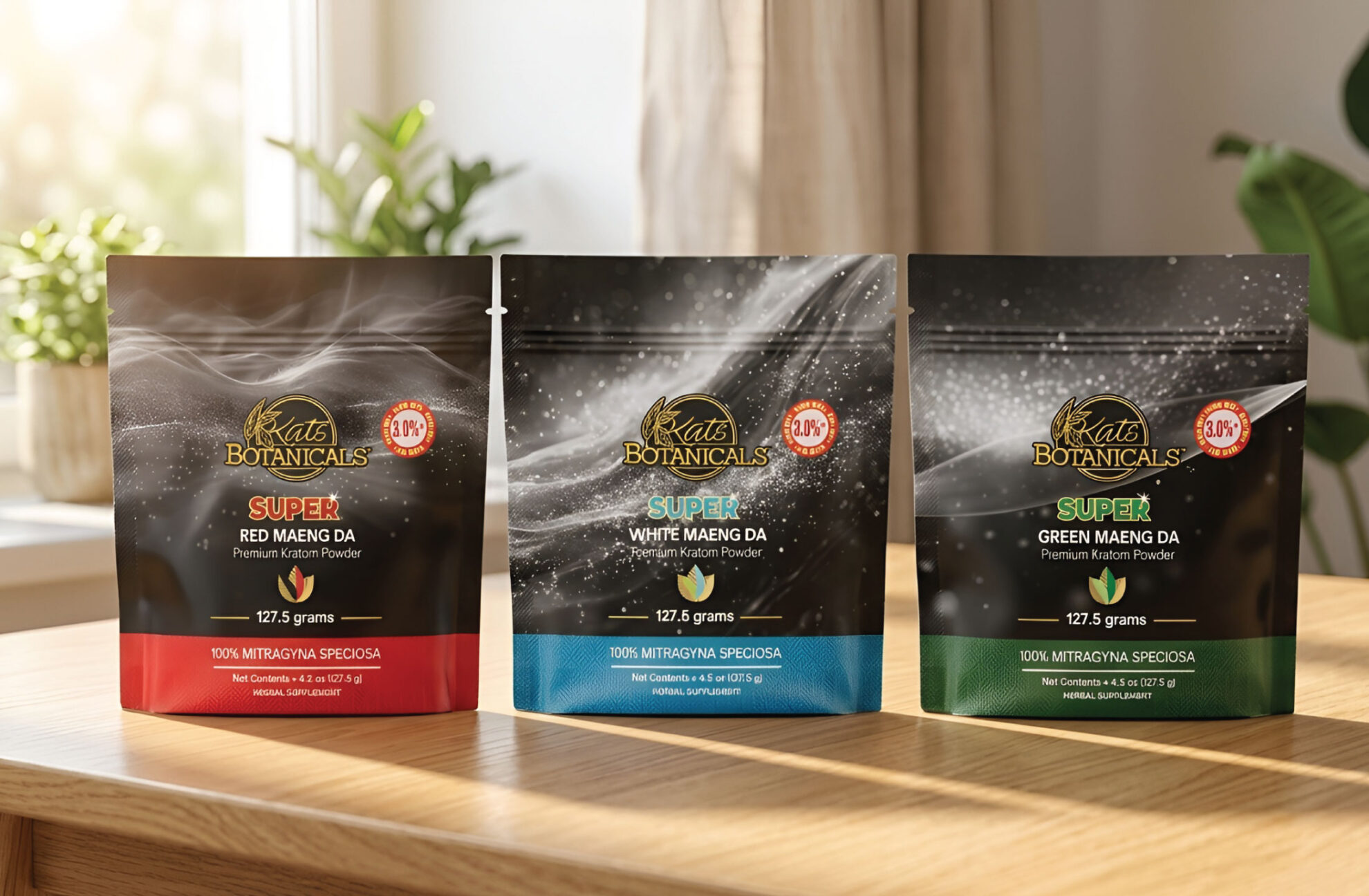
An enhanced green vein will have more alkaloid strength in the formula, either naturally or by added mitragynine extracts. Two good examples are Super Green and Rogue Rhino, both formulated with natural mitragynine extract added (no synthetic kratom involved). Synthetic kratom additives are something to watch out for in this category.
Shopping Hot Tip: You can create your own green kratom blend with the My Blend program.
How Much Green Vein Kratom to Take
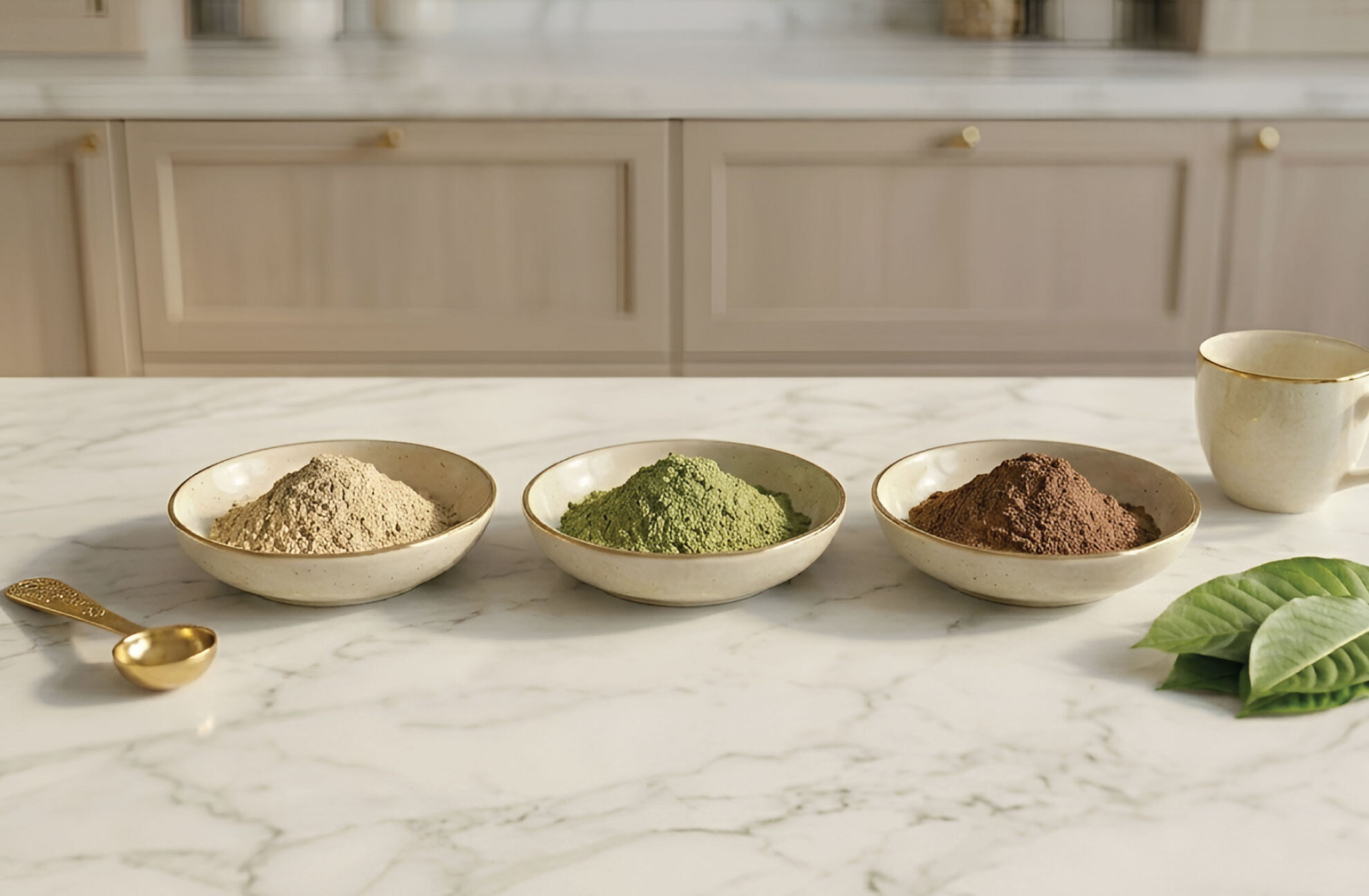
Green vein kratom dosing starts at the bottom of the product’s range and works up slowly. You may be tempted to take too much too soon, but give a single serving time before you judge the strain. As a general reference for green vein powder and capsules:
- Beginners: 1 gram or less of powder, or 1 capsule (about 0.6 g)
- Moderate users: 1.5 to 2 grams, or 2 to 3 capsules
- Experienced users: up to 2.4 grams, or 4 capsules
A single serving of kratom is 2.4 grams, and you shouldn’t exceed two servings in 24 hours. Different strains hit differently, so even seasoned users should ease into a new green rather than match it to their old one. The full kratom dosage guide covers this in more detail.
Side Effects and What to Watch For
Green vein is generally well tolerated, but unwanted effects can show up if you overshoot the dose or combine with other substances. Taking too much at once can bring on nausea, appetite loss, or a heavy, sluggish feeling instead of the lift you wanted. Avoid alcohol when using green kratom, or any kratom for that matter; mixing kratom and alcohol can compound side effects or make the response unpredictable. As with other kratom, the effects can vary. Your doctor is best positioned to advise on use with your individual health profile.
How to Tell You’re Buying Clean Green Vein
Sourcing and lab testing are the only reliable signals of clean green vein kratom. Kratom is a plant product, and plant products pick up contaminants in the field and in processing. An independent lab result is the only thing that confirms what is, and isn’t, in the powder you’re about to take. For more on what to look for, see the guide on how to tell if kratom is low quality.
Every Kats Botanicals product goes through third-party lab testing that screens for heavy metals, pathogens like salmonella and E. coli, and alkaloid levels. Each batch carries a QR code that pulls up its lab report in seconds. We also follow the American Kratom Association’s GMP Standards Program, which is largely based on the GMP requirements of 21 C.F.R. 111, Current Good Manufacturing Practice in Manufacturing, Packaging, Labeling, or Holding Operations for Dietary Supplements. The certification is entirely voluntary; no current law requires any kratom vendor to pursue it, which is precisely what gives it meaning.