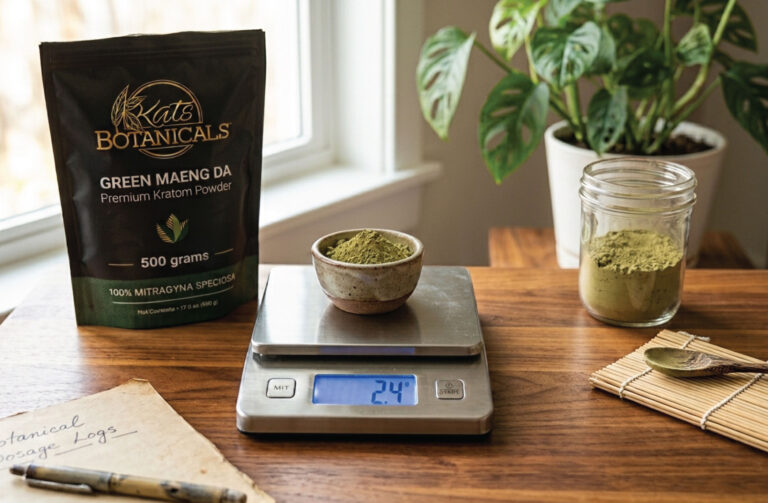
A kratom dosage chart gives you a starting range based on your experience, not a single number that fits everyone. Beginners generally start with 0.5 to 1.5 grams of powder. Intermediate users land around 1.5 to 2.4 grams. Experienced users often stay near 2.4 grams and rotate strains to keep tolerance from creeping up. Extracts sit in their own category and should be dosed by the label rather than the powder chart, since they concentrate the alkaloids well beyond raw leaf.
Kratom (Mitragyna speciosa) is dose-dependent, which is the part most guides skip past. The same strain can feel one way at a small serving and another way at a larger one. So the chart below is a map, not a prescription. Where you land depends on your body, what you want from the day, and the product in your hand.
Quick Answer: Most beginners start with 0.5 to 1.5 grams of kratom powder and wait at least an hour before adjusting. Intermediate users typically take 1.5 to 2.4 grams, and experienced users often stay near 2.4 grams while rotating strains. Extracts are far more concentrated and should be dosed strictly by the product label.
Kratom Dosage Chart by Experience Level
The chart below sorts kratom powder servings into four practical tiers. Use it as a floor to build from, not a target to reach.
| Experience Level | Powder Amount | How to Approach It |
| Beginner (new to kratom) | 0.5–1.5 g | Start at 0.5 g, wait 60 minutes, increase in 0.5 g steps |
| Intermediate | 1.5–2.4 g | Adjust slowly and track how each strain feels |
| Experienced | ~2.4 g | Rotate strains and take days off to manage tolerance |
| Extract (any level) | Per label only | Concentrated; a small fraction of a powder serving |
Notice how narrow those ranges are. That’s deliberate. Kratom’s effects can shift with half-gram changes, so a chart that told you “take 2 to 8 grams” would be useless. If you’re deciding between eyeballing your dose and buying a small kitchen scale, buy the scale. Every honest dosing conversation starts with knowing the actual grams in front of you, and a scoop or teaspoon can vary by a full gram depending on how finely the leaf is ground.
What Changes the Right Dose for You
Your ideal serving is shaped by three things: your own physiology, the strain you picked, and the form it comes in. Two people can take the identical amount of the same powder and describe different experiences, and that variation is normal.
Your Body and Metabolism
Body weight, metabolism, and whether your stomach is empty all move the needle. A larger person often needs a touch more to feel the same thing a smaller person feels at the low end. Taking kratom on an empty stomach tends to bring effects on faster and stronger, which is worth knowing before you decide a dose “didn’t work” and reach for more. It may have simply arrived more slowly after a meal.
There’s no bloodwork you need here. The practical move is to treat your first week as calibration. Pick one strain, hold the amount steady for a few days, and pay attention. Your baseline tells you far more than any chart can.
Strain and Vein Color
Vein color is the shorthand most people use to pick a starting point, and it holds up reasonably well. Red vein strains, like Red Bali, are the ones users most often reach for in the evening for a settled, relaxed feeling. White vein strains, like White Maeng Da, are the daytime pick, with users reporting a more alert, focused feeling. Green veins and yellow kratom sit in the middle, which makes them a forgiving place for beginners to start.
Here’s the part that trips people up: switching strains resets your read on dosing. A 2-gram serving of one green strain won’t feel identical to 2 grams of a red, even at the same weight. Treat every new strain like your first day, even if you’ve used kratom for years.
The Form You Choose
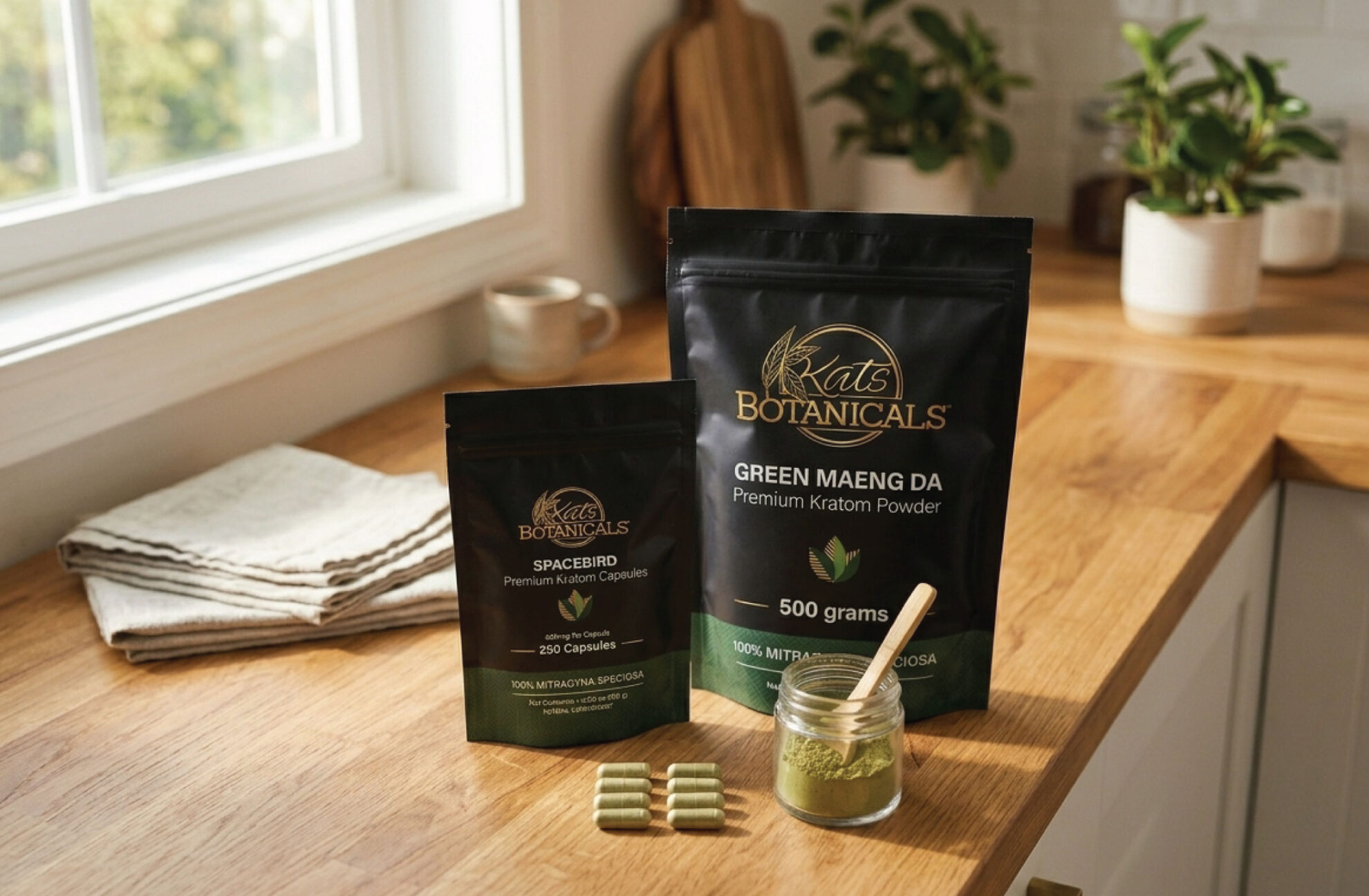
Powder, capsules, and extracts aren’t interchangeable at the same number. Powder is the format that gives you the most control, because you can weigh exactly what you want. Capsules trade that precision for convenience, and each one typically holds 0.5 to 1 gram, so four to six capsules can add up to an intermediate serving. Always check the label, because capsule fill varies between products, and even bulk kratom capsules aren’t standardized across brands.
Extracts are the outlier. They concentrate mitragynine and other alkaloids far past what raw leaf delivers, so a powder chart doesn’t apply to them at all. If you use an extract shot, capsule, or gummy, the label amount is the whole answer. Start with less than you think, because “more is better” is exactly how people overshoot with concentrated products.
Matching Your Serving to the Time of Day
Because kratom is dose-dependent, the amount you take often matters as much as the strain for shaping your day. Smaller servings toward the low end of your range are what most users associate with a lighter, more alert feeling. This is where the interest in kratom dosage for energy comes from, and it usually means staying modest rather than loading up. Larger servings within the responsible range tend to feel heavier and more relaxing, which is why evening users often nudge toward the higher end of their comfort zone.
If your goal is a clear-headed morning, a smaller white or green serving is the logical starting place. If you want to wind down without alcohol at the end of a long day, a red strain at your usual amount fits better. None of this is a promise about outcomes, since individual responses vary, but the pattern is consistent enough that it’s a sensible way to plan your day.
How to Measure Kratom Accurately
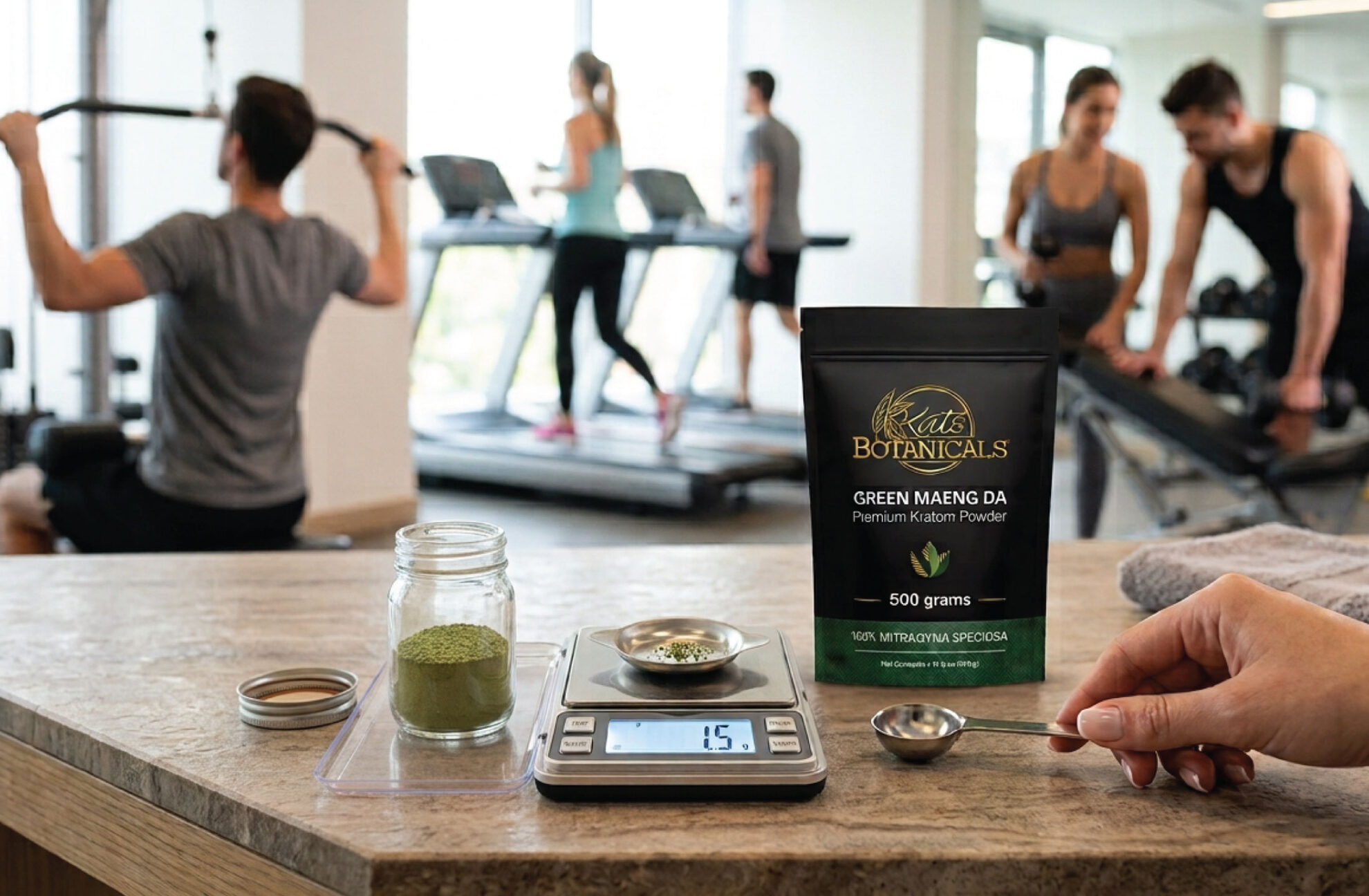
Accurate measuring is the single habit that separates a consistent kratom routine from a frustrating one. A digital scale that reads to 0.1 gram is a reliable tool for powder, and it costs less than a bag of leaf.
- Weigh, don’t scoop. A heaped teaspoon of finely milled powder can hold noticeably more than a level one. Guessing is the most common reason a dose lands harder than expected.
- Know your capsule count. If your capsules hold 0.5 grams each, three of them are 1.5 grams. Do the math once and write it down.
- Mix thoroughly. Powder doesn’t dissolve in water, so stir it well or blend it into juice, a smoothie, or tea so you actually consume the full amount you measured.
- Store it right. Keep kratom in an airtight container in a cool, dark, dry place. Heat, light, and moisture degrade the alkaloid profile over time and make your servings less predictable.
Do this consistently, and your notes become genuinely useful. When you know that 1.5 grams of a specific green strain does what you want, you can repeat it instead of rediscovering it every time.
Start Low, Go Slow, and Manage Tolerance
The safest way to find your dose is to begin below where you think you need to be and climb in small steps. Take a low amount, wait at least an hour, and only then decide whether to add 0.5 grams. Waiting matters more than most beginners expect, because kratom is not instant, and stacking a second dose too early is how people accidentally double up.
Tolerance is the reason experienced users cap their amounts and rotate. Take the same strain at the same dose every day, and the effect you liked tends to fade, which pushes people toward larger servings that carry more risk of dependence. Rotating between strains and building in regular days off are the practical tools for keeping your usual amount working. Frequency, not just size, drives tolerance.
Dosing also connects to how long kratom stays active. A 2015 pharmacokinetic study published in Drug Design, Development and Therapy tracked mitragynine in regular users and estimated an oral half-life of roughly 24 hours, which is longer than many people assume. That’s one more reason not to re-dose repeatedly through the day chasing a stronger effect.
Safety note: Kratom is for adults 21 and older and is not for use if you are pregnant or nursing. The FDA has not approved kratom for any medical use. Talk to your healthcare provider before starting, especially if you take medication or have a health condition.
Quality matters here too. The American Kratom Association’s GMP Standards Program requires participating vendors to third-party test for alkaloid content, heavy metals, and microbial contamination. Buying lab-tested kratom with a published certificate of analysis is the only way to know the actual mitragynine content behind your gram measurement, and without that number, precise dosing is guesswork.