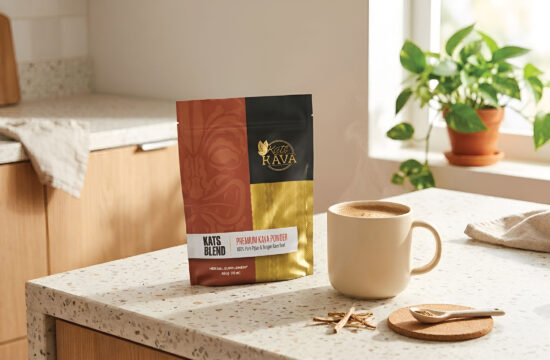
Kava is a plant from the South Pacific whose benefits center on relaxation and calm. People drink it for everyday stress ease, a smoother transition into sleep, and a sociable, unwound feeling in group settings, without alcohol and without heavy sedation. The active compounds, called kavalactones, are what set it apart from most botanical drinks. Kava has been part of ceremonial and social life in Vanuatu, Fiji, and Tonga for more than 3,000 years, and modern kava supplements aim to deliver that same calming character in tea, powder, and capsule form. Individual responses vary, and how kava feels depends on the strain, the dose, and your own body chemistry.
Quick Answer: Kava’s main benefits are relaxation, everyday stress ease, easier evening wind-down, and social comfort. These effects come from kavalactones, the active compounds in the kava root. Most people feel a calm, clear-headed sense of ease rather than the grogginess of a sedative.
What Kava Is and How It Works
Kava is a drink made from the ground root of the Piper methysticum plant, and its calming effects come from compounds called kavalactones. When you drink it, those compounds interact with receptors in the brain tied to relaxation, which produces the settled, unwound feeling kava is known for.
The plant grows across the South Pacific, and not all of it is worth drinking. Growers distinguish between noble kava, the cultivars bred over generations for daily use, and tudei (“two-day”) kava, which is cheaper and can leave people feeling heavy for a day or more. If you’re buying kava root powder or a supplement, noble kava is the only version worth your money. That’s real quality, not marketing language.
The Role of Kavalactones
Kava contains at least 18 kavalactones, but six of them account for most of what you feel: kavain, dihydrokavain, methysticin, dihydromethysticin, yangonin, and desmethoxyyangonin. The ratio of these six, sometimes written as a “chemotype,” is what makes one strain feel more heady and relaxing while another feels more physically loosening.
Kavalactones appear to work partly through the GABA system, the same calming pathway the body uses to quiet mental chatter at the end of the day. That’s the short version. The longer version is that researchers are still mapping how the compounds behave together, and kava’s full mechanism isn’t settled science. What’s clear from centuries of use is the direction of the effect: down-regulation, not stimulation.

The Main Benefits People Look For in Kava
Kava’s benefits cluster around relaxation: a calmer mind, an easier wind-down at night, more comfort in social settings, and a loosened, physically at-ease body. Those are the four reasons most people try it, and they overlap more than they separate. The research on kava is genuine but still developing, so it’s worth reading the effects as a well-documented traditional pattern rather than a list of guarantees.
Everyday Stress and Mental Calm
The benefit people notice first is mental calm. Kava is associated with a quieter, more settled headspace, the kind that makes a busy day feel less like it’s pressing on you. On forums like Reddit, longtime drinkers often describe it as “taking the edge off” without dulling their thinking, which is what separates kava from a glass of wine.
That distinction matters. Kava isn’t about checking out. Most people stay clear-headed, able to hold a conversation or read a book, just with the background tension turned down. Results vary, and a strong dose of a heavier strain can feel more sedating than a light cup of a heady one.
Restful Sleep and Evening Wind-Down
Many people drink kava in the evening for the same reason they’d wind down with tea: it helps the shift from a wired day into a restful night feel smoother. A cup an hour or two before bed can quiet the mental momentum that keeps you scrolling instead of sleeping.
Kava doesn’t knock you out the way a pharmaceutical sleep aid does. What it may do is make it easier to let go of the day, which for a lot of people is the actual obstacle to rest. If you want kava as part of an evening routine, a heavier-bodied strain tends to suit the goal better than a bright, heady one.
Social Ease and Sociability
Across Vanuatu and Fiji, kava is the social drink, served from a shared bowl at gatherings the way other cultures pour rounds of alcohol. That’s not an accident of tradition. Kava tends to make people more talkative and at ease in groups while keeping them sober and clear, which is why kava bars have spread across the United States as an alcohol-free way to be social.
The appeal is straightforward. You get the loosened, sociable feeling without the hangover, the impaired judgment, or the calories. For anyone cutting back on drinking, that trade is the whole point.
Physical Relaxation and Muscle Comfort
Kava’s relaxing effect isn’t only mental. Many drinkers report a loosening in the body, a sense of physical ease and comfort in the muscles that pairs with the mental calm. Some of the six main kavalactones have been examined for their relaxing action on muscle tissue, which fits what people describe after a strong cup.
This is part of why kava shows up in post-workout and evening routines. It’s worth being honest about the ceiling, though. Kava is a relaxant, not a treatment, and the physical effect is gentle rather than dramatic.
Is Kava Different for Men and Women?
The core benefits of kava- relaxation, calm, easier sleep, and social ease- are the same regardless of sex. Marketing that splits “kava benefits for men” from “kava benefits for women” is mostly a search-engine artifact, not a real physiological divide.
Body weight and individual chemistry influence how strong a given serving feels far more than sex does. A smaller person may feel a standard serving more intensely, and everyone’s kavalactone sensitivity is a little different. Start low, see how your body responds, and adjust from there rather than following a gendered dosing chart.
How to Take Kava
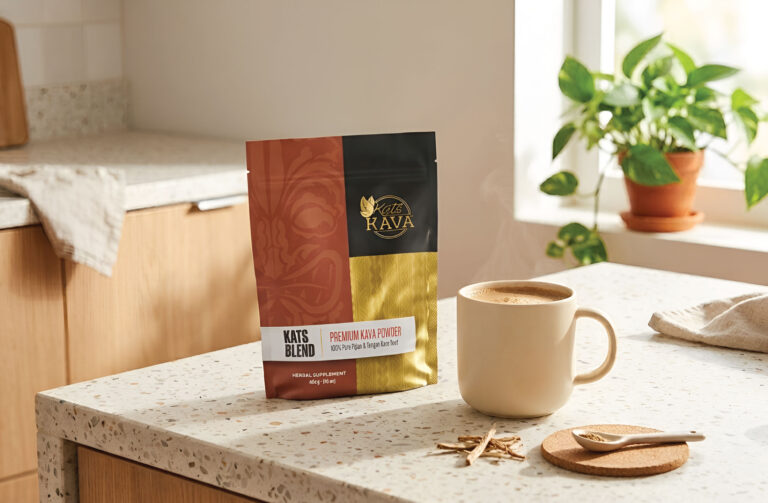
The traditional and most flexible way to take kava is as a tea brewed from kava root powder, though kava capsules and pre-made blends offer convenience for people who don’t want to prepare it. Each format delivers kavalactones. They just differ in effort, taste, and how much control you get over strength.
Traditional Tea vs Capsules and Powder
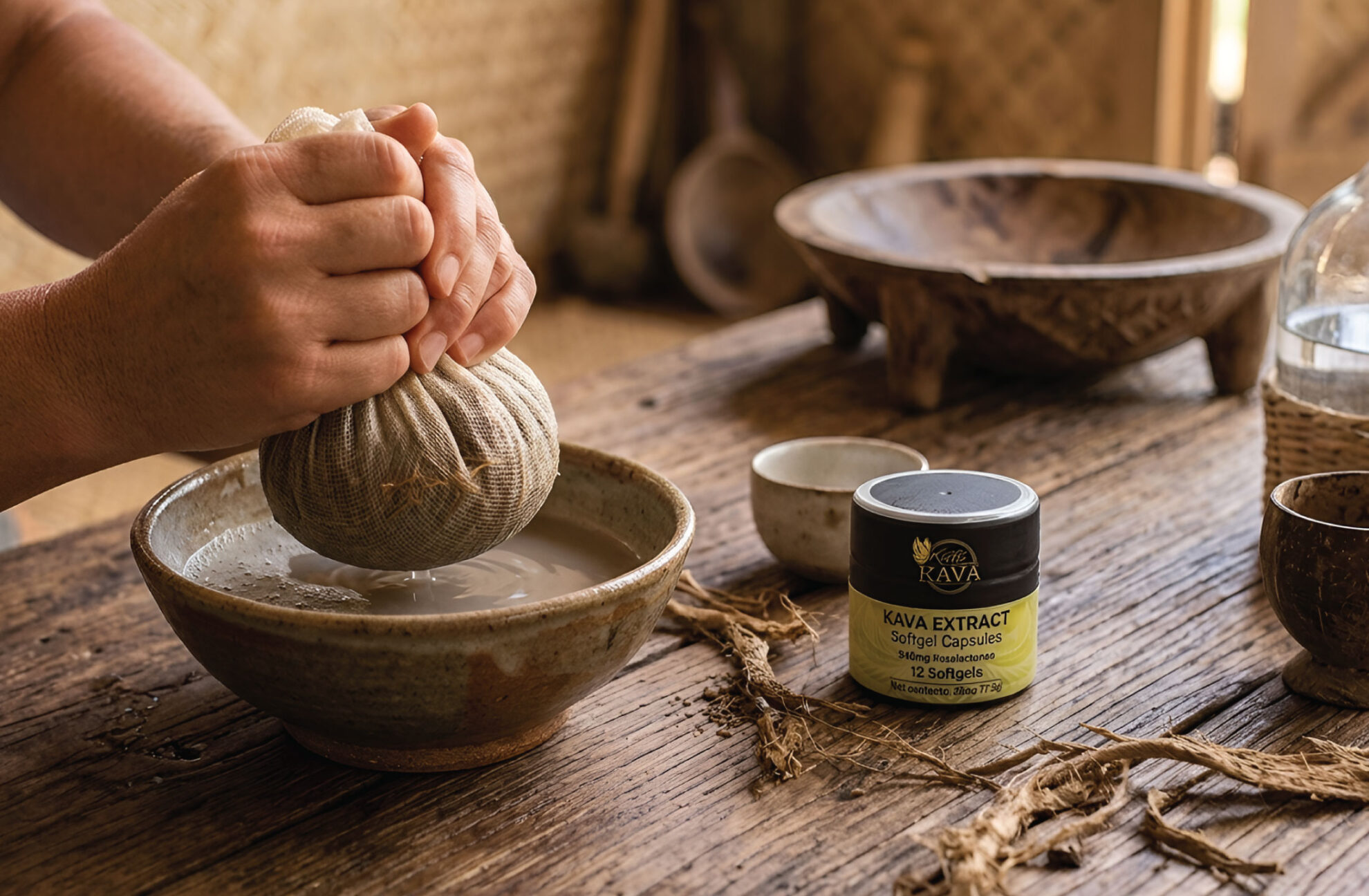
Traditional kava kava tea is made by kneading kava root powder in water inside a straining bag, then squeezing out the liquid. It takes a few minutes and tastes earthy and bitter, an acquired flavor that regular drinkers stop minding. The upside is control. You decide the ratio of root to water, so you decide the strength.
Capsules skip the taste and the prep entirely. That convenience costs you some flexibility, since the dose is fixed and the effects can arrive a little slower than a fresh cup. For a first-timer testing whether kava suits them, capsules are a low-commitment start. For someone building an evening ritual, the tea is usually worth the effort.
Whatever the format, the quality of the root is what shapes the experience. Look for noble kava that has been third-party lab tested, with the kavalactone content and origin actually disclosed. “Kava” on a label without those specifics tells you nothing.