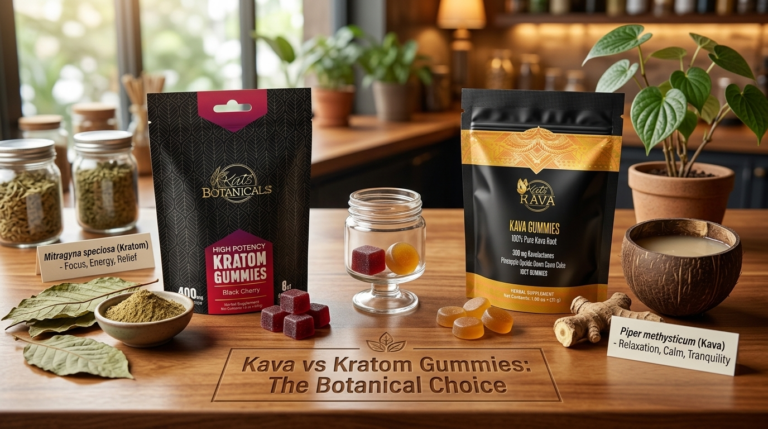
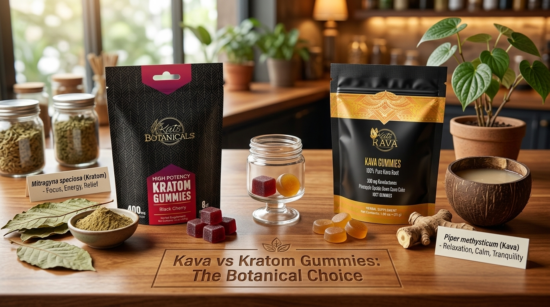
Kava and kratom get grouped together constantly. They share bar menus, wellness forums, and search results. They also come from different plants, different continents, and different chemistry, which means the experiences they produce have little in common. Kava is the root of a South Pacific pepper plant and works mainly through GABA receptors to produce a steady calm. Kratom is the leaf of a Southeast Asian tree, and its effects shift from energizing to relaxing depending on the strain and serving size. If you want predictability, kava is the simpler answer. If you want a botanical that behaves differently at different doses, kratom offers that range.
Quick Answer: Kava comes from the root of Piper methysticum and delivers a consistent, grounding calm through compounds called kavalactones. Kratom comes from the leaf of Mitragyna speciosa and produces dose-dependent effects, more energizing at smaller servings and more relaxing at larger ones. They aren’t interchangeable, and most people pick one based on whether they want reliability or flexibility.
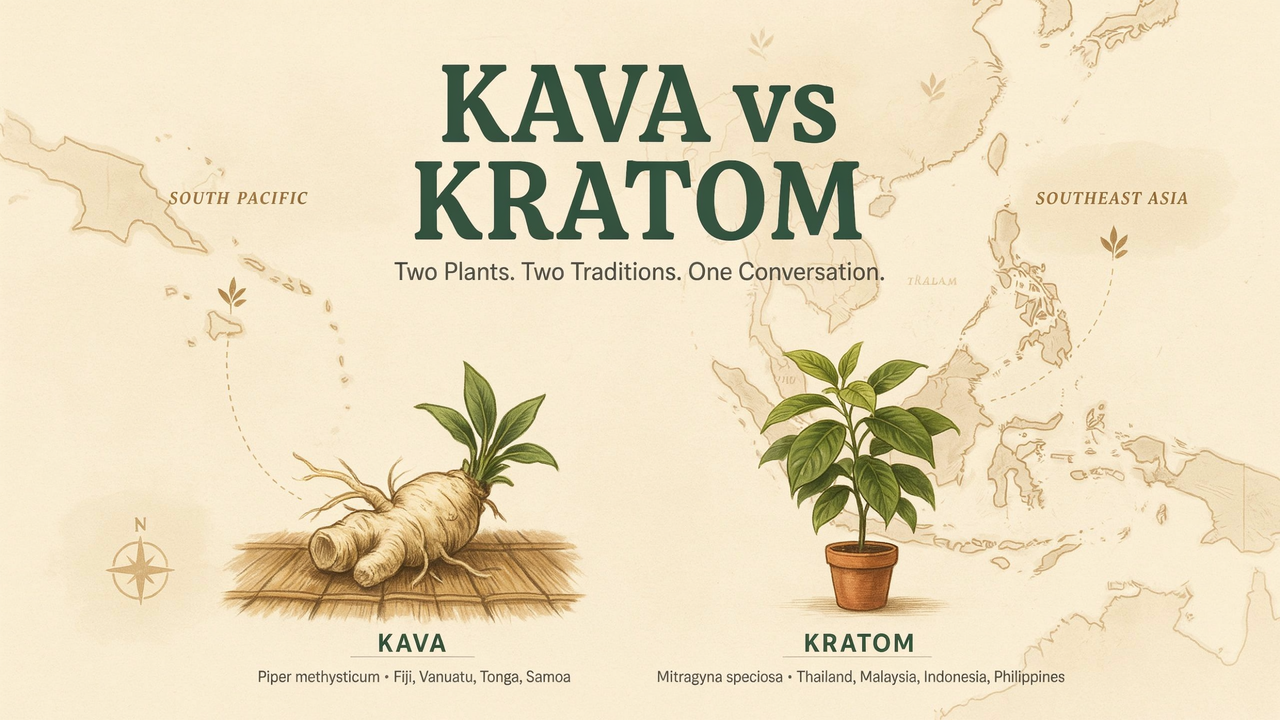
Where Kava and Kratom Come From
The two plants grew up on opposite sides of the world, and their traditions reflect that.
Kava’s Pacific Roots
Kava root comes from Piper methysticum, a member of the pepper family cultivated across the South Pacific. Fiji, Vanuatu, and Tonga produce the varieties most people recognize. For centuries, Pacific Island communities have ground the root, steeped it in water, and strained it into an earthy drink served in social and ceremonial settings. The point was never a buzz. It was connection, a way to sit with people and let the edge come off the day.
Not all kava is equal, and this is where sourcing earns its keep. Noble kava varieties, made from the peeled root using water extraction, carry the long safety record. Products made from stems, leaves, or aerial parts don’t, and that distinction turns out to matter more than most first-time buyers realize.
Kratom’s Southeast Asian Origin
Kratom comes from Mitragyna speciosa, a tropical tree native to Indonesia, Thailand, and neighboring regions. Historically, laborers chewed the fresh leaves for stamina during long shifts, then used the same plant in the evening to wind down. That built-in dual nature isn’t folklore. It reflects how the plant’s alkaloids behave at different amounts, which is the single biggest thing separating it from kava.
How Each One Works in the Body
The difference between kava and kratom starts at the molecular level, and it explains almost everything else about them.
Kavalactones and GABA
Kava contains around 18 identified kavalactones, and these are the compounds responsible for its character. They interact with GABA receptors, the same broad system alcohol acts on, though the resulting feel is different and comes without the next-morning penalty alcohol charges. A 2016 PLOS One study on kavain, the major kavalactone, found that it positively modulates GABA-A receptors without binding at the classical benzodiazepine site. Because the kavalactone profile in a good root is fairly stable, the experience tends to be consistent. You get roughly the same thing each time, which is exactly why some people prefer it.
Alkaloids and the Dose-Dependent Range
Kratom works through alkaloids, with mitragynine being the most abundant. According to a 2022 Frontiers in Pharmacology review, mitragynine interacts with mu, delta, and kappa opioid receptors as well as adrenergic pathways, which is why kratom refuses to be pinned to a single effect. Smaller servings lean energizing. Larger servings lean relaxing. Kava has no equivalent to this. It does one thing well, while kratom does several things depending on how you use it. Neither approach is better in the abstract. They solve different problems.
What Each One Feels Like
Effects vary by person, serving size, and body chemistry, but a few patterns hold across most users.
The Kava Experience
People who drink kava describe a grounded, settled calm. Physical tension may ease. Conversation may come a little easier, though most users agree the mind stays clear rather than clouded. There is often a warm feeling that starts in the body before it reaches the head.
Kava doesn’t produce the kind of high some newcomers expect, and that surprises people. It’s closer to the relief of unclenching a jaw you didn’t know was tight. That understated quality is the whole appeal for the calm-seeking crowd, and it’s also why kava shows up so often in user discussions about easing everyday stress, always as a state people report rather than a promise the plant makes.
The Kratom Experience
Kratom is harder to summarize because it isn’t one experience. Vein color is the usual shorthand:
- White vein strains: favored for mornings, associated with focus and natural energy.
- Green vein strains: a middle-of-the-day pick, appreciated for balance.
- Red vein strains: the common evening choice, tied to unwinding and relaxation.
Beyond these, there are yellow varieties, regional strains, and blends that add nuance. If you want a fuller side-by-side, the kratom strain comparison chart breaks each one down by expected feel. This range is precisely why some people choose kratom over kava, and why others reach the opposite conclusion. If you value variety, kratom rewards it. If you value knowing exactly what your evening will feel like, kava is the safer bet.
Taste and Product Formats
Neither botanical wins on flavor, so it helps to know your options before committing.
Kava tastes earthy and peppery, and traditional preparation produces a muddy, gritty drink that can numb your lips and tongue on the way down. Plenty of people grow to like it. Almost nobody likes the first sip. Kava gummies and instant mixes sidestep the taste entirely, and a well-made kava tea makes the traditional format far more drinkable.
Kratom tea runs bitter and grassy. Honey or citrus takes the edge off, but many users skip the flavor problem completely with kratom capsules or gummies. There’s also a growing category of kava kratom combination products, including blended shots, for people who want both in a measured serving without brewing anything.
Kava, Kratom, and Liver Health
Liver questions come up in almost every kava vs kratom discussion, and they deserve a straight answer rather than reassurance.
Early reports in Europe in the early 2000s linked kava to liver toxicity, which led several countries to ban it. Later analysis traced most of those cases to products made with non-root plant parts or contaminated with mold, not to properly prepared noble root. Most of those bans have since been lifted. This is the clearest example of why the plant part and preparation method matter, and it’s a case where the marketing shorthand of “kava is dangerous” simply doesn’t match what the case reports showed.
Kratom and the liver have received less formal study, though isolated case reports exist. In many of those, pre-existing conditions or concurrent substance use were involved, which makes clean cause-and-effect hard to establish. The honest read is that the research is thinner than anyone would like.
Safety note: Neither botanical should be combined with alcohol, and anyone with liver concerns or existing health conditions should talk to a doctor before using either one.
How Kava and Kratom Compare to CBD
People often ask where CBD fits, since the three get shelved together. Each works through a different system. CBD interacts with the endocannabinoid system, kava works through GABA receptors, and kratom acts on opioid and adrenergic receptors. Grouping them as one category oversimplifies how differently they behave.
| Feature | Kava | Kratom | CBD |
| Source | Root of Piper methysticum | Leaf of Mitragyna speciosa | Hemp plant |
| Origin | South Pacific | Southeast Asia | US-grown hemp |
| Active compounds | Kavalactones | Alkaloids (mitragynine) | Cannabinoids |
| Typical feel | Consistent calm | Energizing to relaxing | Subtle, background-level ease |
| Psychoactive | Mild | Yes, dose-dependent | No |
If you want to try more than one, introduce a single botanical at a time so you can tell what your body is actually responding to.
How to Choose Between Kava and Kratom
Start with the outcome you want. If your goal is a predictable evening calm and a social alternative to alcohol, kava is the cleaner choice because it does the same thing every time. If you want a botanical that can support focus in the morning and relaxation at night depending on how you use it, kratom’s dose-dependent range fits that better.
Then think about sourcing, which matters as much as the choice itself. Neither kava nor kratom is federally regulated, so the gap between a vetted vendor and an unknown seller is wide. The FDA has not approved kratom for any medical use, which puts the burden of quality control on the brand. Look for third-party lab testing on every batch for potency and contaminants, following the American Kratom Association’s GMP standards. That’s the minimum, not a premium feature.
Whichever you pick, start with a smaller serving and give your body time before adjusting. Skip alcohol and sedatives entirely, and check with your healthcare provider if you take prescription medications. The kratom dosage guide walks through starting servings by format if you go that route.