Red Bali kratom dosage generally falls between 2 and 5 grams for most adults. Beginners do best starting near 2 grams, while people who’ve used red vein strains for a while sometimes settle in the 4 to 6 gram range. Red Bali is one of the slower, heavier red vein kratom strains, so the amount you take matters more here than with a lighter green or white. Take too little, and you may not notice much. Take too much of a relaxing red, and you can feel groggy rather than at ease. This guide walks through how to find the amount that fits your body, your tolerance, and the format you’re using.
Quick Answer: Most people take between 2 and 5 grams of Red Bali kratom, with 2 to 3 grams being a sensible starting point for beginners. Effects vary by body weight, tolerance, and whether you use powder or capsules, so start on the low end and adjust in small steps over several days.
What Changes the Right Red Bali Dose for You
There’s no single correct number, and anyone who gives you one is skipping the part that actually matters. Your response to Red Bali depends on your body weight, your metabolism, how much you’ve eaten, and whether you’ve used kratom recently enough to carry tolerance.
Red Bali sits on the relaxing end of the red vein family. Its alkaloid makeup leans toward the slower, more grounding profile that red strains are known for, which is why users reach for it in the evening rather than the morning. That same quality is why dosing precision counts. A gram or two past your comfortable range can shift the experience from calm to sluggish.
Body weight plays a larger role than people expect. Someone who weighs 130 pounds and someone who weighs 220 pounds taking the same 3 grams aren’t having the same experience. If you’re on the lighter side, treat the low end of every range as your real range.
The Alkaloids Behind the Dose
Kratom’s effects trace back to two primary alkaloids: mitragynine and 7-hydroxymitragynine. Mitragynine is the most abundant, and its concentration varies from batch to batch depending on the tree, the region, and how the leaf was dried. Peer-reviewed pharmacology work in ACS Central Science has characterized both alkaloids and their receptor activity in detail. This is the practical reason why two bags of “Red Bali” from different sellers can feel different at the same gram count.
It’s also why lab testing is worth caring about. The American Kratom Association’s GMP Standards Program calls for third-party testing of alkaloid content, heavy metals, and microbial contamination. When a vendor publishes mitragynine content for a specific batch, you can dose against a known quantity instead of guessing. Without that number, you’re recalibrating every time you reorder, which is a slower and less pleasant way to find your dose. For a deeper walk-through of the numbers on a certificate of analysis, see our guide on how to read kratom lab test results.
Red Bali Kratom Dosage by Experience Level
The table below is a starting framework, not a prescription. Individual responses vary, and where you land inside these ranges depends on the factors above.
| Experience Level | Typical Range | Notes |
| Beginner | 2 to 3 grams | Enough to feel the strain without overshooting |
| Moderate | 3 to 4 grams | For those with a few weeks of consistent use |
| Experienced | 4 to 6 grams | Higher tolerance; not a target to chase |
Beginners: Start at 2 to 3 Grams
If Red Bali is your first red strain, begin at 2 grams and wait. Give it a full 45 to 60 minutes before deciding whether you need more. Red Bali comes on more gradually than a stimulating white, so the mistake beginners make is assuming nothing is happening and taking a second dose too soon. Then both hit at once. Patience here saves you an uncomfortable afternoon. If this is your first time with kratom at all, our first-time kratom use guide walks through the setup in more detail.
Moderate Users: 3 to 4 Grams
Once your body knows the strain, most people find their comfortable window somewhere between 3 and 4 grams. This is the range where Red Bali tends to feel balanced for a lot of users: settled and calm without the heaviness that comes higher up. If you’ve been dosing consistently for a few weeks, this is likely where you’ve landed on your own.
Experienced Users: 4 to 6 Grams
Higher ranges exist, but I’d push back on treating 5 or 6 grams as a goal. More kratom isn’t automatically a better experience, and with a relaxing strain like Red Bali, climbing the dose often trades the pleasant part for grogginess. The experienced range is where longtime users sit because of genuine tolerance, not because bigger is better. If you find yourself needing steadily more to feel anything, that’s a tolerance signal worth addressing rather than outrunning; our kratom tolerance guide covers how to reset without escalating.
How to Find Your Personal Dose
The smartest approach is boring on purpose: start low, go slow, and change one thing at a time.
Measure, Don’t Eyeball
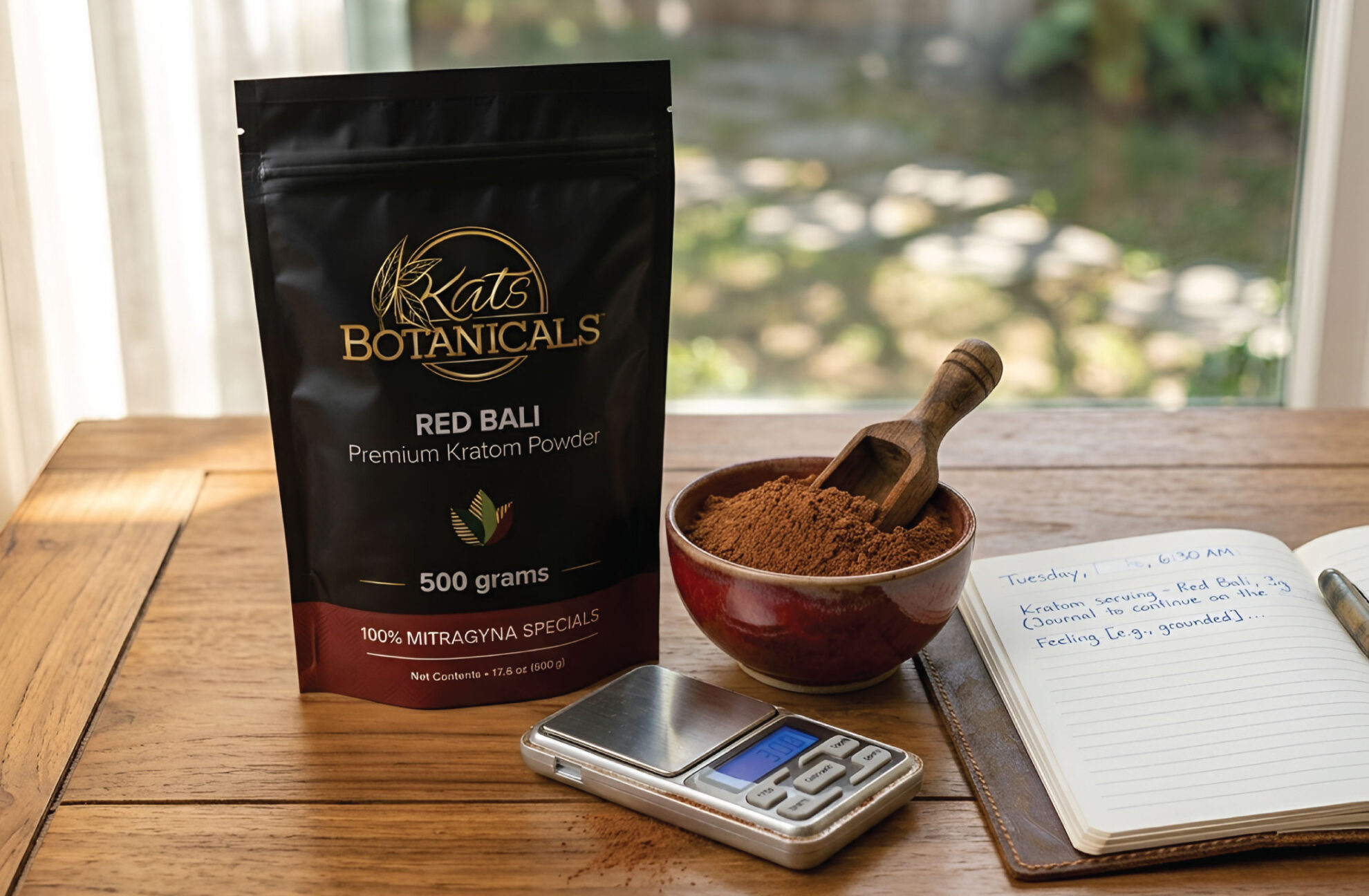
A kitchen scale that reads to a tenth of a gram is the single best tool for dosing kratom powder. Volume measurements fail because powder density differs between strains and even between grinds of the same strain. A “teaspoon” of Red Bali can weigh anywhere from roughly 2 to 3 grams depending on how finely it was milled. That’s the difference between a beginner dose and a moderate one, decided by nothing more than how packed your spoon was. Weigh it. It takes ten seconds and removes the biggest source of inconsistency.
Give Each Dose Time
Take your starting amount on a relatively empty stomach and wait a full hour before adjusting. If you decide you need more, add a single gram, not two or three. This is how you find your ceiling without crashing through it. Food slows absorption, so a dose taken after a heavy meal will feel milder and arrive later. Keeping your routine consistent, same time relative to eating, makes it easier to read what the kratom itself is doing.
Track What You Take
Write down the amount, the time, and how you felt for the first week or two. It sounds tedious. It also cuts your search for the right dose from weeks of vague trial and error to a handful of data points you can actually compare. Once you know your number, you can stop.
Adjusting Your Dose Over Time
Tolerance is the reason a dose that felt right in month one feels weaker by month three. Your body adapts to regular kratom use, and the alkaloids produce a smaller response at the same amount. The instinct is to take more. That works briefly and then compounds the problem.
A better move is rotating strains and taking days off. Some users cycle Red Bali with a different vein color, or leave a day or two between doses, to keep their baseline sensitivity from creeping upward. Others keep their dose fixed and accept that occasional plateaus are the tradeoff for not chasing an ever-larger amount. Both are reasonable. Steadily increasing your dose month over month is the one path I’d steer you away from, because it ends with you taking a lot of kratom for the same effect a smaller amount used to deliver.
Dosing Different Red Bali Formats
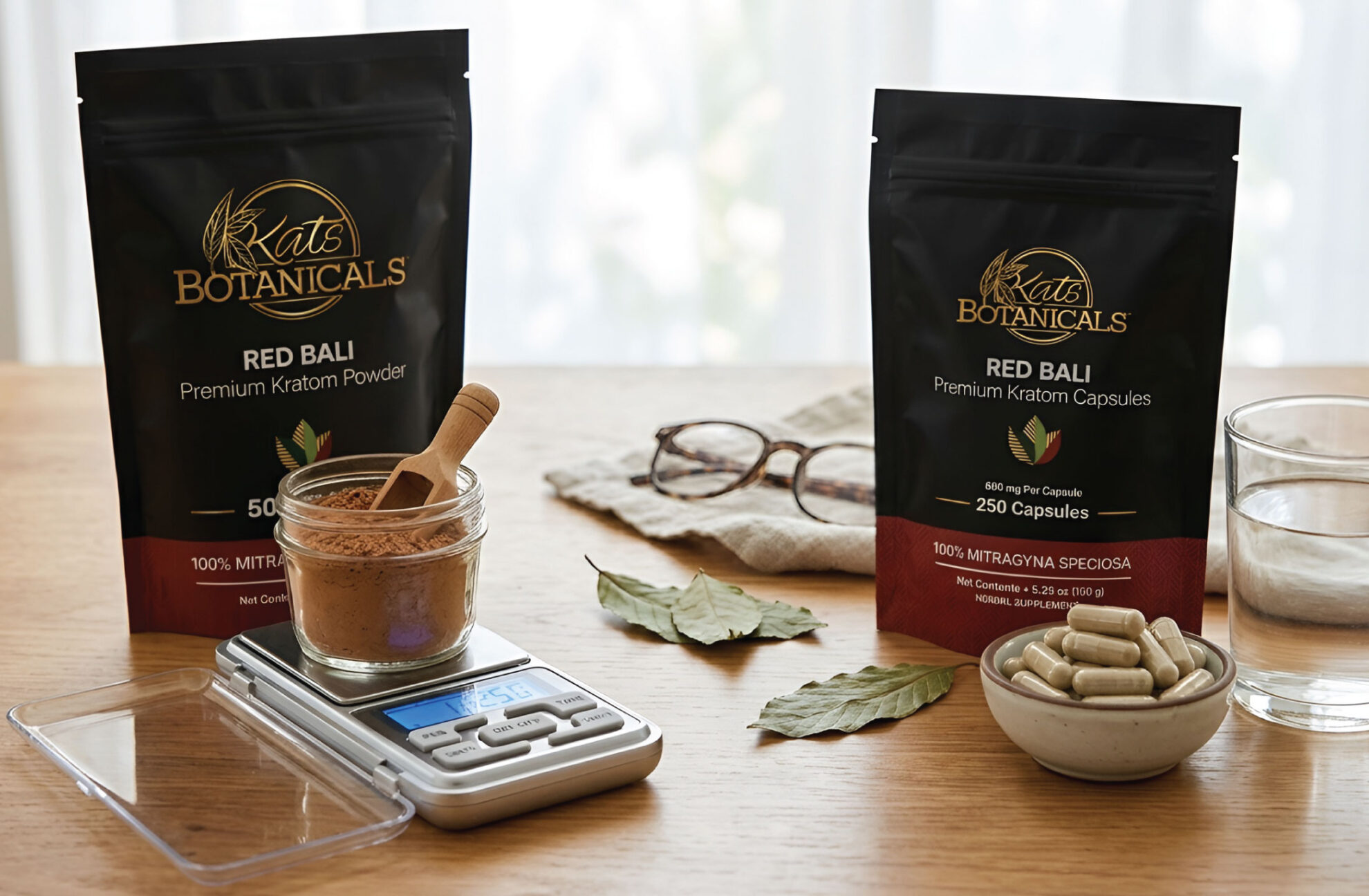
Powder and capsules deliver the same leaf, but they change how you measure and how fast you feel it.
Powder
Powder is the most flexible format because you control the exact amount to the tenth of a gram. It also tends to take effect a little faster than capsules, since there’s no shell to break down first. Many people mix it into juice or use the toss-and-wash method. The downside is the taste, which is earthy and bitter, and the need for a scale.
Capsules
Capsules solve the taste and measuring problem by pre-portioning the powder, usually around 0.5 to 0.6 grams per capsule. That convenience is the whole appeal, and for a lot of people it’s worth it. The math is the catch: a 3-gram dose means five or six capsules, and your stomach has to break those down before the kratom releases, so effects arrive somewhat later. Check the fill weight on the label so you know how many capsules equal your target dose.