
Kava has been used for centuries across Pacific Island cultures; in ceremonies, social gatherings, and daily wind-down rituals. Traditionally prepared as a drink from the ground root of Piper methysticum, Kava teas have stood the test of time. Modern Kava users, however, may want to avoid the steps of traditional Kava preparation.
Kava capsules skip the measuring, steeping, or straining. Same plant. Fewer steps. Kava capsules and softgels are becoming more mainstream as more users choose them over the bitterness of traditional Kava drinks. This guide covers how they work, what to expect, and how to choose between product types.
What Kava Capsules Actually Contain
Kava’s active compounds are called kavalactones. These compounds are found in the root of the plant and are responsible for the calming, tension-easing effects Kava is known for. When you take Kava capsules, you’re getting a measured dose of those compounds; either from ground Kava root powder or a concentrated Kava extract. Capsules are usually standardized, meaning, you know the exact percentage of kavalactones per serving.
A ground root capsule and a 30% kavalactone extract capsule are not the same product. Ground root is closer to the traditional preparation; less concentrated, with the full range of the plant’s compounds present. An extract prioritizes kavalactone content over full-spectrum plant compounds. Capsules made with traditional Kava powder, for some, may feel a more well-rounded experience, while extract capsules deliver a potentially more relaxing vibe.
The right choice for you depends on how your body responds, and which experience you prefer. Whichever you choose, avoid any Kava capsules that do not disclose exactly what’s in them, or that contain unnecessary fillers.
Shopping tip! Trying Kava powders first can help you get a feel for the nuances between strains, sample dosing to see what works best for you, and decide what you are looking for in a capsule. See our full line up of Kava powders, extracts, and other botanicals on our botanical supplements page.
What People Use Kava Capsules For
Kava’s traditional use centered on relaxation, social ease, and stress relief; and that’s still why most people reach for it today. Users commonly report that Kava may help take the edge off tense situations, support a calmer mental state in the evenings, or help them decompress after demanding days. Some find it useful for social discomfort, where it may promote a sense of ease without the sedation or impairment associated with alcohol or other substances. Traditional Kava can also be enjoyed at a Kava bar with friends.
But for day-to-day support, capsules are a convenient option. Kava capsules or softgels can come in handy when you’re not in the mood for a Kava drink, but want:
- To wind down after a long day.
- To prepare for a stressful work day or event.
- To take off the social edge.
- To stack with adaptogens or other stress-support supplements. (Clear stacking combos with your doctor.)
- To ease into restful sleep without relying on sleep meds.
Each person’s body may respond differently to Kava, so with a little mindful experience you can tailor your routine. Your body weight, metabolism, diet, and sensitivity all affect your experience, as well as the format and dose you use. Start low and listen to your body’s cues.
How does Kava make you feel? Does Kava make you drunk? For first-time Kava use questions see our Guide to Kava Effects. We’re always here for your questions and to support you on your journey!
How Long Do Kava Capsules Take to Work?
Slower than the drink, generally. When you prepare traditional Kava tea, the kavalactones absorb relatively quickly through the mucous membranes. Capsules go through the digestive system first, which adds time.
Most people report feeling effects somewhere between 30 and 60 minutes after taking Kava capsules on an empty stomach. That window can stretch to 90 minutes or longer if you’ve eaten a large meal. Taking them with a small amount of fat; a handful of nuts, a bit of coconut milk; may improve absorption, since kavalactones are fat-soluble compounds.
Effects from a standard dose typically last two to four hours. Unlike the beverage, which can feel more immediate and then fade relatively quickly, capsules often produce a more gradual onset and a longer, smoother effect curve. Some people prefer this for daily use specifically because it doesn’t hit as abruptly.
Kava Capsules vs. the Drink
Kava drinks are more bioavailable and kick in a little quicker and stronger. Traditional water-extracted Kava delivers kavalactones in a form that the body absorbs more readily than encapsulated powder. If you’ve tried Kava as a beverage and gotten noticeable effects, you may find that capsules require a higher dose to produce something comparable.
That said, the drink has real barriers: the taste (earthy, slightly bitter, with a mild numbing effect on the tongue), the preparation time, and the social context in which it’s traditionally consumed. Capsules cut those barriers out. For daily use; especially for people incorporating Kava into a routine rather than a ritual; capsules are a practical format in a way the drink simply isn’t.
Kava capsules also travel better, store longer, and don’t require any preparation beyond opening a bottle. If the goal is consistency and convenience over the course of weeks or months, capsules make more sense than keeping Kava powder on hand.
Kava Capsules vs. Kava Softgels: What’s the Difference?
Kava capsules vs Kava softgels – is there really a difference? Both formats offer the same convenience and taste-free experience, but differences in the encapsulated contents do make a difference. Let’s define, then compare the two.
Traditional Kava Capsules
Kava capsules contain powdered Kava, whether traditional Kava powders like our Fiji Kava Powder or Solomon Kava Powder, or a powdered form of Kava extract. The capsules come pre-made or you can fill capsules at home to get the precise measurements you want. Most capsules are made from gelatin, or are made out of vegan- or vegetarian-friendly ingredients.
- A two-part capsule can be taken apart.
- Shelf-stable.
- Consistent dosing.
- Taste-free experience.
- Strength depends on standardized concentration.
New Kava Softgels
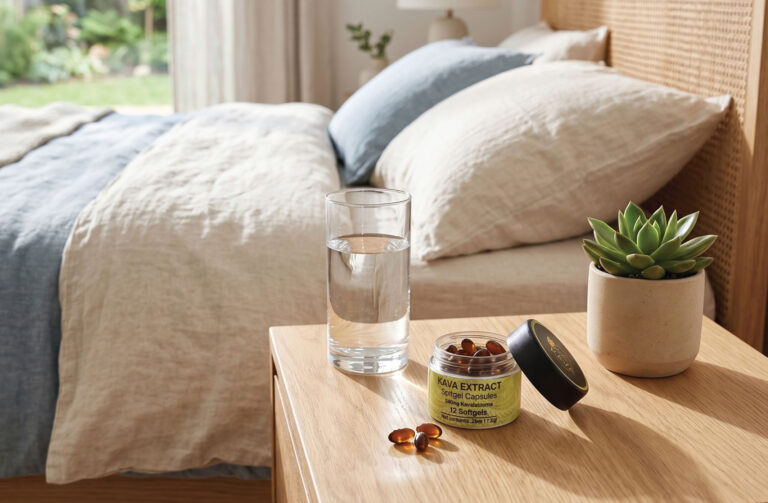
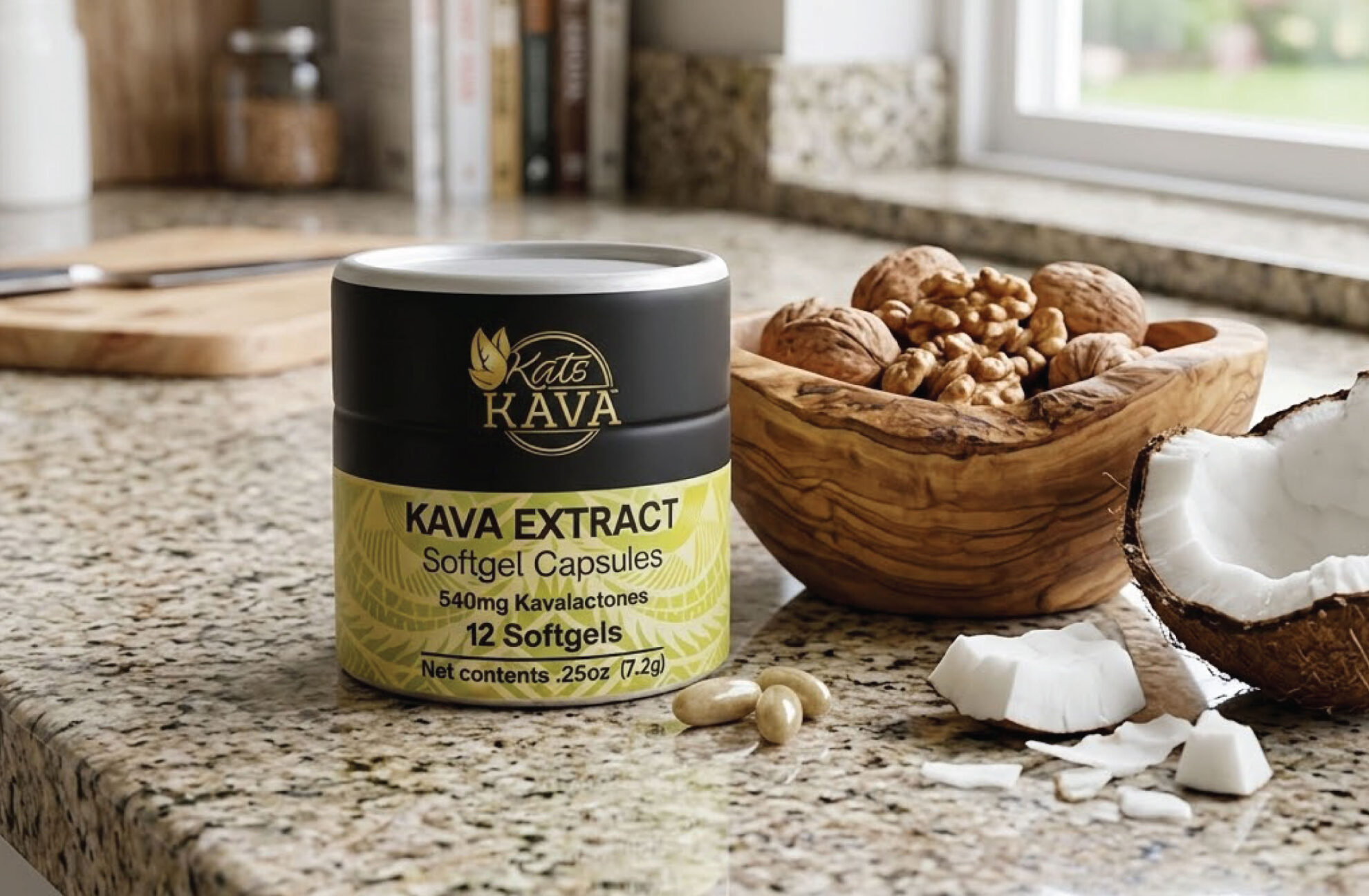
A newer way to encapsulate Kava’s effects comes in the form of a softgel capsule. Kava softgels contain a liquid or semi-liquid form of Kava extract, typically Kava oil or CO2 extract, suspended in a carrier oil such as coconut oil. Unlike traditional capsules, softgels are single-piece capsules with a softened gelatin shell.
- Liquid or semi-liquid extract (often oil-based).
- May support enhanced kavalactone absorption due to fat solubility.
- Potentially faster onset compared to dry powder capsules.
- Smooth, easy-to-swallow format.
- Strength depends on extract quality and carrier oil formulation.
- More sensitive to heat and storage conditions.
Learn more about where to buy Kava near you!
Choosing Between Kava Softgels and Kava Capsules
Choosing between capsules and softgels comes down to preference and priorities. Each format offers distinct advantages depending on how you plan to use Kava.
| If you want… | Better option |
| A simple, reliable starting point | Capsules |
| Consistent, repeatable dosing | Capsules |
| Longer shelf life and easier storage | Capsules |
| A widely available, budget-friendly option | Capsules |
| A potentially faster onset | Softgels |
| A format that uses oil-based extraction | Softgels |
| To experiment with absorption differences | Softgels |
| An easy-to-swallow, smooth capsule | Softgels |
| Vegan or plant-based capsule options | Capsules |
Be sure to check the kavalactone concentration in any product you choose, as this reflects its baseline strength. Individual effects can vary based on factors like body chemistry, diet, and overall health.
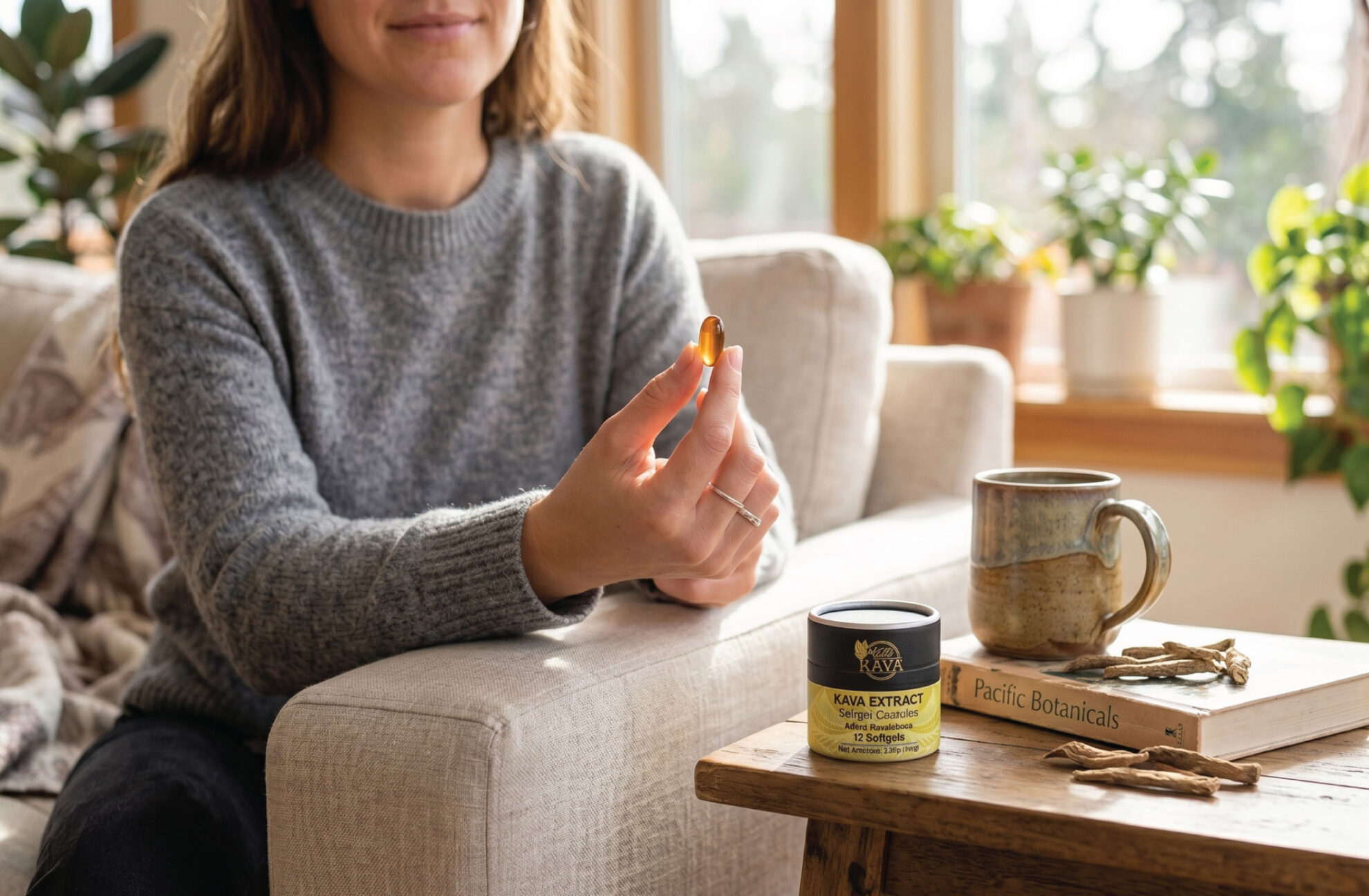
Reading a Kava Capsule Label
Labels are a great place to start when shopping for Kava. And you’ll soon see that the information provided from one vendor to the next can vary widely. Some companies (like Kats Botanicals) offer full information, backed by Certificate of Analysis lab results posted on the website. Others use fancy marketing terms that baffle you into buying.
So, here’s the info you’re looking for as an informed shopper:
- Kavalactone content. A well-made Kava extract capsule will list both a percentage of the extract and a per-serving milligram amount. Products that list only “Kava root powder” without kavalactone content are harder to evaluate and may vary between batches.
- Root-only sourcing. Reputable products use only the root. Stem peel and aerial parts have been associated with a higher risk of adverse effects.
- Third-party testing. Independent lab verification helps confirm purity, potency, and absence of contaminants. If testing isn’t mentioned, that’s a potential red flag.
- Noble Kava varieties. Noble cultivars are associated with more balanced effects and more reputable sourcing. “Tudei” varieties may cause lingering unwanted effects like tummy upset or grogginess.
Dosage Notes
There’s no universal standard for Kava capsule dosing. Manufacturers provide general guidelines, but individual factors like body chemistry and overall health can influence how Kava feels. It’s best to start low on doses and increase gradually as needed, without exceeding labeled recommendations.
| Product type | Beginner starting point | Notes |
| Kava root powder capsules | 1–2 capsules | Gentler introduction; larger volume needed for equivalent potency. |
| Kava extract capsules | 1 capsule | More concentrated; check label for 60 to 120 mg kavalactones range. |
| Kava extract softgels | 1 softgel | Oil-based for potentially faster absorption; smaller serving size. |
As a reminder: Kava should never be used with alcohol.Kava and alcohol don’t mix well. Combining them may strain the liver or produce an unpredictable sedating effect.
Understanding Kava Concentrations
If your Kava product doesn’t give exact kavalactone content, but a percentage of the overall product, here’s how to figure the kavalactone content per dose:
Some products are formulated at 30% kavalactone concentration, meaning a 200 mg capsule delivers 60 mg of kavalactones. Total exact weight is figured by dividing the kavalactone milligrams by the percentage (as a decimal).
- So for a 30% extract:
60 mg kavalactones ÷ 0.30 = 200 mg total capsule fill weight
- Or reverse it:
Total capsule weight × percentage (as decimal) = kavalactones per dose
200 mg × 0.30 = 60 mg kavalactones