Kava reverse tolerance describes something backward from how most substances work: many people feel almost nothing the first few times they drink kava, then start noticing calm and relaxation after several sessions, even at the same amount. Rather than needing more over time to feel the same thing, you often end up needing less. New drinkers hear about kava’s reputation for a mellow, settled feeling, try it once, feel little, and assume it doesn’t work for them. The reality is that kava tends to reveal itself gradually. Your body appears to become more responsive to it with repeated exposure, not less.
Quick Answer: Kava reverse tolerance is the tendency for kava’s relaxing effects to feel stronger after a few sessions rather than weaker. First-time drinkers often feel little, but with regular use over one to three weeks, the same serving may produce a more noticeable calm. It’s the opposite of the tolerance seen with most substances.
What Kava Reverse Tolerance Actually Is
Reverse tolerance means the effects grow with repeated use instead of shrinking. With most things, your body adapts by dulling the response, so you chase the original feeling with larger amounts. Kava tends to run the other way. Drinkers who felt nothing on night one frequently report a clear sense of relaxation by their fourth or fifth session, drinking the same shell of kava they started with.
This is one of the most talked-about quirks of the drink, and it comes up constantly in kava communities online. Search kava tolerance on Reddit, and you’ll find the same story repeated: someone tries kava, feels nothing, almost gives up, then posts a few weeks later surprised that it finally “clicked.” That pattern is common enough that experienced drinkers now warn beginners about it in advance. It’s a big part of what makes kava different from kratom, where sensitivity usually goes the other direction with regular use.
How It Differs From Regular Tolerance
Regular tolerance is a wall you hit. Reverse tolerance is a door that opens slowly. The practical difference matters for your wallet and your expectations. If you assume kava behaves like caffeine or alcohol, you’ll do the wrong thing after a disappointing first session: drink more, faster, and end up nauseous instead of relaxed. Understanding that kava rewards patience changes how you approach those first two weeks entirely.
Why Kava Behaves This Way
The honest answer is that researchers don’t fully know. The most discussed theory involves kavalactones, the group of compounds responsible for kava’s activity, and how your body processes them over time. Six major kavalactones account for roughly 96% of the pharmacological activity in kava root: kavain, dihydrokavain, methysticin, dihydromethysticin, yangonin, and desmethoxyyangonin, as documented in peer-reviewed kava pharmacology reviews. These are the compounds doing the work.
One idea is that your body needs repeated exposure before it metabolizes and responds to kavalactones efficiently. Another points to the liver enzyme systems that break these compounds down, suggesting they may adjust with consistent use. There’s also a simpler explanation that gets less attention: many first-timers just don’t drink enough, don’t prepare it well, or drink poor-quality kava, then blame reverse tolerance for what was really a preparation problem.
The Role of Kavalactones
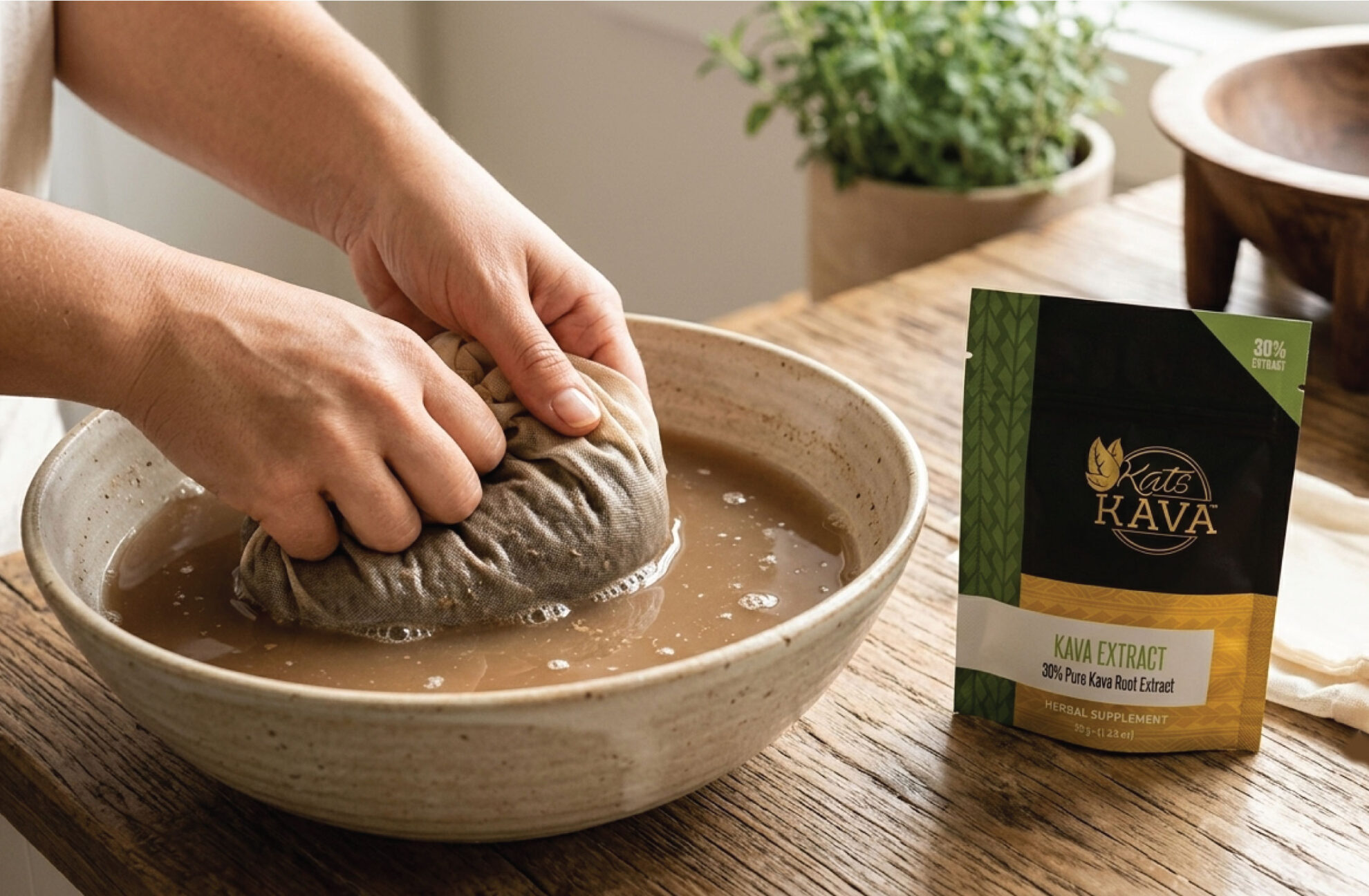
Kavalactones aren’t easily absorbed, which is part of why preparation matters so much. They bind to fats, and traditional preparation involves kneading ground root in water to release them. If you barely extract any kavalactones, you barely feel anything, and no amount of reverse tolerance will fix a weak drink. This is why the quality of your kava does more heavy lifting in the early weeks than most beginners realize. A well-made cup of noble kava gives your body something to actually respond to.
What “The Click” Might Be
Long-time drinkers describe a moment when kava suddenly starts working, and they call it the click. Whether that’s a genuine physiological shift or simply the point where you’ve learned to prepare and drink it correctly is an open question. Both explanations are probably true to some degree. The takeaway is the same either way: don’t judge kava on a single session.
What to Expect in Your First Few Weeks
Expect your first few sessions to underwhelm you, and don’t panic when they do. This is the single most useful thing a new drinker can know. The timeline varies by person, but a rough map helps set realistic expectations so you don’t quit on day two. If you’re curious about how quickly kava normally comes on once it does work, our guide to how long kava takes to kick in covers the session-level timing.
Sessions One Through Three
Your first sessions may bring subtle signs and little else. A slight numbing or tingling on the tongue and lips is the most reliable early marker, and it tells you the kavalactones are present and active even if you don’t feel relaxed yet. Some people notice a faint calm; many notice nothing beyond the mouth-numbing and the earthy taste. That’s normal. This is the stage where most people wrongly conclude kava isn’t for them.
Weeks One Through Three
Somewhere between your fourth session and your third week, the shift tends to happen. The same amount of kava that did nothing before starts producing a settled, unwound feeling in the body and a quieter, more sociable headspace. Drinkers often describe it as the tension leaving their shoulders without any mental fog. If you’ve been consistent, this is usually when reverse tolerance stops being a rumor and becomes your own experience.
Important: Individual responses to kava vary widely. Some people feel effects on the first try, others take longer than three weeks, and a few find kava simply isn’t for them. If you take any medications or have a health condition, talk with your healthcare provider before adding kava to your routine.
How to Reach Reverse Tolerance Sooner
The fastest path through reverse tolerance is consistency paired with good preparation. You can’t force the process, but you can stop sabotaging it. Here’s what actually moves the needle in those first weeks.
- Drink consistently. A few sessions spread over one to two weeks do more than one heavy night. Regular, moderate exposure is what seems to build responsiveness.
- Use quality noble kava. Noble kava varieties, recognized under Vanuatu’s Kava Act of 2002 for daily drinking use, are the standard worth buying. Cheaper, non-noble or filler-heavy products give you a rougher experience and fewer kavalactones to work with.
- Prepare it properly. If you’re using traditional root powder, knead it thoroughly in warm water for several minutes to release the kavalactones. Our walkthrough on how to make kava tea covers the technique in detail. Rushed preparation is the most common reason a session falls flat.
- Drink on a relatively empty stomach. Many drinkers find effects come through more clearly when they haven’t just eaten a large meal, though a light snack can help if kava tends to unsettle your stomach.
- Give it time before increasing your amount. More kava in a single session isn’t the same as more sessions over time. Drinking too much too fast usually just brings nausea.
If traditional preparation feels like too much effort at the start, instant kava and kava capsules offer a lower-friction entry point. They tend to be more convenient than potent, so many people use them to stay consistent between traditional sessions rather than as a full replacement. That trade of convenience for strength is reasonable, as long as you know you’re making it.
What Kava Feels Like Once It Clicks
Once reverse tolerance sets in, kava typically produces a relaxed body and a calm, clear mind without heavy sedation. People describe it as feeling unwound and sociable, which is why kava bars have grown into gathering spots where the appeal is easy conversation without alcohol. The mind usually stays sharp while the body settles, a combination that sets kava apart from things that leave you groggy.
The experience isn’t intoxicating in the way alcohol is, and kava is not a psychedelic. What most regular drinkers report is a gentle evening wind-down or an easy, talkative calm in social settings. The taste stays earthy and bitter no matter how experienced you get, so don’t expect to grow to love the flavor. You’ll just come to associate it with the relaxation that follows.