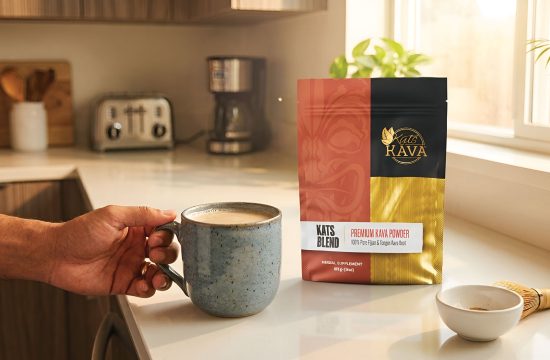
Kava has two stories worth knowing. One is how it gets to you: a root grown on South Pacific islands, then harvested and dried, then milled into the powder you buy. The other is what you do with it once it arrives, which is where most people have questions. This guide covers both the origin and the preparation, so the cup you end up with makes sense from the ground up.
If you’re mainly here for the how-to, skip ahead to the home methods. The sourcing half is worth a minute too, because where your kava comes from shapes everything about the drink it makes.
Quick Answer: To make kava at home, knead a quarter cup of noble kava powder inside a strainer bag in two to three cups of warm (not boiling) water for five to ten minutes, then press and strain the liquid into a cup. Micronized or instant kava skips the bag and is stirred directly into cool water at about a teaspoon per 8 to 12 ounces.
Where Kava Comes From
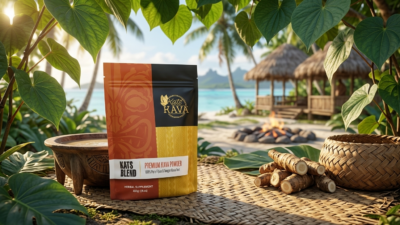
Kava is the root of Piper methysticum, a plant native to the South Pacific. The best-known growing regions are Fiji and Vanuatu, along with Tonga and the Solomon Islands, each with its own reputation among kava drinkers. The active compounds, called kavalactones, live in the root, which is why preparation centers on getting them out of the ground-up root and into your drink.
Pacific Island cultures have used kava for centuries as a ceremonial and social drink, and that tradition still shapes how it’s grown and graded today.
The noble kava distinction
Not all kava is equal, and the split that matters most is noble versus tudei. Noble cultivars are the traditionally accepted varieties, the ones Pacific communities have used for generations, with kavalactone profiles suited to regular use. Tudei and other non-noble types are best avoided. In Vanuatu, exportation of kava is strictly regulated, and only cultivars classified as noble are permitted for export. Reputable kava, including everything from Kats Botanicals, comes from noble cultivars only, so checking for that is the first quality filter.
How Kava Is Made
Before kava becomes a powder, it goes through a defined chain: the root is cultivated for a few years, then harvested, cleaned and dried, then milled. Noble kava plants are typically harvested at four to five years of age, when kavalactone concentrations in the root peak. From there, the form you buy depends on how finely it’s processed.
Traditional grind
Traditional grind kava is root powder prepared the classic way. You steep it in water, agitate it, then press or strain it to keep the liquid. This is the form closest to how kava has been made for centuries. It still needs straining because the ground root stays in the bag rather than in your cup.
Finer grinds and extracts
Mill that powder finer and you get micronized or instant kava processed so well that it mixes straight into liquid without straining. Kats Botanicals mills its powders extra fine for exactly this reason. Concentrate the kavalactones further, and you get kava extracts and tinctures, like a 30% kava extract powder that delivers a set amount per serving and skips the prep.
How to Make Kava at Home
Here’s the part you came for. There are a few ways to do it, and the right one depends on how traditional you want to be and how much effort you feel like spending.
There is no single correct method. The strainer-bag approach is the most authentic and gives the smoothest drink; instant powders win on convenience. Pick based on the experience you want, not on which one sounds most legitimate.
The traditional strainer-bag method
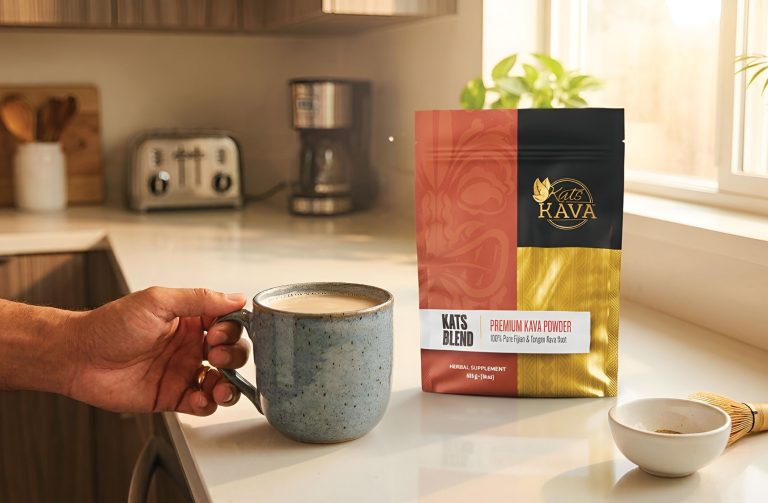
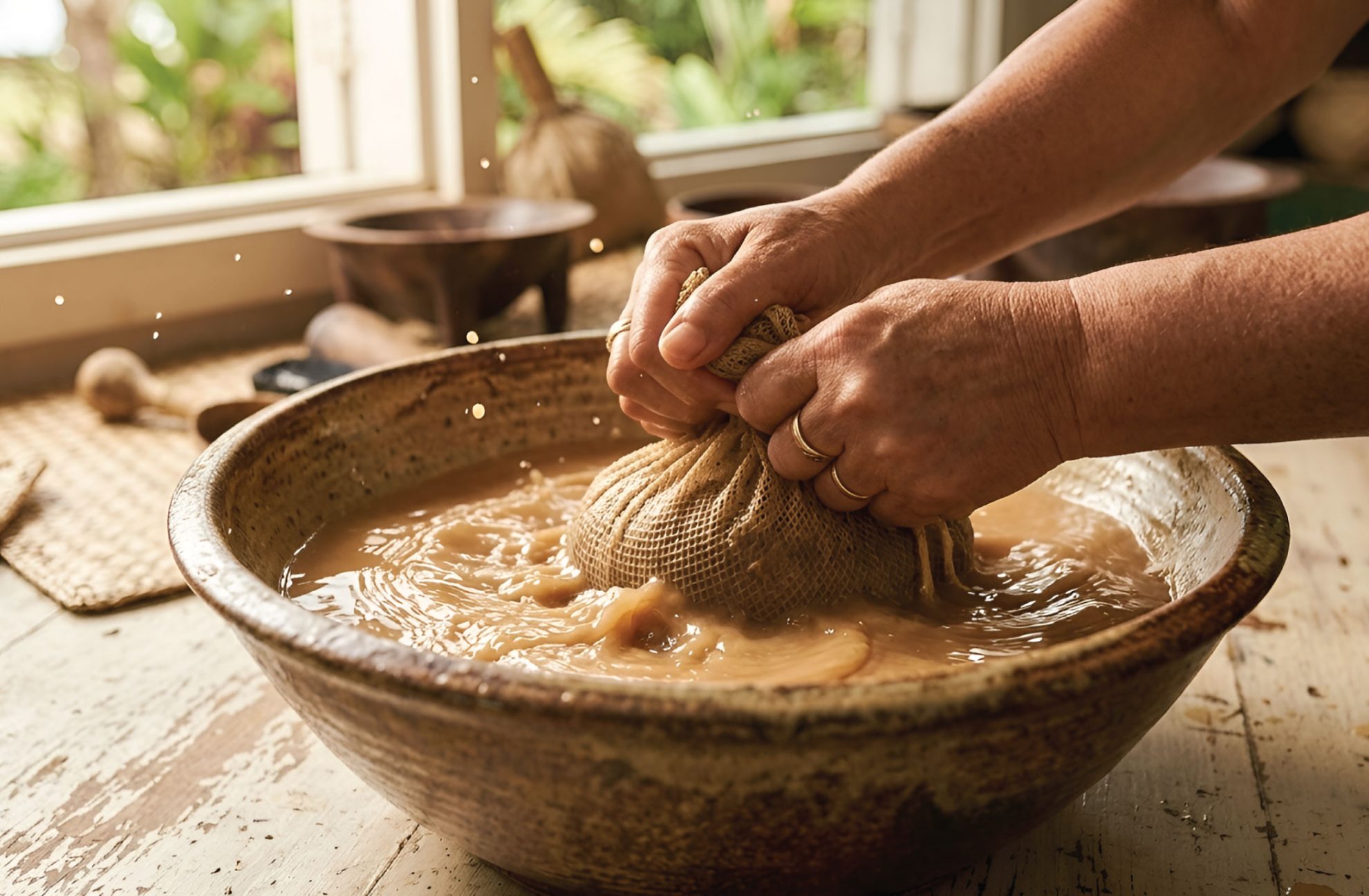
This is the classic kava tea. Put your kava powder in a strainer bag, submerge it in warm water, and knead and squeeze the bag for several minutes to work the kavalactones into the water. Press it out and strain, and you have a milky kava drink.
A rough starting ratio is a quarter cup of powder to two or three cups of water, kneaded for five to ten minutes. You can scale it up for a larger bowl meant to share, which is closer to how kava is served traditionally.
One rule matters here: use warm water, not boiling. Heat that’s too high degrades the kavalactones, so you want comfortably warm rather than scalding. For a full step-by-step, our how to make kava tea guide walks through the details.
The instant method
If you want the easiest route, micronized or instant kava skips the bag. Stir it into cool water, usually around a teaspoon per 8 to 12 ounces, and drink. The tradeoff is texture, since you’re consuming the full powder, but the prep barrier disappears.
Cold brew
Cold brew trades time for smoothness. Place the powder in a strainer bag, submerge it in cold or room-temperature water, and refrigerate for four to eight hours, squeezing occasionally. The result is milder, though cold water pulls kavalactones less efficiently than warm.
Making kava taste better
Kava is honestly an acquired taste: earthy, woody, and bitter. Many people add coconut milk or coconut water, and the fat may also help with absorption. A splash of fruit juice or a smoothie base works too. The goal is to make the drink something you’ll actually finish.

What to Expect the First Time
A few sips in, you’ll likely notice a mild numbing or tingling on your tongue and lips. That’s normal, and it actually signals that your kava was prepared well, since the sensation comes from the kavalactones themselves. The flavor is medicinal and earthy, closer to root tea than herbal blend.
As for effects, kava is traditionally used for relaxation and social ease, and users report a calm, settled feeling without losing mental clarity. Of the 18 identified kavalactones in the root, six (methysticin, dihydromethysticin, kavain, dihydrokavain, yangonin, and desmethoxyyangonin) account for roughly 96% of the pharmacological activity, which is why noble cultivars with balanced kavalactone profiles are the standard for daily drinking. Individual responses vary, so start with a modest serving and give it time before deciding whether to have more. Don’t combine kava with alcohol, and check with your physician before using it if you take medication or have a health condition.
Buying Kava Worth Preparing
The drink is only as good as the root. Look for noble cultivars, named sourcing, and lab testing, and you’ve cleared the bar that most quality problems hide behind. Kats Botanicals sources noble kava from Pacific regions like Vanuatu and Fiji, including Kats Kava Fiji and the Kats Kava Blend.
Every batch is lab-tested, and the powders are milled fine so straining is optional rather than required. That milling is also why Kats kava mixes more smoothly than coarsely ground root. For help choosing, our guide on where to buy kava covers what separates good kava from the rest.