
A lot of shilajit users end up pairing it with coffee for the simplest reason possible: both happen in the morning. Traditional shilajit use often involves mixing the dose with coffee as the flavors blend well. You’re already reaching for a mug. The shilajit bottle is on the same shelf. The question of whether they play well together comes up after the fact, not before.
The short answer is yes, you can take shilajit and coffee together without issue for most people. The longer answer involves absorption timing, what happens when you add shilajit to your coffee, and whether there’s a meaningful difference between stacking shilajit with caffeine and taking it alone. This piece walks through all of that, plus a comparison to the Kratom and coffee combination for anyone weighing their options.
Can You Take Shilajit With Coffee?
Yes, shilajit and coffee can be taken together, and for most healthy adults there’s no known interaction that makes the combination problematic. Shilajit is a mineral-and-compound-rich extract; coffee is a caffeinated beverage. They don’t share metabolic pathways in a way that produces a meaningful clash.
That said, the details matter. Coffee’s acidity and temperature can affect how shilajit dissolves if you’re using resin. Caffeine’s absorption timing and shilajit’s are different enough that the combined effect isn’t usually a straight addition of both. And if you’re taking shilajit gummies or capsules, how you pair them with coffee looks different than if you’re using raw resin.
Most people who take both daily end up landing on a routine: take the shilajit first, drink the coffee separately, or stir the resin into the coffee directly. All three work. The right approach depends on the shilajit format you’re using and how sensitive your body is to caffeine.
Why take shilajit with your coffee? It’s a nutritional supplement rich with over 85 minerals your body needs.
Can You Put Shilajit in Coffee?
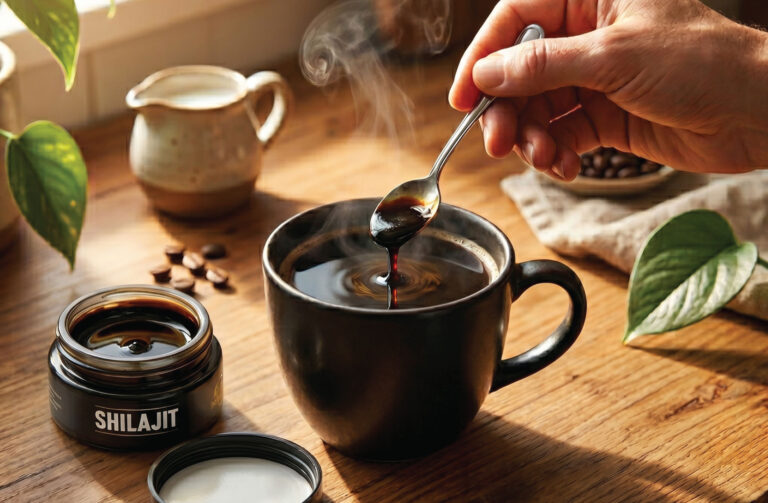
Yes, you can put shilajit directly into coffee. In fact, this is how a lot of long-term shilajit users take it, especially those who find the taste of shilajit dissolved in water unpleasant. Coffee’s dark, slightly bitter profile covers the earthy, mineral-heavy flavor of shilajit without much effort.
The practical approach depends on format:
- Shilajit Resin. Drop a pea-sized portion (around 250 to 500 milligrams) into hot black coffee and stir until it dissolves. The heat helps liquify the shilajit without compound loss. If it clumps or sticks to the spoon, pre-dissolve it in a small amount of warm water first, then add it to the coffee.
- Shilajit Extract Powder. Stir directly into hot coffee. It dissolves faster than resin and doesn’t require pre-mixing.
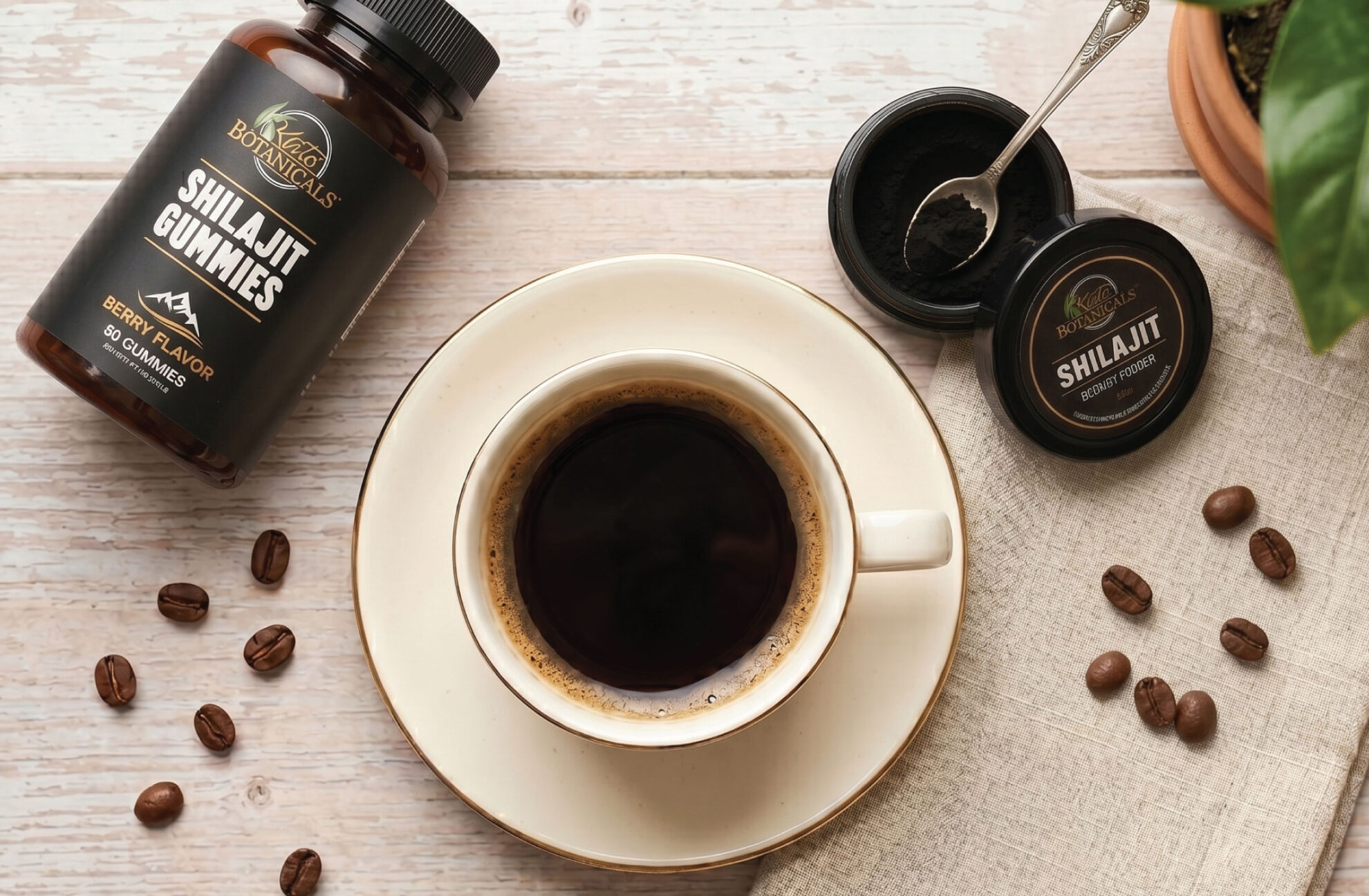
- Shilajit Gummies. These aren’t meant to be dissolved in liquid. Take them alongside your coffee instead of in it.
- Shilajit Capsules. Also taken separately, alongside your morning brew.
Adding cream, milk, or sugar doesn’t meaningfully affect shilajit’s compound activity, but it can change how it dissolves. Black coffee is the cleanest carrier. If you take your coffee with dairy, mix the shilajit into the coffee before adding anything else.
For a more comprehensive look at ways to take shilajit for health, see our user guide to shilajit use.
Does Caffeine Affect Shilajit Absorption?
At this time the research hasn’t fully addressed this question, and the honest framing is that we don’t have a definitive answer.
What we know: Shilajit’s main actives, fulvic and humic acids, are water-soluble and absorb in the gut. Caffeine is also water-soluble and absorbs quickly from the stomach and small intestine. They don’t compete for the same receptors, and there’s no established mechanism by which caffeine would block shilajit absorption the way it can interfere with, say, iron supplementation from certain sources.
What we don’t know: Whether coffee’s tannins and chlorogenic acids affect fulvic acid bioavailability in practice. Coffee is known to bind some minerals in the gut (iron and zinc especially), so there’s a theoretical reason to wonder about it. But no published trials have specifically looked at caffeine’s effect on shilajit absorption in humans.
If you’re concerned about maximizing absorption, take shilajit 30 to 60 minutes before or after coffee. If you’d rather just take them together and not think about it, that’s fine too. The difference, if any exists, is probably small.
Benefits People Report From Combining Shilajit and Coffee
Most of the reasons users give for pairing shilajit with coffee aren’t about compound interactions. They’re about compound timing and morning routine integration.
Steadier energy through the morning. Coffee’s caffeine peaks fast and tapers; shilajit is associated with a more gradual, sustained effect. Some users describe the combination as having a smoother morning profile than coffee alone, with less of the early-afternoon dip that caffeine-only users sometimes report.
Easier habit stacking. You’re already making coffee. Adding shilajit to a routine you already have makes consistency much easier, and consistency is where shilajit’s reported benefits actually come from. A supplement you take every day for three months delivers more than a supplement you take sporadically for six months.
Better taste tolerance. For users who find shilajit unpleasant to drink dissolved in water, coffee makes the daily dose actually doable. This sounds small, but compliance is the single biggest variable in whether any supplement delivers on its label.
The effects people report from shilajit itself (changes in energy, recovery, and sense of baseline over time) aren’t magnified by caffeine. What caffeine does is give shilajit a ride in an existing habit.
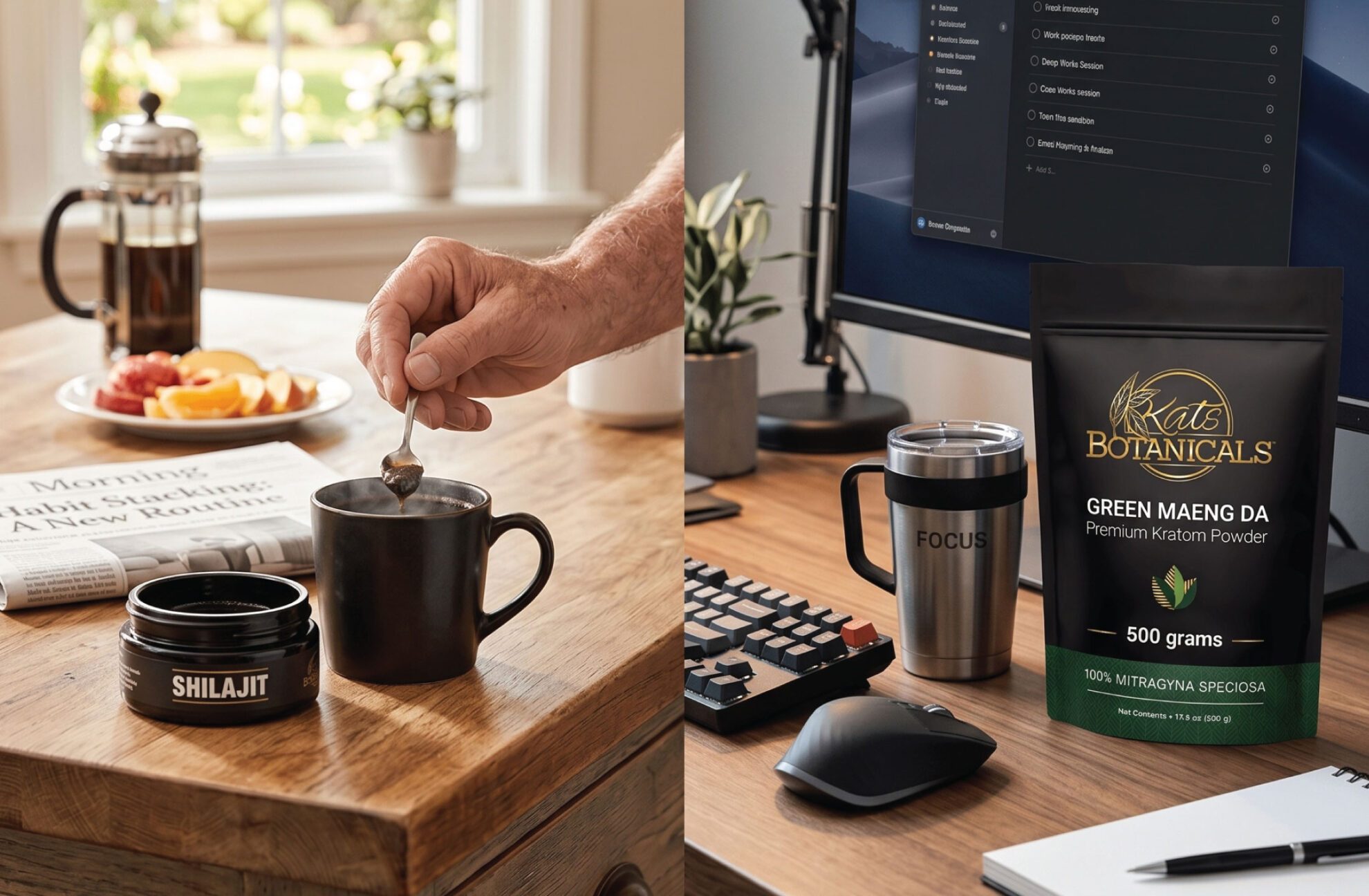
Shilajit and Coffee Compared to Kratom and Coffee
Kratom and coffee is the other popular morning pairing in the botanical space, and the two combinations sit on different ends of the spectrum for what they’re doing.
Kratom comes from the leaves of the Mitragyna speciosa tree, which is actually in the coffee family (Rubiaceae). Its active compounds, Mitragynine and 7-Hydroxymitragynine, interact with different receptors than caffeine does.
Kratom and coffee together is often described by users as producing a more energetic, alertness-forward effect than either alone, which can be useful for some routines and counterproductive for others (over-stimulation is a real possibility). If overstimulation from caffeine is an issue but you still want the combo, opt for a Kratafusion dose in your coffee, which balances Kava with Kratom.
Shilajit and coffee is a much gentler pairing than, say, a white vein Kratom dose with your morning Joe. Shilajit doesn’t stack with caffeine the way Kratom can. Its effects are slower, subtler, and cumulative over weeks rather than acute within an hour.
Here’s a side-by-side breakdown of how the two pairings compare:
| Factor | Shilajit + Coffee | Kratom + Coffee |
|---|---|---|
| Primary effect | Sustained energy and mineral support (cumulative) | Acute energy and alertness (same session) |
| Onset alongside coffee | Gradual over weeks | 30 to 60 minutes |
| Compound interaction | Minimal known interaction | Can amplify stimulation |
| Best for | Long-term daily routines | Mornings that need a stronger push |
| Risk of overstimulation | Low | Moderate, especially at higher Kratom doses or with Kratom extract, 7-OH shots, white vein strains, or enhanced Kratom products |
If you’re someone who wants a daily compound stack that builds over time, shilajit and coffee is the pairing to consider. If you’re looking for a morning kick that’s more pronounced than coffee alone, Kratom and coffee might fit better, though that combination requires more attention to Kratom dosing and sensitivity. For those that enjoy the high-octane kick, Kats Botanicals does have a brand new coffee + Kratom shot product in the pipeline. (Coming soon!)
Kats Botanicals carries both shilajit and Kratom product lines, so for users who want to try either pairing, the sourcing and lab testing are covered either way.
When to Skip the Combo
A few situations where combining shilajit with coffee isn’t the right move:
Caffeine sensitivity. If you already get jittery or anxious from coffee, adding another daily compound on top of it doesn’t solve that problem. Take shilajit with warm water or herbal tea instead, at least until you know how your body responds.
Iron deficiency. Coffee can interfere with iron absorption, and shilajit contains iron among its trace minerals. If you’re taking shilajit partly for its iron content, drinking coffee with it may blunt that specific benefit. Separate them by an hour or more.
Stomach sensitivity. Shilajit on an empty stomach can cause mild discomfort in some people. Coffee amplifies that risk. Eat something small with the combination, especially if you’re new to either.
Sleep issues. This isn’t a shilajit problem, but taking coffee too late in the day is a caffeine problem. Shilajit won’t affect your sleep, but your timing of the coffee portion will.