Most of the clinical research on shilajit has been done on men. That’s a real limitation and worth stating plainly. It doesn’t mean shilajit is irrelevant to women’s health; the compound profile that makes it interesting for men applies broadly to human physiology, but it does mean the evidence base for women-specific benefits leans more heavily on mechanism and user reporting than on dedicated trials.
Where the research is specific to women, it’s worth examining carefully. Where it isn’t, the case is built from what we know about fulvic acid, trace minerals, and the systems they support. Recent studies showed the potential benefits of shilajit for women in terms of hormonal balancing, enhanced energy and cognitive function, and improved skin and hair health. The mechanisms behind those findings aren’t surprising given shilajit’s compound profile; they’re worth understanding.
Energy and Fatigue
Shilajit supports ATP production and CoQ10 function, the two mechanisms cells use to generate and manage energy. This is part of why the energy effect users report feels different from caffeine: no spike, no crash, just a steadier baseline that holds up through a demanding day.
Iron deficiency is one of the most common nutritional issues in women of reproductive age and one of the most frequent causes of chronic fatigue. Shilajit has been studied in the context of iron deficiency anemia, with research suggesting it may support iron absorption and the body’s ability to use dietary iron through fulvic acid’s chelation function. For women whose fatigue is partly iron-related, that’s a relevant mechanism.
Most women find the energy benefits show up within the first two to four weeks of consistent use. Morning on an empty stomach is the preferred timing for most users; fulvic acid may absorb more efficiently before food competes for uptake, and the effects align naturally with daytime energy demands.
For a quick recap on overall shilajit effects, see how shilajit works.

Bone Health and Mineral Density
This is where the case for shilajit is strongest for women, grounded in straightforward nutritional logic. Bone density depends on a sustained supply of calcium, magnesium, phosphorus, and zinc. Most women don’t consistently get enough of these, particularly after 40 when dietary absorption starts to decline and hormonal changes begin affecting bone turnover.
Shilajit contains all four minerals in a form that fulvic acid actively helps transport into cells. That’s meaningfully different from a calcium supplement, where passive absorption rates are often poor. For women in perimenopause and beyond, when bone density loss accelerates, the mineral delivery mechanism that shilajit provides is a practical advantage over isolated mineral supplements.
This is not a treatment for osteoporosis and shouldn’t replace a doctor’s guidance on bone health. As nutritional support, the logic is sound, and the mineral profile is genuinely relevant.
Hormonal Balance and Menstrual Health
Shilajit’s effects on hormonal health in women are less clinically documented than the benefits of shilajit in men, but the mechanisms involved are the same systems. Zinc and selenium are both involved in thyroid function and the regulation of sex hormones. Fulvic acid’s antioxidant activity supports the cellular environments in which hormonal signaling occurs.
Women who use shilajit regularly often report improvements in cycle regularity, reduced severity of PMS symptoms, and more stable energy across the hormonal cycle. These are user observations, not clinical findings, but the pattern is consistent enough across users to take seriously. The mineral support shilajit provides addresses several of the nutritional deficiencies commonly associated with hormonal dysregulation.
For women in perimenopause, some users report improvements in sleep quality and mood stability after several weeks of consistent use. Those observations align with what the mineral and adaptogenic properties of shilajit would theoretically support.
Skin and Hair Health
Fulvic acid’s antioxidant properties are relevant to skin health because oxidative stress is a primary driver of visible aging. Free radical damage breaks down collagen and elastin over time. Antioxidant compounds that work at the cellular level can slow that process.
Shilajit also contains zinc and copper, both of which support skin cell turnover, wound healing, and collagen integrity. Users report improvements in skin clarity, texture, and hydration with consistent use, as well as improvements in hair strength and shine. The research base for these effects is thinner than for the energy and mineral findings, but the mechanisms are credible and the user reporting is consistent.
Cognitive Function
Tyrosine in shilajit contributes to dopamine production, which supports motivation and focus. Fulvic acid’s antioxidant activity in brain cells reduces oxidative stress associated with mental fog. Users report improvements in concentration and cognitive clarity within the first few weeks, which tends to run alongside the energy improvements. The two mechanisms are related.
Fertility and Reproductive Health
Shilajit’s mineral and antioxidant profile supports the physiological systems that women’s reproductive health depends on. Women who are actively trying to conceive should discuss shilajit with a reproductive specialist before starting, particularly if managing conditions like PCOS or thyroid dysfunction. The fertility research in women is preliminary; what’s reasonable to say is that the nutritional foundation shilajit provides is relevant to reproductive health, not that it addresses fertility as a condition.
Dosage and How to Take It
The recommended starting dose for women is 100 mg daily—roughly the size of a grain of rice. If you feel an increase is needed after a few weeks to a month, work up to about the size of a pea, which is roughly 250 mg. Consider your needs and your body’s response. Individual results can vary.
Take it in the morning, ideally before eating. Combine it with a balanced diet, regular movement, adequate sleep, and proper hydration for the best results. Shilajit supports the body’s systems; it works best when those systems are otherwise being looked after.
See our Shilajit Dosage Guide for more information.
Finding the Best Shilajit for Women
The product considerations are the same regardless of sex: Himalayan sourcing for mineral density, verified purification to remove heavy metals, and a third-party certificate of analysis documenting fulvic acid percentage and contaminant levels.
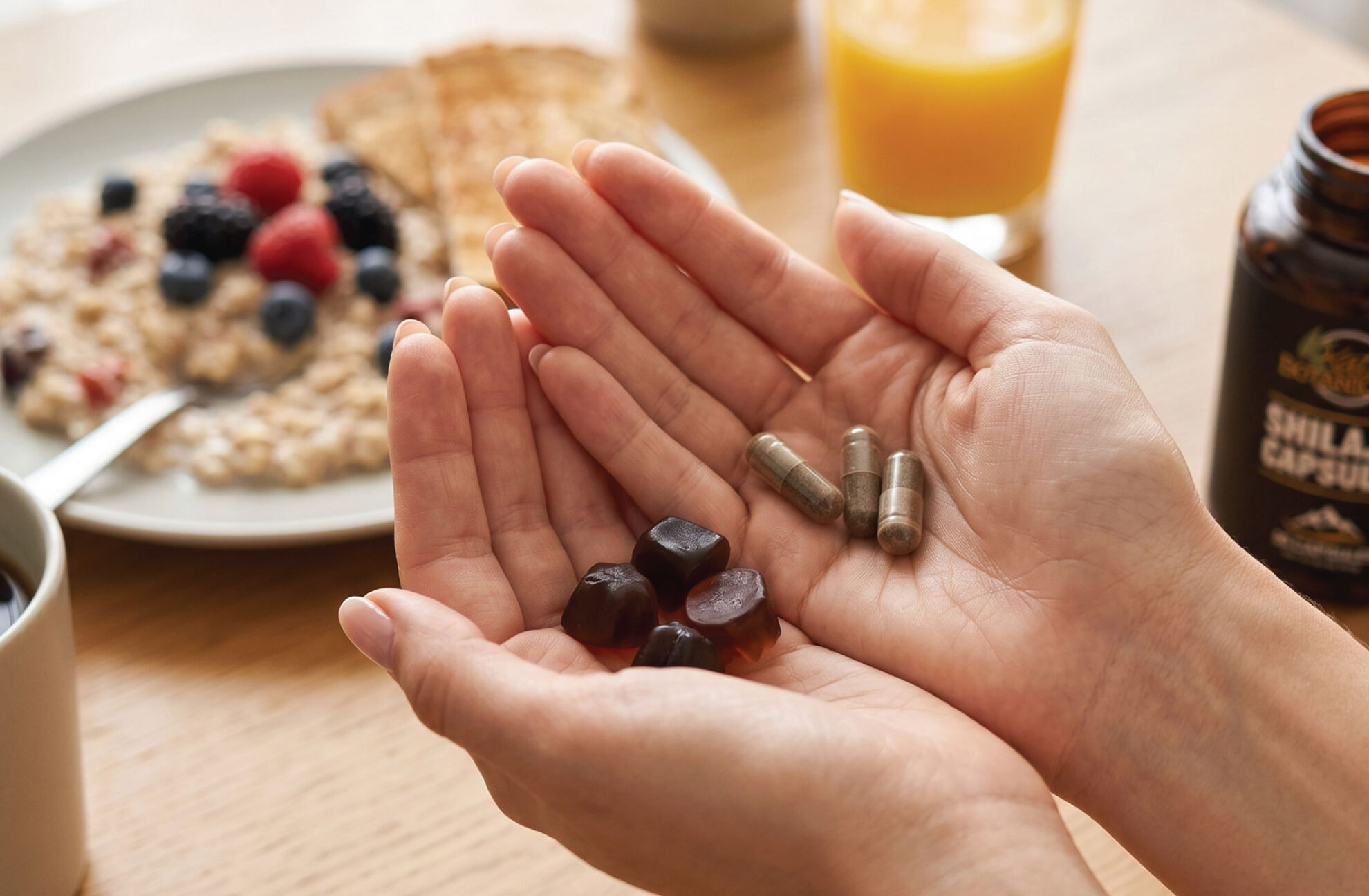
- Himalayan Shilajit Resin is the least processed form and delivers the broadest compound profile. Strong taste; best dissolved in coffee or warm water. 300+ servings per jar.
- Himalayan Shilajit Capsules are pre-dosed, portable, and contain 63% fulvic acid. The most practical daily option for women who want consistency without measuring.
- Himalayan Shilajit Gummies contain 80% fulvic acid per serving in a berry-flavored format. Convenient and accessible, particularly for women new to shilajit.
All three are sourced from high-altitude Himalayan regions, third-party lab-tested, and free of fillers and additives. Every batch COA is available via the QR code on packaging or at the Kats Botanicals COA page.