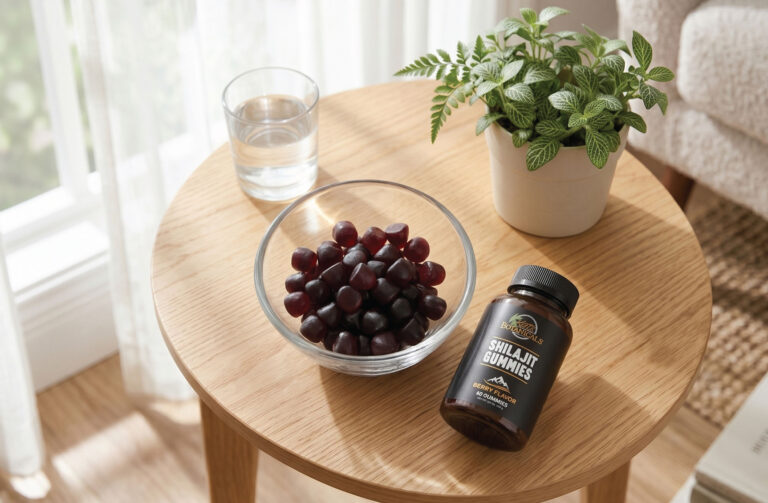
Shilajit gummies are a flavorful way to get your daily dose of shilajit, a tar-like resin sourced in the Himalayas. Shilajit has been used for centuries for vitality and as a nutritional bolster for dozens of minerals your body needs. If you’re new to the compound, naturally you want to know if it works, and whether the gummy form is as effective as the more traditional resin.
Well-madeshilajit gummies deliver real shilajit compounds. This guide walks through what the gummies actually do, how they compare to resin, and what to look for in a high-quality shilajit supplement.
Quick Answer: Shilajit gummies work when they’re made from purified extract with a disclosed fulvic acid percentage and third-party heavy metal testing. Each gummy typically delivers 250 to 500 mg of shilajit extract, and most users notice steady changes in energy or recovery after 2 to 4 weeks of daily use.
What Shilajit Gummies Are Made Of
A shilajit gummy is purified shilajit extract bound into a gelatin or pectin base, sweetened and flavored to mask the bitter, earthy taste of the raw resin. Each gummy typically contains between 250 and 500 milligrams of shilajit extract, which puts a two-gummy serving in a similar dose range as a pea-sized blob of resin.
Shilajit itself starts as a sticky, blackish-brown substance that seeps out of rocks in high-altitude regions, mainly in the Himalayas and the Altai mountain range. After purification, it becomes a concentrated source of trace mineral compounds, with two that get the most attention: fulvic acid and humic acid. A quality shilajit product will list fulvic acid content on the label, usually somewhere between 10% and 60% depending on the format and extraction. For a deeper look at what’s actually in the compound, see ourshilajit mineral content guide.
What you’re not getting in a gummy is the full compound profile of unprocessed resin. The drying and extraction steps trim some of the trace minerals and minor compounds, and the binding process can do the same. The core actives, meaning fulvic and humic acids, can survive the process when the product’s made carefully.
The question is whether the specific brand of gummy you’re considering offers all the essentialshilajit gummy benefits.
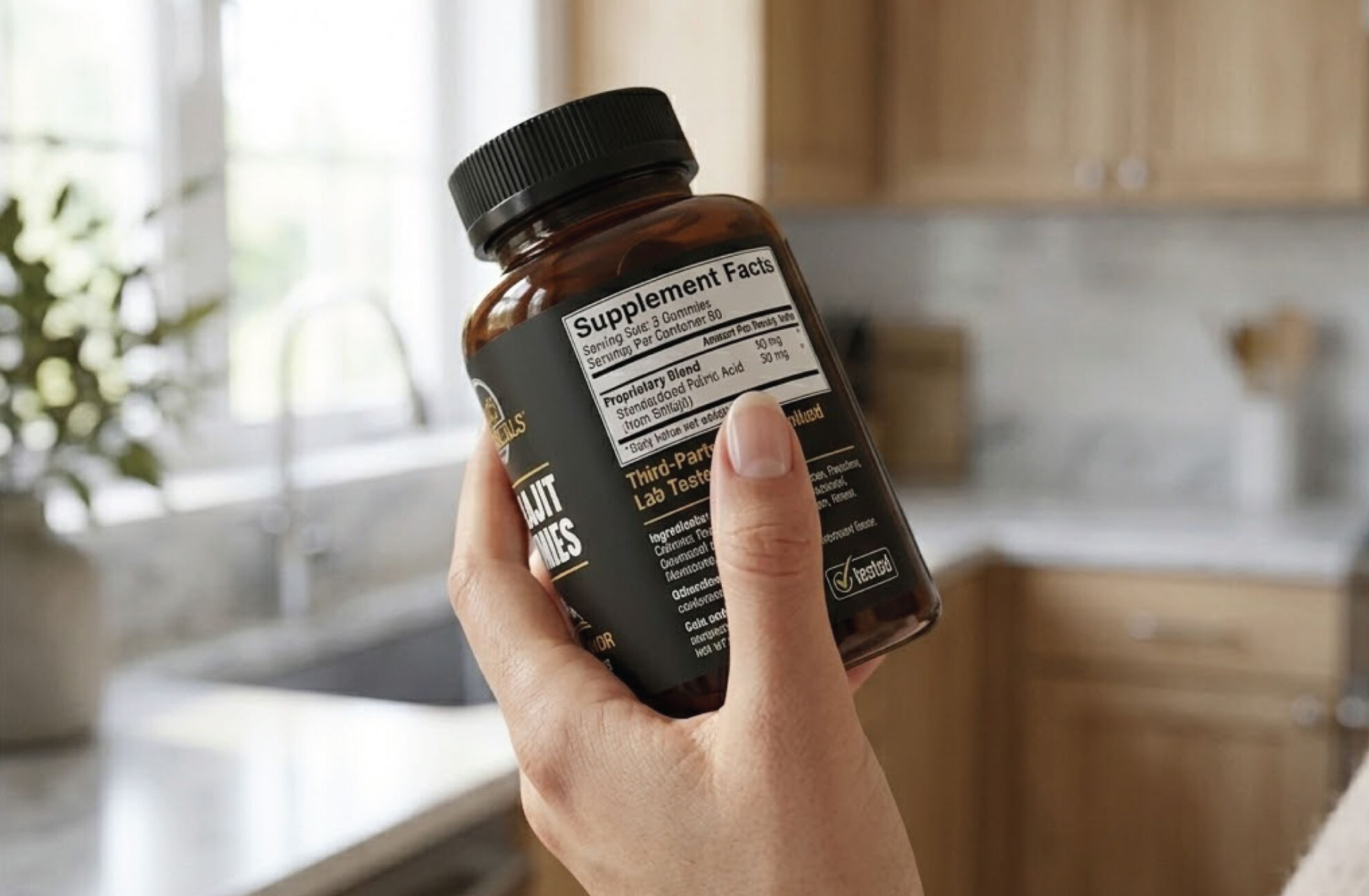
Do Shilajit Gummies Actually Work?
Yes, when they contain enough of the essential compounds. Fulvic acid, the compound most associated with shilajit’s reputation, is water-soluble and survives the gummy manufacturing process when the extract’s handled well.
Users of gummy products commonly report the same kinds of effects associated with other shilajit formats. These vary depending on the user, but many report better energy and recovery, and for some a lift in mood or general well-being. Individual results vary, and it does take a few weeks of consistent daily use.
Research on shilajit is real but limited. Arandomized, double-blind, placebo-controlled trial published in Andrologia gave 250 mg of purified shilajit twice daily for 90 days to healthy men aged 45 to 55, and reported statistically significant increases in total testosterone, free testosterone, and DHEAS compared with placebo. That study used a specific purified extract, not a gummy, so applying its results to any given gummy product involves some translation.
What shilajit gummies won’t do is give you an immediate, sharp effect like a coffee or an energy drink. The compounds work gradually.
Studies have also analyzedshilajit benefits for women. See how shilajit may complement your wellness routine from hormonal support to hair, skin, and overall vitality.
What Do Shilajit Gummies Do in the Body
Shilajit’s reputation rests mostly on the activity of fulvic acid, which functions as a natural chelator. That means it binds minerals and small molecules and moves them across cell membranes. Researchpublished in PMC on fulvic acid chemistry notes that the low molecular weight of these compounds is what allows them to transport minerals into cells in the first place. That’s not a small thing. Most mineral supplements just sit in the gut hoping to get absorbed.
Users have traditionally taken shilajit for what might be called systems-level effects rather than targeted symptom support. The compounds are associated with mineral absorption, cellular energy production (via a pathway involving the mitochondria), andhormonal balance in both men and women. The word most people reach for when describing how shilajit feels over time is “steady.”
Gummies deliver these same compounds, just in a format that’s easier to take consistently. When users enjoy the format, and a tasty gummy is appealing, the supplement is more likely to become part of the daily routine.
Quality varies widely in the shilajit gummy category. Look for products that list fulvic acid percentage on the label and provide third-party lab testing for heavy metals. Raw shilajit pulled from rocks can contain lead and arsenic, which is why purification and testing matter.
Shilajit Gummies vs Resin: What’s Different
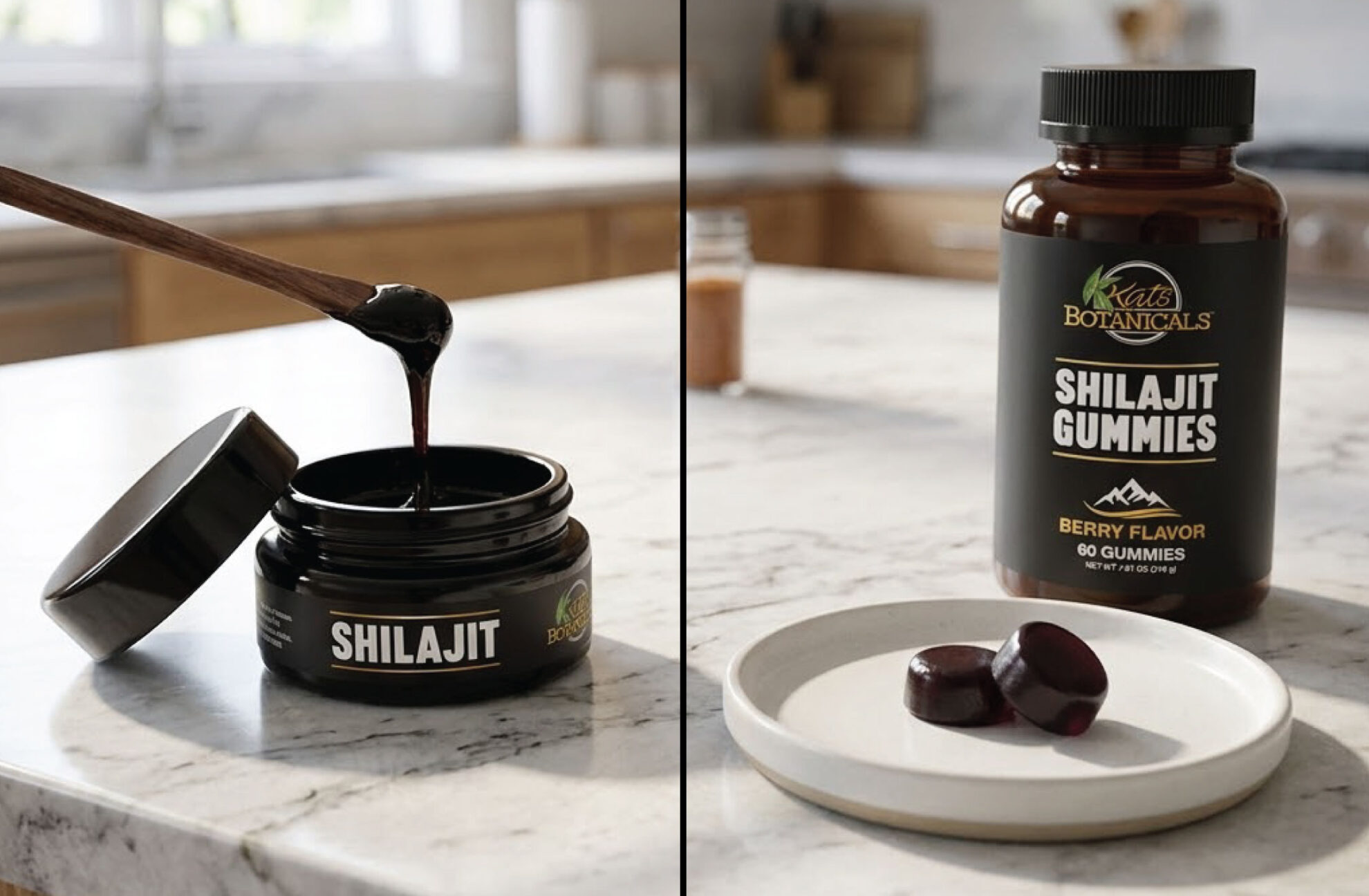
Shilajit resin is the least processed shilajit format. It’s the thick, tar-like substance after purification but before any further extraction. A pea-sized portion dissolved in warm water is the most traditional way to take it, and it delivers the widest compound profile of any format.
Gummies trade some of that compound range for the things resin can’t offer: portability, a fixed dose in every piece, and a more pleasant taste. The extraction and binding process involved in making a gummy does shave off some of the full-spectrum profile. How much depends on the manufacturer’s capabilities and care.
Here’s a practical frame for the comparison:
| Factor | Resin | Gummies |
| Compound profile | Widest | Narrower (core actives plus carrier) |
| Taste | Bitter, earthy | Sweetened, flavored |
| Dosing precision | Requires judgment | Fixed per piece |
| Prep required | Dissolve in water | None |
| Shelf life | Long when sealed | Shorter once opened |
| Typical cost per dose | Lower at equivalent potency | Higher |
If you care about getting the most from shilajit and don’t mind the prep or the taste, resin is the better pick. If you want something you’ll actually take every day without thinking about it, gummies make the tradeoff worth it.
For more on how shilajit capsules compare to resin format, see our guide toshilajit capsules vs resin.
Why People Are Choosing Shilajit Gummies
Gummies are popular because people enjoy taking them more than capsules or resin. Shilajit resin has a flavor profile somewhere between soil and bitter coffee, and the prep, dissolving a small amount in warm water and drinking it, is easy to skip on a busy morning.
Gummies fix both problems. You chew it, enjoy a bit of flavor, and you move on with your day. Gummies usually cost more per milligram of shilajit extract than resin does, but many people are willing to pay a little extra for the convenience.
Theshilajit capsule format also offers convenience similar to a gummy, but with a completely taste-free experience. Kats offers filler-free premium-grade shilajit capsules in a 90-count bottle.
How to Choose a Shilajit Gummy Worth Taking
Not every shilajit gummy on the market is made equal. A few things separate a product worth taking from one that’s mostly a sweetened placebo.
Fulvic acid percentage listed on the label. This is the most important spec. A quality gummy product will tell you what percentage of the extract is fulvic acid, typically in the 10% to 25% range for gummies. If the label doesn’t list it, the brand probably doesn’t know or doesn’t want you to know.
Third-partylab testing for heavy metals. Because raw shilajit can contain heavy metals, every reputable brand should test each batch for lead, arsenic, mercury, and other common contaminants. Certificates of analysis should be available on the brand’s website or on request.
Short, clean ingredient list. A good shilajit gummy has shilajit extract as the active ingredient, a binding agent (gelatin or pectin), a sweetener, and maybe natural flavors. If the ingredient list runs twenty items long with synthetic additives, you’re paying for candy with a dusting of shilajit.
Transparent sourcing. Where the shilajit was harvested and purified matters.Himalayan or Altai mountain sourcing is the standard; brands that can’t tell you where their shilajit came from should be avoided.